
Attracting qualified luxury buyers is defined as the practice of targeting verified, high-intent affluent prospects through persona-based outreach rather than broadcasting a listing to the widest possible audience. A qualified luxury buyer holds the financial capacity, lifestyle alignment, and genuine motivation to close on a premium property. Broad exposure fills your calendar with unqualified showings. Precision targeting fills it with serious prospects. Persona-based precision marketing converted 186 leads into just 9 highly qualified prospects in one premium market case study. That ratio is not a failure. It is the point. Fewer, better leads close faster and protect seller privacy, which matters deeply to ultra-high-net-worth individuals (UHNWIs).
How to build an accurate luxury buyer profile
A qualified buyer profile goes far beyond income brackets. The most effective profiles combine verified financial data with lifestyle intelligence, because luxury buyers purchase an experience, not just square footage.
Financial and demographic qualifiers
Start with the hard numbers. A qualified luxury buyer in Southern California markets like La Jolla or Rancho Santa Fe typically carries a net worth well above the property price, liquid assets sufficient for a cash or near-cash transaction, and a documented source of wealth. Verified wealth intelligence, including source of wealth and geographic mobility, produces far sharper targeting than broad demographic filters like age or zip code alone. The shift toward intelligence-led marketing focuses on these verified signals rather than surface-level demographics.
Lifestyle and interest data
Financial qualifiers tell you who can buy. Lifestyle data tells you who will buy your specific property. Agents who build buyer profiles around dining habits, leisure activities, equestrian interests, or privacy preferences connect with buyers on a deeper level. This connection reduces unqualified showings and shortens the sales cycle. Key lifestyle data points to include:
-
Dining and nightlife preferences (signals urban vs. estate lifestyle)
-
Leisure activities such as golf, equestrian, or boating
-
Privacy requirements and gate or acreage preferences
-
Travel patterns and second-home ownership history
-
Philanthropic affiliations and club memberships
Interest-based buyer profiling including dining and leisure preferences is a critical but underappreciated factor that determines buyer connection and reduces unqualified traffic.
Pro Tip: Invest $2,000–$4,000 in a targeted buyer profile list built around specific lifestyle interests. That investment typically costs less than one unqualified showing and dramatically reduces wasted time for both agent and seller.

What marketing channels work best for luxury buyer outreach?
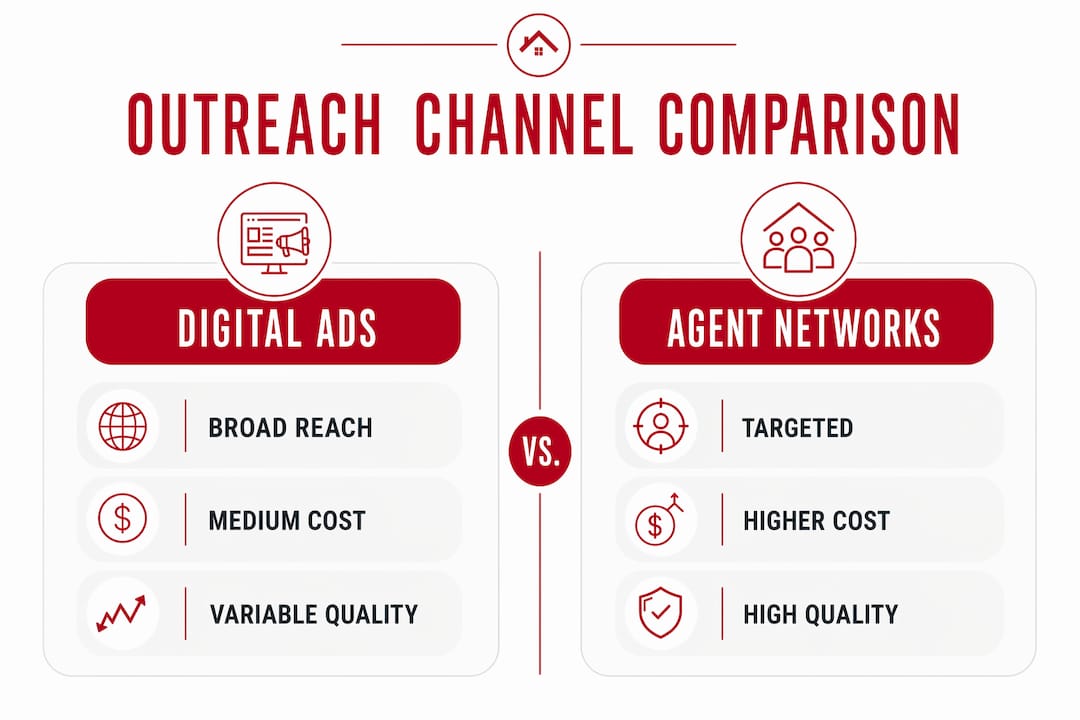
Reaching affluent clients requires a layered channel strategy. No single platform captures the full UHNW audience. The most effective approach combines precision digital campaigns, private agent networks, and curated content.
Precision digital campaigns
Digital ads built on persona and interest layers outperform generic luxury ad placements by a wide margin. Targeted narrative-based campaigns raised lead-to-appointment rates from 6% to 14% within 45 days without increasing budget. That improvement comes from targeting the right signals, not spending more. Platforms that allow interest-layer and behavioral targeting give agents the ability to reach buyers researching coastal estates, private compounds, or equestrian properties specifically.
Trigger-based outreach
Timing matters as much as targeting. Trigger-based marketing targeting life transitions such as IPOs, business exits, and career moves is 3–5 times more effective than loyalty-based targeting for ultra-luxury buyers. A business founder who just completed a liquidity event is actively looking to upgrade their lifestyle. Reaching them at that moment, with the right property narrative, produces dramatically higher conversion than retargeting past visitors.
Channel comparison
| Channel | Reach | Relative Cost | Lead Quality |
|---|---|---|---|
| Persona-based digital ads | Broad but filtered | Medium | High |
| Agent-to-agent private networks | Narrow and targeted | Low | Very High |
| Trigger-based outreach campaigns | Narrow and timely | Medium | Very High |
| Public luxury portals | Very broad | Low to Medium | Low to Medium |
| Curated email to intermediaries | Narrow and precise | Low | High |
Most luxury transactions happen through agent-to-agent private networks and select email outreach rather than public portals. Public listings build awareness. Private networks close deals.
How do you craft narratives that resonate with affluent buyers?
Generic luxury messaging fails with UHNWIs. Phrases like “world-class amenities” and “unparalleled views” appear in every listing from entry-level condos to $30 million estates. Affluent buyers filter them out instantly.
Write to a specific buyer, not a broad market
The most effective property narratives speak directly to one buyer type. A narrative for a privacy-focused tech executive reads differently than one for a multigenerational family seeking an equestrian estate. Tailoring messaging to San Diego lifestyle buyers in 2026 means addressing the specific values driving their search, whether that is walkable coastal access, gated seclusion, or architectural significance.
Strong lifestyle-driven messaging approaches include:
-
Privacy narratives: describe acreage, gate systems, and sight-line separation in concrete terms
-
Design narratives: name the architect, the materials, and the design philosophy
-
Legacy narratives: frame the property as a generational asset with long-term value
-
Community narratives: connect the property to specific clubs, schools, or cultural institutions
Avoid the common mistake of stacking status signals. Treating UHNWIs like aspirational core luxury buyers damages trust. They respond to discretion and curated access, not to conspicuous display.
Pro Tip: Align your property narrative with how affluent buyers search in AI-powered tools. Generative engine optimization (GEO) ensures your listings and content appear when buyers use AI-driven search queries during property research. This is an emerging advantage that very few luxury agents have adopted yet.
How to execute discreet, relationship-based outreach for serious buyers
The most qualified luxury leads come through trusted relationships, not public advertising. This is the channel that separates agents who close consistently from those who rely on volume.
Steps to build a private buyer network
-
Identify the 50 agents controlling relevant buyer pools. In any major luxury market, a small group of agents represents the majority of active UHNW buyers. Building relationships with these agents through discrete email campaigns and broker networking produces higher-quality leads than any public listing.
-
Launch MultiCast campaigns targeting trusted intermediaries. Estate attorneys, family office managers, and private wealth advisors often know about a client’s real estate intentions before any agent does. MultiCast campaigns among these intermediaries shorten trust-building cycles and generate warm inbound interest.
-
Create content that builds intellectual authority. White papers, market analyses, and neighborhood reports position you as a credible source rather than a salesperson. UHNWIs respond to expertise and credibility.
-
Integrate inbound warm leads with relationship follow-up. When a referral or inbound inquiry arrives, respond with curated, personalized information rather than a generic listing sheet.
Outreach method comparison
| Outreach Method | Lead Quality | Trust Level | Conversion Potential |
|---|---|---|---|
| Agent-to-agent private network | Very High | High | Very High |
| Intermediary MultiCast campaigns | High | Very High | High |
| Targeted digital inbound | Medium to High | Medium | Medium to High |
| Public portal listings | Low to Medium | Low | Low |
Stu Harvey Estates uses a relationship-focused approach to help buyers and sellers evaluate property opportunities. Stu Harvey brings 15+ years of real estate experience and 250+ personal career transactions to that work.
How do you measure the success of luxury buyer campaigns?
Measuring luxury buyer marketing requires different metrics than standard residential campaigns. Volume metrics like impressions and clicks tell you almost nothing about lead quality.
Key performance indicators to track
-
Lead-to-appointment rate: The percentage of inquiries that convert to a qualified showing. A rate below 10% signals poor targeting. The 6% to 14% improvement achieved through targeted campaigns shows what precision can deliver.
-
Qualified showing ratio: The percentage of showings that result in a second visit or offer. A low ratio means your buyer profile needs refinement.
-
Source attribution: Track which channel produced each qualified lead. Agent referrals, intermediary outreach, and digital campaigns each perform differently by property type and price point.
-
Days on market by channel: Properties marketed through private networks often close faster than those relying on public portals.
Pro Tip: Review campaign performance every 30 days, not quarterly. Luxury buyer behavior shifts quickly around market events and interest rate changes. Agents who refine targeting monthly outperform those who set campaigns and wait.
Key Takeaways
Attracting qualified luxury buyers requires precision targeting, lifestyle-aligned messaging, and relationship-based outreach rather than broad exposure or volume-based tactics.
| Point | Details |
|---|---|
| Build detailed buyer profiles | Combine verified financial data with lifestyle interests like dining, leisure, and privacy preferences. |
| Use trigger-based timing | Target buyers during life transitions like business exits or IPOs for 3–5x higher conversion. |
| Prioritize private networks | Agent-to-agent outreach and intermediary campaigns produce higher-quality leads than public portals. |
| Craft specific narratives | Write to one buyer type using privacy, design, or legacy messaging rather than generic luxury language. |
| Track lead quality metrics | Measure lead-to-appointment rate and qualified showing ratio, not impressions or click volume. |
What I’ve learned about luxury buyer marketing after 250+ transactions
Most agents approach luxury marketing as a volume problem. They assume more exposure produces more buyers. A targeted marketing plan should consider buyer fit, property presentation, and the seller’s privacy priorities.
The agents who consistently attract the most qualified buyers do one thing differently. They treat buyer acquisition like a research project, not a broadcast. They know which 50 agents in their market control the relevant buyer pools. They know which intermediaries sit closest to UHNW clients making real estate decisions. They build content that earns credibility rather than campaigns that shout for attention.
The shift I’ve seen most clearly in 2026 is the role of AI in buyer research. Affluent buyers increasingly use AI-powered search tools to research neighborhoods, architects, and market conditions before they ever contact an agent. Agents who optimize their content for these AI-driven queries gain a first-mover advantage that compounds over time. Most luxury agents have not started yet. That gap is an opportunity.
My honest advice: stop measuring success by how many people saw your listing. Start measuring it by how many of those people had the financial profile, lifestyle alignment, and genuine motivation to buy. That shift in mindset changes everything about how you market, who you call, and how you spend your budget.
— Stu
How Stuharveyestates connects sellers with serious luxury buyers
Stuharveyestates brings more than 15 years of precision luxury marketing experience to every property in Southern California’s most competitive markets, including La Jolla, Rancho Santa Fe, and coastal San Diego.
Stu Harvey’s approach combines verified buyer network access, lifestyle-aligned property narratives, and discreet agent-to-agent outreach to connect sellers with buyers who are genuinely ready to close. Every listing benefits from the same targeted strategies described in this article, backed by a track record of over 250 successful transactions. Browse current luxury listings to see how precision marketing translates into real results for sellers and buyers alike.
FAQ
What is a qualified luxury buyer?
A qualified luxury buyer is a prospect with verified financial capacity, lifestyle alignment, and genuine motivation to purchase a specific premium property. Financial qualification alone is not enough. Lifestyle fit determines whether a showing converts to an offer.
Why do luxury homes require targeted buyer outreach?
Broad exposure attracts unqualified traffic that wastes seller time and compromises privacy. Targeted outreach reaches buyers whose financial profile and lifestyle preferences match the specific property, producing faster closings and fewer disruptions.
How effective is trigger-based marketing for luxury buyers?
Trigger-based marketing targeting life transitions like IPOs or business exits is 3–5 times more effective than loyalty-based targeting for ultra-luxury buyers. Timing outreach to these moments dramatically increases conversion rates.
What channels produce the highest-quality luxury leads?
Agent-to-agent private networks and curated intermediary outreach consistently produce the highest-quality leads. Public portal listings generate awareness but rarely convert to serious UHNW buyers without a relationship layer behind them.
How much should agents invest in targeted buyer profile lists?
Targeted buyer profile lists built around lifestyle and interest data typically cost $2,000–$4,000 per campaign. That investment reduces unqualified showings and shortens the sales cycle, making it one of the highest-return expenditures in luxury marketing.