
Due diligence for a luxury investment property is the structured process of verifying every financial, legal, and physical detail of a high-value asset before you commit capital. Unlike standard residential purchases, luxury investment due diligence operates at a family office standard, where 30–45 days of pre-acquisition verification is the accepted baseline. That timeline exists because the stakes are different. A missed encumbrance or an unverified title on an eight-figure asset can erase years of portfolio gains. Stuharveyestates has guided investors through this process across more than 250 luxury transactions in Southern California, and the pattern is consistent: the investors who protect their capital are the ones who treat verification as a non-negotiable step, not an afterthought.
What does due diligence on a luxury investment property actually require?
The prerequisites for effective due diligence fall into three categories: documents, experts, and financial tools. Assembling all three before you make an offer is the difference between a protected acquisition and an expensive lesson.
Documents to gather before submitting an offer:
- Full title history, including any recorded liens, easements, or servitudes
- HOA governing documents, meeting minutes, and reserve fund statements
- Seller financial disclosures and any existing rental income records
- Legal disclosures covering known defects, litigation history, and zoning status
- Short-term rental regulations from the relevant municipality
Reviewing HOA and rental regulation documents before you submit an offer is not optional. Municipal short-term rental rules vary widely and can restrict or eliminate the income stream you are underwriting. Finding that out after you are under contract costs you leverage and time.
Experts you need on your team:
- A judicial expert for assets with complex title histories or high valuations
- An independent local notary or real estate attorney separate from the seller's counsel
- A verified investment specialist familiar with the specific submarket
Financial tools to prepare:
- A debt service coverage ratio (DSCR) calculator set to the 1.25 threshold
- Cap rate benchmarks for the target neighborhood
- A cash-on-cash return model that includes HOA fees, management costs, and vacancy reserves
Pro Tip: Never rely on the seller's attorney to confirm title integrity. Engage your own independent counsel before the inspection period begins. The cost is negligible relative to the risk.
How to analyze the financial performance of a luxury investment property
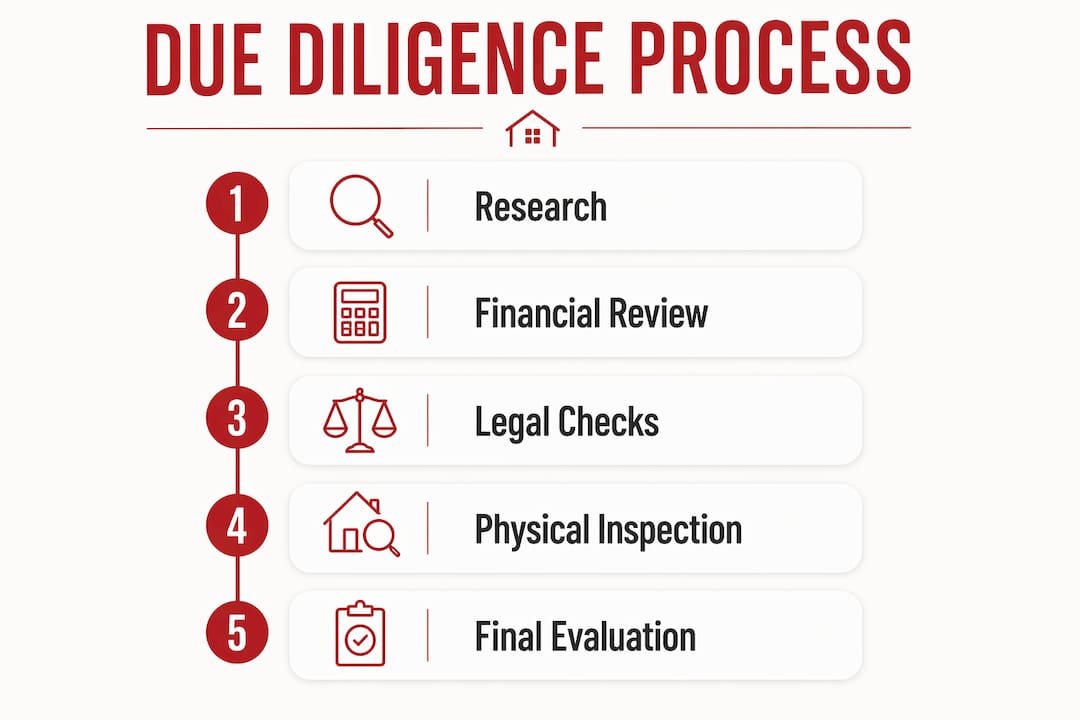
Financial validation is where most investors either protect themselves or expose themselves to overpaying. Three metrics form the core of any credible investment property analysis: DSCR, cash-on-cash return, and cap rate.

DSCR: the loan viability threshold
Professional underwriters require a DSCR above 1.25 for leveraged luxury investment deals to qualify. A DSCR of 1.25 means the property generates 25% more income than its debt obligations. Anything below that signals that the asset cannot service its own debt under normal operating conditions.
Cash-on-cash return and cap rate
Cash-on-cash returns of 8–12% represent the viable range for leveraged luxury market deals. Cap rate analysis complements this by letting you compare properties independently of financing structure. Using both metrics together gives you a complete picture of performance and relative value.
Stress-testing your expense assumptions
| Expense Category | What to Verify | Why It Matters |
|---|---|---|
| HOA and service charges | Annual statements and reserve fund health | Underfunded reserves signal future special assessments |
| Maintenance and deferred repairs | Inspection reports and contractor estimates | Deferred costs compress net returns immediately |
| Vacancy reserves | Local market vacancy rates by property type | Luxury properties carry longer vacancy periods |
| Management fees | Existing rental program terms | Branded residence programs often carry premium fees |
Service charges on branded residences can run from $10,000 to $50,000 or more per year. That figure must appear in your expense model before you calculate any return projection.
The branded residence premium question
Branded residences carry an average global price premium of 33%, rising to 39% in resort markets. The premium is real, but it is not automatically an investment thesis. The critical number is the exit premium after 3–5 years, which depends on core fundamentals amplified by the brand rather than the entry premium itself. Assess location quality, operator track record, and liquidity before you assign value to the brand name.
Pro Tip: Build a base-case, downside, and stress scenario for every property. If the downside scenario still clears your DSCR threshold, the deal has structural integrity.
What legal and compliance checks are critical in luxury property due diligence?
Legal verification is the layer most investors underweight, especially when a property looks clean on the surface. Clean-looking titles can carry hidden encumbrances that only a thorough legal review will surface.
Core legal checks for any luxury acquisition:
- Full title search covering recorded liens, easements, and boundary disputes
- Verification of servitudes and any rights of way affecting the property
- Confirmation of zoning compliance and any pending municipal regulatory changes
- Review of foreign ownership restrictions and applicable tax residency rules
- FinCEN reporting obligations for high-value real estate transactions
Independent local notaries and legal advisers are essential for uncovering hidden encumbrances and confirming compliance with foreign ownership and tax rules. Relying solely on the seller's counsel creates a conflict of interest that can leave material risks undisclosed.
For high-value assets, judicial expert verification is not a luxury. Judicial-grade verification is mandatory for assets above the equivalent of €10 million or those with complex title histories. Judicial experts certify latent defects, cross-border complications, and title integrity in a way that creates a legally defensible verification record.
Investors who skip judicial verification on complex titles are not saving money. They are transferring risk onto themselves at a scale that no insurance policy can fully cover.
HOA compliance deserves its own review track. Confirm that the HOA is financially solvent, that no special assessments are pending, and that the governing documents permit your intended use of the property. Reviewing these documents before you make an offer gives you real negotiating power if problems surface.
How to conduct physical inspections for luxury investment due diligence
Physical inspection at the luxury level goes well beyond a standard home inspection. The goal is to quantify every deferred maintenance item and operational risk before you close.
Structural and systems inspections to commission:
- Structural integrity assessment by a licensed structural engineer
- Roof condition and age verification, including membrane and drainage systems
- HVAC system performance and remaining service life
- Plumbing inspection covering supply lines, waste systems, and water intrusion history
- Electrical panel capacity, wiring condition, and code compliance
Deferred maintenance is the most common source of post-closing surprises in luxury acquisitions. A property that looks immaculate can carry $200,000 or more in deferred mechanical and structural work that the seller has cosmetically concealed. Commission independent inspectors, not inspectors referred by the listing agent.
Operational factors to assess during walkthroughs:
- Existing rental program terms and any management exclusivity agreements
- Short-term rental restrictions imposed by the HOA or municipality
- Service charge levels and what they cover in branded or managed residences
- Noise, privacy, and access conditions that affect rental desirability
Short-term rental regulations vary significantly by municipality and can impose restrictions that materially affect your projected income. Verify the current rules and any pending regulatory changes at the city or county level before you finalize your underwriting.
Pro Tip: Walk the property at different times of day, including evenings and weekends. Traffic patterns, noise levels, and neighbor activity tell you things an inspection report cannot.
What due diligence mistakes do luxury investors most often make?
The most costly errors in luxury real estate investment due diligence are not random. They follow predictable patterns.
-
Reviewing HOA and rental documents too late. Waiting until after an offer is accepted to read HOA governing documents or municipal rental rules removes your leverage. Problems discovered mid-contract force you to either accept them or lose your deposit.
-
Overvaluing the brand premium. Brand premium in non-hospitality branded residences is often a marketing uplift, not an investment thesis. Paying a 33% premium for a name without verifying location quality, liquidity, and operator track record is a structural error in your underwriting.
-
Skipping judicial-grade verification. Failing to perform judicial verification on complex titles or high-value assets has cost investors millions. The verification fee is negligible compared to the risk exposure it eliminates.
-
Underestimating operating costs. Service charges, management fees, insurance, and maintenance on luxury properties run significantly higher than investors project. Build a detailed operating cost model and then add a 15% contingency buffer.
-
Ignoring future regulatory shifts. Rental regulations, foreign ownership rules, and tax treatment for high-value real estate change. An investment that works under today's rules may not work under next year's. Review the regulatory pipeline for your target market as part of your luxury property risk assessment.
Key Takeaways
Rigorous due diligence on a luxury investment property requires verified financial metrics, independent legal review, and physical inspection completed before closing, not after.
| Point | Details |
|---|---|
| Start verification early | Review HOA, rental rules, and title history before submitting an offer to preserve negotiating leverage. |
| Use three financial metrics | DSCR above 1.25, cash-on-cash return of 8–12%, and cap rate together confirm investment viability. |
| Engage independent legal counsel | Never rely on the seller's attorney; hire your own notary and legal adviser to surface hidden encumbrances. |
| Commission judicial verification | Assets with complex titles or high valuations require judicial-grade certification to protect generational wealth. |
| Stress-test all operating costs | Include service charges, vacancy reserves, and deferred maintenance in every return projection. |
What 15 years of luxury transactions taught me about due diligence
Most investors come to me focused on the asset. They want to talk about the view, the finishes, the brand on the door. My job is to redirect that conversation to the numbers and the paperwork, because that is where the real investment is made or lost.
The single most expensive mistake I have seen is an investor who fell in love with a branded residence in a resort market, paid the full 39% brand premium, and never commissioned an independent title review. The title carried an undisclosed easement that restricted the rental program they had underwritten. The income projection was off by 40% from day one.
The investors who build lasting luxury real estate portfolios treat due diligence as a workflow, not a checklist they hand to someone else. They know their DSCR threshold before they tour a property. They have their legal team on standby. They read the HOA documents themselves.
My honest view is that the brand premium conversation is mostly a distraction. The exit premium after five years is what matters, and that is driven by location, liquidity, and operator quality. I have seen plain-titled properties in La Jolla outperform branded residences in resort markets because the fundamentals were stronger. The brand is a multiplier. It does not create value where none exists.
Integrate due diligence into your investment workflow from the first showing, not the first offer. That shift alone will protect you from the majority of costly surprises.
— Stu
How Stuharveyestates supports luxury investors in San Diego
Stuharveyestates brings over 15 years of specialized experience and more than $1.2 billion in luxury transaction volume to every investment engagement in Southern California.
Stu Harvey and his team give investors direct access to verified investment specialists, independent legal contacts, and deep submarket data across La Jolla, Rancho Santa Fe, and greater San Diego. Every client engagement includes a structured review of financial metrics, HOA documents, and title history before an offer is submitted. Investors working with Stuharveyestates can search current luxury listings with full investment context already built in, or connect with the buyer support team for a tailored due diligence consultation.
FAQ
What is due diligence in real estate?
Due diligence in real estate is the process of verifying all financial, legal, and physical details of a property before purchase. For luxury investment properties, this includes title review, financial metric analysis, and physical inspections completed within a structured pre-closing window.
How long does luxury investment property due diligence take?
Family office-grade due diligence on luxury real estate typically requires 30–45 days for comprehensive pre-acquisition verification, including judicial expert sign-off on complex titles.
What DSCR is required for a luxury investment property loan?
Professional underwriters require a DSCR above 1.25 for leveraged luxury investment property deals to be considered viable. This means the property must generate at least 25% more income than its total debt obligations.
Do I need a judicial expert for a luxury property purchase?
Judicial expert verification is mandatory for assets above the equivalent of €10 million or those with complex title histories. The certification creates a legally defensible record that protects generational wealth against future title disputes.
How do I evaluate a branded residence as an investment?
Assess the exit premium after 3–5 years rather than the entry price premium. Branded residences carry an average 33% global price premium, but the real investment value depends on location quality, operator track record, and liquidity, not the brand name alone.