
Remote home buying is the practice of purchasing property entirely online, using digital tools to replace every in-person step from the first showing to the final signature. The process mirrors traditional home buying in sequence but replaces physical interactions with virtual tours, electronic signatures, and remote online notarization. Platforms like DocuSign and NotaryCam now make online home buying a practical reality across most of the country. Whether you are relocating for work, investing from out of state, or buying a second home in Southern California, understanding how remote home buying process works gives you a real competitive edge.
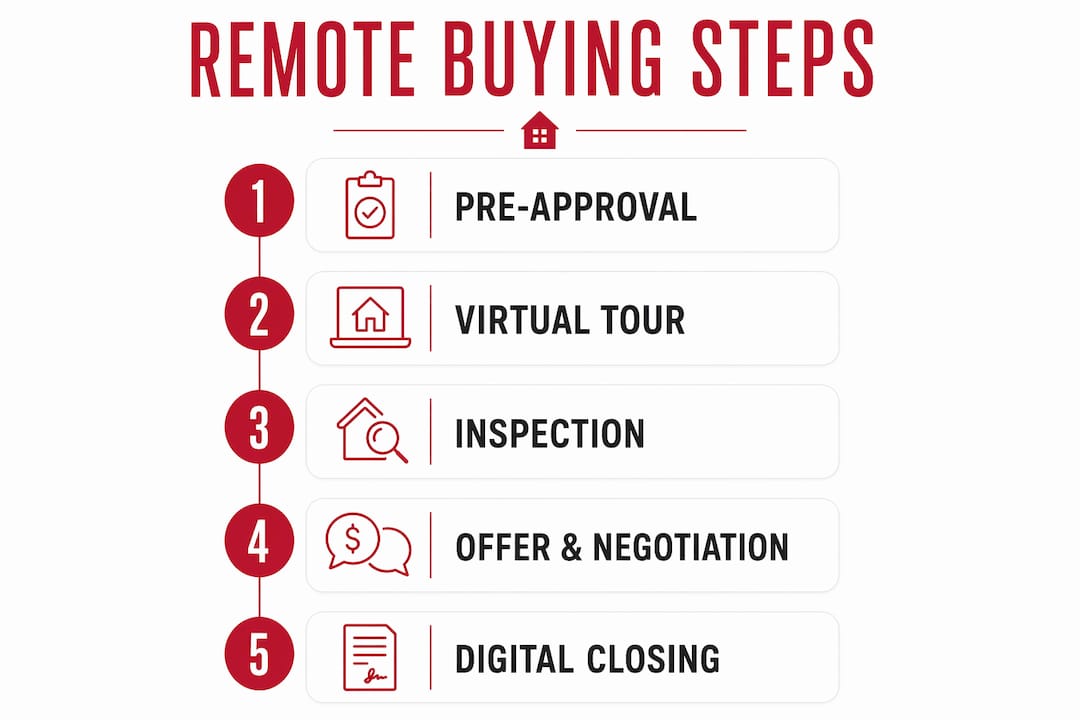
What are the essential steps to buy a house remotely?
The remote home purchase process follows the same sequence as a traditional transaction. The difference is the toolset, not the logic.
-
Get pre-approved online. Lenders like Rocket Mortgage and SoFi offer pre-approval in under 10 minutes using digital documentation uploads. Your lender must be licensed in the state where you are buying, not just where you live. A lender familiar with the target market can also unlock first-time buyer incentives and state programs you would otherwise miss.
-
Hire a local buyer’s agent. Your agent is your eyes and ears on the ground. Choose someone with documented experience in virtual showings and remote negotiations. The San Diego home buying guide at Stuharveyestates outlines exactly what to look for in a remote-ready agent.
-
Tour properties virtually. Use Matterport 3D tours, Zillow’s interactive floor plans, or live video walkthroughs via Zoom or FaceTime. Your agent should narrate what the camera cannot capture, including odors, noise levels, and water pressure.
-
Make an offer with electronic signatures. DocuSign and similar platforms handle offer documents securely. Earnest money deposits typically range from 1–3% of the purchase price and are wired directly to a secure escrow account.
-
Schedule remote inspections and appraisals. Your agent attends in person while you observe via live video. The inspector delivers a multimedia report with drone footage, thermal imaging, and detailed narration.
-
Close remotely. Most buyers use a fully digital closing or a hybrid model. Remote online notarization is legal in 48 states and saves lenders $444 per loan while shortening closing timelines by up to one week.
Pro Tip: Build a two-week buffer before your hard move-in deadline. Remote transactions involve more coordination across time zones and service providers, and delays are common even in smooth deals.
How do virtual tours, inspections, and negotiations work?
Virtual property assessment is the most underestimated skill in a remote home buying guide. Done right, it protects you as well as any in-person visit.
-
3D and live tours: Matterport delivers self-guided 3D walkthroughs you can revisit anytime. For live tours, Zoom or FaceTime with your agent gives you real-time control. Ask your agent to open every cabinet, run every faucet, and walk the perimeter.
-
Sensory narration: Live video walkthroughs conducted by agents include narration of details like odors, noise from nearby roads, and water pressure. These details are absent from prerecorded tours but critical to your decision.
-
Inspection reports: Request inspectors who provide drone footage of the roof, thermal imaging for moisture, and a narrated video summary. A written report alone is not enough for a remote buyer.
-
Remote negotiations: Your agent handles real-time edits to offer terms through digital communication channels. Counteroffers move through DocuSign within hours, not days.
-
Protective contingencies: Escrow holdbacks protect remote buyers by holding a portion of funds until post-closing repairs are completed. Virtual final walk-throughs via video are now a standard contingency clause in many remote contracts.
Pro Tip: Ask your agent to record every live walkthrough and send you the video file. You will catch details on the second viewing that you missed in real time.
What legal and logistical considerations should remote buyers know?
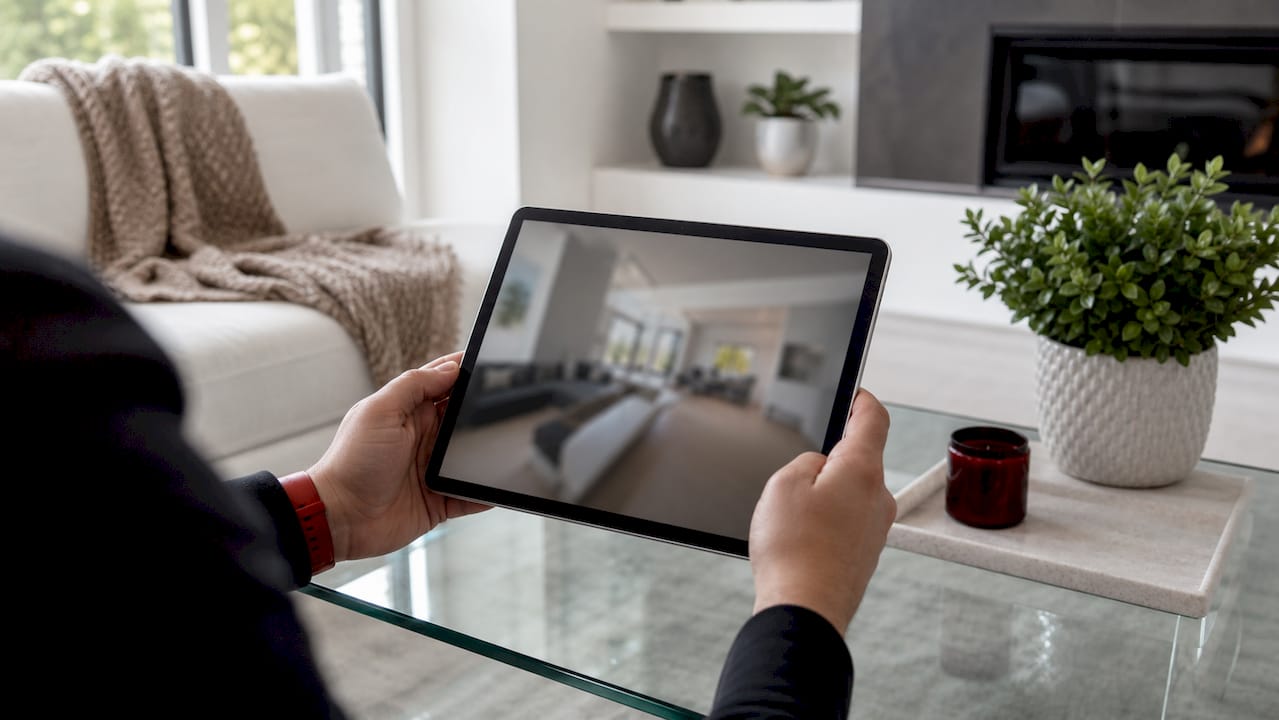
Legal requirements in a virtual home purchase process vary significantly by state. Getting this wrong can force last-minute travel or delay your closing by weeks.
The most important distinction is between attorney states and title company states. Attorney states mandate a local lawyer’s physical presence at closing, which directly affects whether a fully remote closing is possible. Title company states are generally more flexible and accommodate digital closings with fewer restrictions.
| Closing Type | How It Works | States Where Common |
|---|---|---|
| Fully Remote (RON) | All signatures and notarization via video conference | Most title company states |
| Hybrid Closing | Some documents signed electronically, wet signatures for others | Mixed states |
| In-Person Required | Attorney or notary physical presence mandatory | Attorney states (e.g., Georgia, Massachusetts) |
| Escrow Holdback | Funds held post-closing until repairs are verified | Available in most states |
Verify your closing type early in the process. State regulations and lender rules vary, and discovering a travel requirement two days before closing is a costly surprise. Remote closings also record the entire notarization session for legal record-keeping, which adds a layer of transparency traditional closings do not provide.
On the logistical side, coordinate your closing date carefully if you are selling an existing home simultaneously. A two-week buffer before hard move-in deadlines prevents the most common remote transaction delays. After closing, update your driver’s license, vehicle registration, and tax forms promptly to reflect your new address.
For a deeper look at how attorneys factor into the closing process, the Stuharveyestates guide on real estate attorney roles explains the distinctions clearly.
How to build a remote-ready team for your virtual home purchase
The right team is the single biggest factor in a smooth remote transaction. Every professional you hire needs to be comfortable with digital workflows, not just willing to try them.
-
Buyer’s agent: Choose someone who has closed remote transactions before, not someone who will learn on your deal. Ask directly: how many out-of-state buyers have you represented in the last 12 months?
-
Mortgage lender: Your lender must be licensed in the purchase state. Resolving financial hurdles before contract signing, through pre-underwriting rather than just pre-approval, avoids the most common delays.
-
Home inspector: Require multimedia deliverables. A PDF report with 40 photos is not sufficient for a buyer who cannot visit the property.
-
Title and escrow company: Confirm they support RON and have processed digital closings before. Not every title company has updated its workflows.
-
Insurance agent: Bind your homeowner’s policy remotely before closing. Many insurers now offer fully digital policy issuance, but you need to start this process at least two weeks out.
Strong communication holds this team together. Set a weekly check-in with your agent and establish a shared document folder for all transaction paperwork. Buyers who treat remote transactions as a passive process are the ones who get surprised.
Key takeaways
The remote home buying process succeeds when buyers combine the right digital tools, a verified local team, and early legal due diligence before signing anything.
| Point | Details |
|---|---|
| Start with digital pre-approval | Use lenders like Rocket Mortgage or SoFi to get pre-approved online in under 10 minutes. |
| Hire a proven local agent | Your agent must have documented remote transaction experience, not just willingness to try. |
| Verify your closing type early | Confirm whether your state requires attorney presence or supports full RON before going under contract. |
| Use protective contingencies | Escrow holdbacks and virtual final walk-throughs guard against repair surprises you cannot inspect in person. |
| Build in a time buffer | Allow two weeks before hard move-in deadlines to absorb coordination delays across time zones. |
What i’ve learned after 15 years of remote and luxury transactions
Most buyers approach remote home buying as a technology problem. It is not. It is a trust problem.
The tools, Matterport, DocuSign, Zoom, are mature and reliable. What breaks remote deals is the absence of a trusted local professional who treats your purchase with the same urgency you would if you were standing in the driveway. I have seen buyers lose properties they loved because their agent sent a pre-recorded tour instead of picking up the phone for a live walkthrough at 7 p.m. on a Tuesday.
The sensory details matter more than most buyers realize until after closing. I always tell remote clients: ask your agent to describe what the neighborhood smells like at 6 a.m. Ask about the sound of the street during school pickup. Ask whether the kitchen gets natural light in the afternoon. These are not trivial questions. They are the difference between a home you love and one you tolerate.
One more thing most remote buying guides skip: the inspection is not the end of your due diligence. It is the beginning of your negotiation. A detailed multimedia inspection report gives you real leverage on price or repairs, especially in a market where the seller assumes a remote buyer will accept more risk. Do not accept that assumption.
— Stu
How Stuharveyestates makes remote buying straightforward
Buying a home in Southern California from across the country is a real undertaking. Stu Harvey brings experience from 250+ personal career transactions to a process built around clear communication and local guidance.
Stu Harvey’s team provides live virtual showings of San Diego listings, connects buyers with lenders and inspectors experienced in digital closings, and delivers neighborhood-level insight that no algorithm replicates. Whether you are targeting Coronado, Pacific Beach, or La Jolla, you get a dedicated local professional managing every detail on the ground. Explore the full buyer’s team approach at Stuharveyestates to see how the process works from pre-approval through closing.
FAQ
What does the remote home buying process involve?
The remote home buying process covers every traditional step, from pre-approval to closing, conducted through digital tools like virtual tours, electronic signatures, and remote online notarization. Buyers never need to visit the property in person to complete a legally binding purchase.
Is remote online notarization legal everywhere?
RON is legal in 48 states, but two states still require in-person notarization. Attorney states may also require a local lawyer’s physical presence at closing regardless of RON availability.
How much earnest money do remote buyers typically put down?
Earnest money deposits range from 1–3% of the purchase price and are wired directly to a secure escrow account. Escrow holdbacks can protect buyers when repairs cannot be verified before closing.
How do i assess a property i cannot visit in person?
Request a live video walkthrough from your agent using Zoom or FaceTime, and ask for a multimedia inspection report that includes drone footage and thermal imaging. Instruct your agent to narrate sensory details like noise, odors, and water pressure that cameras do not capture.
What is the biggest risk in a long-distance home buying transaction?
The biggest risk is discovering a state-specific closing requirement, such as mandatory attorney presence, too late to prepare. Verify your closing type and RON eligibility at the start of your search, not the week before closing.