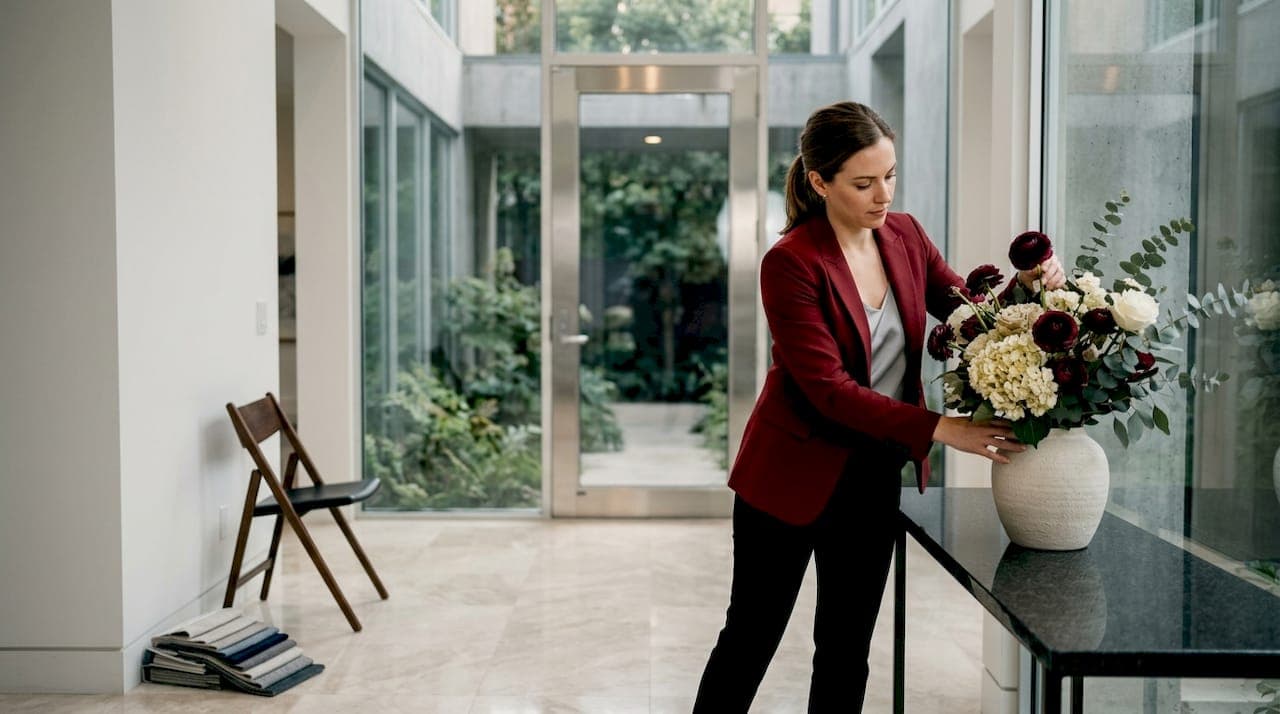
Luxury home staging for sale is not decoration. It is a deliberate marketing strategy that shapes how buyers feel the moment they step through the door, and that feeling directly affects what they are willing to pay. In high-end real estate, where buyers are sophisticated and options are plentiful, staging is brand positioning and risk mitigation in one move. This guide walks you through everything from pre-staging preparation to post-staging marketing, so you can use staging as the sales tool it was always meant to be.
Table of Contents
Key takeaways
| Point | Details |
|---|---|
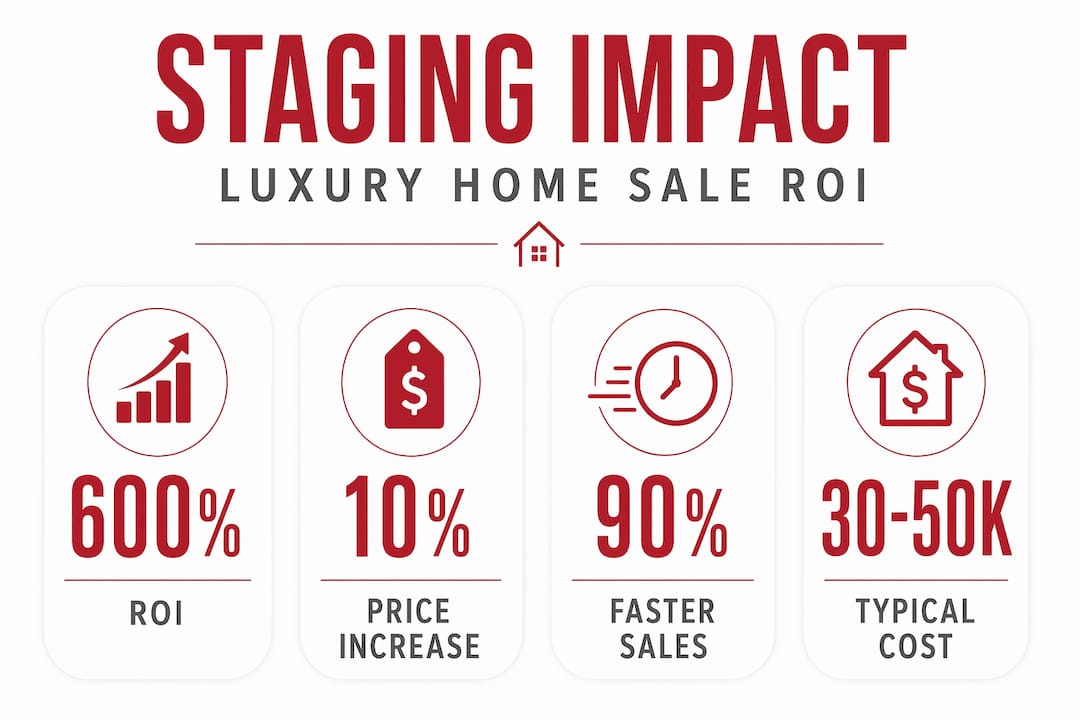
| Staging drives real ROI | Effective luxury staging can yield 600% to 1000% ROI and increase sale price by up to 10%. |
| Timing is everything | The first two weeks on market are critical. Stage before you list, not after. |
| Customization wins | Generic rental furniture undercuts luxury appeal. Custom pieces and curated art create buyer connection. |
| Budget accordingly | Plan for a $30,000 to $50,000 staging investment on high-end properties to deliver maximum return. |
| Marketing amplifies staging | Professional photography and turnkey marketing of staged spaces attract global and second-home buyers. |
Luxury home staging for sale: what it actually means
Most sellers think staging means renting a few nice sofas and adding some throw pillows. At the luxury level, that thinking costs you money. Luxury home staging is a purpose-built design strategy aligned to your property’s architecture, its price point, and the specific lifestyle your target buyer is seeking.
The difference between basic staging and high-end home staging comes down to intentionality. Basic staging fills empty rooms. Luxury real estate staging tells a story. It answers the question every buyer is quietly asking: “Can I picture my life here, and does that life feel extraordinary?”
What that looks like in practice:
-
Custom or high-quality rental furnishings selected to complement the home’s architectural style, whether that is coastal modern, Spanish revival, or contemporary minimalist
-
Curated artwork and installations that create emotional resonance, not just visual filler
-
Statement lighting layered across ambient, task, and accent sources to flatter every space
-
Textile and texture mixing through linen, velvet, marble, and natural wood to signal material quality
-
Lifestyle vignettes in kitchens, primary suites, and outdoor spaces that communicate aspiration
Custom pieces and art installations create emotional connections that generic rental items simply cannot replicate. Discerning buyers notice. And in a market where the difference between the asking price and the final offer can be hundreds of thousands of dollars, that emotional connection is the asset you are staging for.
Pro Tip: Before engaging a stager, pull three to five comparable listings in your price bracket and study their staging. Identify what feels flat versus what feels aspirational. That gap is your opportunity.
Preparing your luxury home for staging
Preparation is where most sellers lose weeks they cannot afford to lose. The staging itself is only as effective as the canvas it sits on, and a canvas full of outdated hardware, scuffed baseboards, or clutter tells buyers the home has not been cared for.
Start at least sixty to ninety days before your target listing date. Work through the home systematically with three priorities: declutter, repair, and neutralize.
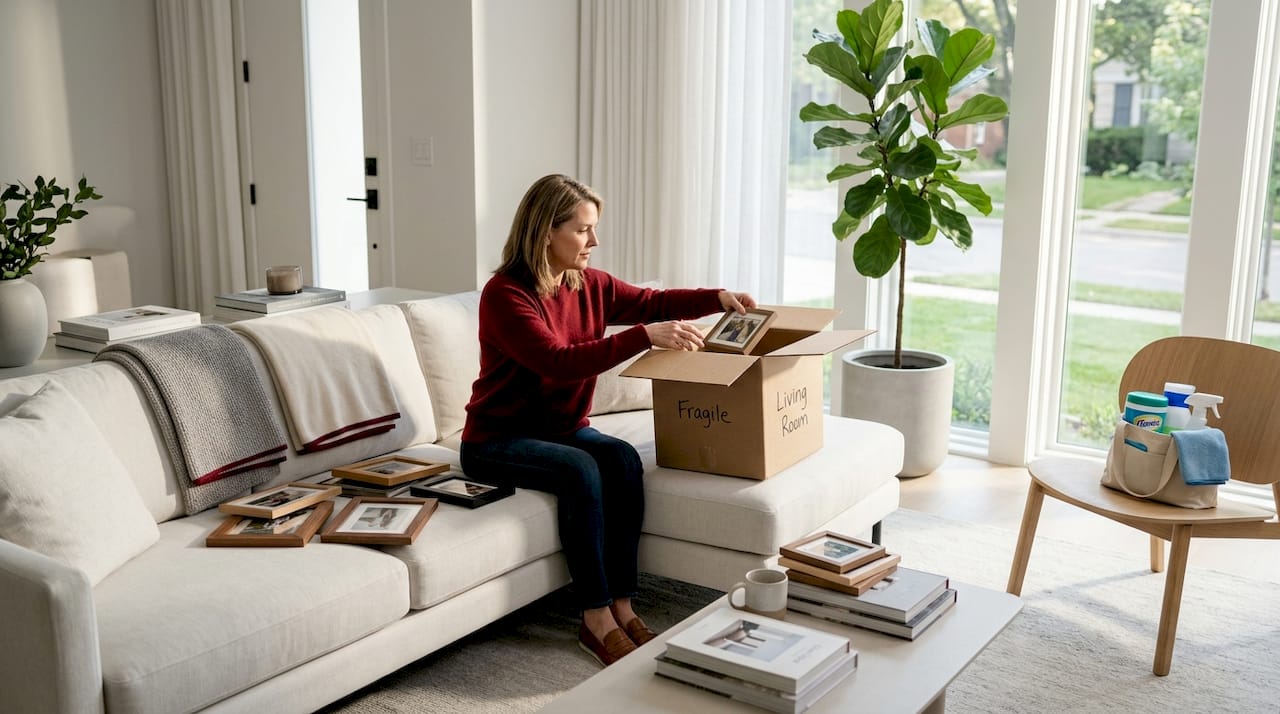
Decluttering is more aggressive than most sellers expect. Personal photographs, collections, children’s artwork, and family-specific furniture all need to go into storage. You are not erasing your life. You are making room for the buyer’s imagination.
Repairs and updates matter more than sellers often realize. A cracked tile, a sticky door, or a dated faucet signals deferred maintenance to a luxury buyer, who will then wonder what else has been neglected. Address these before the stager arrives.
Working with professionals early is non-negotiable. Professional staging partnerships between brokerages and staging companies allow listings to launch fully prepared within critical marketing windows. The stager, your agent, and the photographer need to be working from a shared timeline.
Here is a preparation framework that works:
| Task | Timing Before Listing | Goal |
|---|---|---|
| Full declutter and deep clean | 8 to 10 weeks out | Neutral, ready canvas |
| Repairs and cosmetic updates | 6 to 8 weeks out | Remove buyer objections |
| Stager walkthrough and plan | 5 to 6 weeks out | Align design to buyer profile |
| Furniture delivery and install | 1 to 2 weeks out | Complete staging before photography |
| Professional photography | 3 to 5 days before listing | Capture staged home at its best |
Budget expectations matter here too. Luxury staging investment typically runs between $30,000 and $50,000 for high-end properties, tailored specifically to deliver performance-grade results. On a $10 million listing, that same staging can generate a $200,000 price increase plus over $100,000 in saved carrying costs. That math is why serious sellers treat staging as a line item, not an afterthought.
Pro Tip: If your agent has access to in-house or proprietary staging inventory, prioritize that relationship. In-house staging control eliminates the timeline delays common with third-party vendors, which is critical when buyers move fast.
Executing luxury staging: design strategies that work
Once preparation is complete, execution is where the vision becomes reality. This is not the time to make safe choices. Luxury buyers are drawn to spaces that feel curated and considered, not spaces that feel like a hotel lobby no one has personality-tested.
Here is how to approach execution in a way that resonates with discerning buyers:
-
Match furnishings to the home’s architecture. A Craftsman estate and a glass-box modern home require completely different furniture profiles. When a stager drops mid-century pieces into a Spanish colonial, buyers feel the mismatch even if they cannot name it. Curated, custom design increases buyer engagement precisely because it feels intentional.
-
Design for buyer movement, not magazine shoots. Layouts should feel natural to walk through. Buyers need to move from the entry through the living room to the kitchen without rerouting around oversized sectionals or tight corners. Proper scale and flow make rooms feel larger and more livable.
-
Layer lighting deliberately. Overhead lighting alone flattens a space. Add floor lamps, table lamps, and under-cabinet lighting to create depth and warmth. In a primary bedroom, soft lighting signals rest and luxury. In a chef’s kitchen, task lighting signals function and precision.
-
Create lifestyle vignettes in key rooms. A spa-like primary bathroom gets folded towels, a tray with quality products, and a single sculptural plant. A home office gets a leather desk pad, a clean monitor setup, and one piece of wall art. A breakfast nook gets a linen runner and two ceramic mugs. These details make buyers feel that a remarkable life already exists in this home.
-
Use art strategically, not decoratively. Art should direct attention toward the home’s best features. A large-scale canvas above a fireplace draws the eye to an architectural centerpiece. A gallery wall in a hallway creates a sense of depth. Art that competes with the architecture distracts.
-
Avoid the cookie-cutter trap. When a buyer has toured fifteen luxury homes staged by the same regional vendor, they notice the same gray sectional and the same abstract print over the same console table. Properties staged with custom design stand out more effectively because they feel distinct.
Pro Tip: Walk through the staged home the night before photography with the lights on as they will be during showings. Every room should photograph beautifully and feel even better in person. If something looks off in person, fix it before the camera arrives.
Common staging mistakes that undermine luxury appeal
Even sellers who invest heavily in staging can undercut their own results. The mistakes below are the ones that show up most often in luxury transactions that underperform.
-
Staging after listing. The impact of staging is strongest within the first two weeks on market. Listing an unstaged home and then staging it mid-campaign signals desperation to buyers who have already passed on the property.
-
Using low-quality or generic furnishings. A luxury buyer notices when furniture quality does not match the home’s price point. Cheap sofas in a $4 million home create cognitive dissonance. The buyer starts to question the home’s value.
-
Ignoring buyer demographics. A home in La Jolla attracting international buyers needs a different staging profile than a ranch property in Rancho Santa Fe drawing domestic buyers. Understanding buyer lifestyle expectations is part of staging strategy, not a separate conversation.
-
Over-personalizing or over-cluttering. Too much décor feels fussy and signals a lack of confidence in the architecture itself. Luxury buyers want to see the home, not the staging.
-
Misaligned team communication. When the seller, agent, and stager are not working from the same brief, the result is a staged home that does not match the listing’s marketing narrative. This disconnect is more common than it should be.
Staging is not about filling rooms. It is about making buyers feel that walking away from this property means walking away from the life they actually want.
Verifying staging success and leveraging marketing
Once staging is complete, you need two things: a way to measure whether it is working, and a plan to amplify it through marketing. Staging without strategic marketing is like setting a table for a dinner party and forgetting to send the invitations.
Indicators that staging is working:
| Signal | What It Tells You |
|---|---|
| Multiple showing requests in week one | Buyers are engaging with the listing online and want to see it in person |
| Repeat visits from the same buyers | Emotional connection has been made; buyers are returning to confirm their interest |
| Offers above or at asking price | Staging has supported and justified the list price in buyer perception |
| Fewer days on market vs. comparables | The property is outperforming unstaged listings in the same tier |
Professional photography of staged spaces is not optional at this price point. It is the product. Buyers form first impressions digitally, and listings with high-quality staged photography generate significantly more showing requests than those with vacant or poorly lit images.
Staging also opens a specific marketing opportunity: positioning the property as fully furnished or turnkey. Fully furnished sale strategies appeal directly to global buyers and second-home purchasers who are buying a lifestyle, not just square footage. If your stager uses high-quality pieces, offering them as part of the sale or as a negotiable addition can shift buyer interest into buyer urgency.
Virtual tours of staged homes add another layer. They allow out-of-market buyers to experience the property before traveling, which increases the quality of in-person showings because those buyers arrive already emotionally invested.
My take: staging is the most underused sales tool in luxury real estate
I have been in luxury real estate in Southern California for over fifteen years, and the most consistent pattern I see is sellers who invest millions in a property and then hesitate to spend $40,000 on the strategy that directly influences what buyers are willing to pay for it.
Here is what I have learned: buyers do not buy square footage. They buy a feeling. And at the luxury level, that feeling needs to be precisely engineered, not improvised. I have seen identically priced properties in the same neighborhood where one sells in ten days and another sits for ninety. The difference, almost every time, is staging quality and timing.
What surprised me early in my career was how much the collaboration between agent and stager matters. When those two teams are not aligned on the buyer profile and the home’s market positioning, the staging ends up beautiful but generic. It serves no one. The best results I have seen come from staging that tells a specific story to a specific buyer.
I also think sellers underestimate the value of speed. Synchronized staging and launch is not just a nice-to-have. It is a competitive advantage. The window of peak buyer attention is short. Miss it and you are managing a price reduction conversation instead of a multiple-offer situation.
Staging is not cosmetic. It is the difference between selling your home and selling your home at the number you deserve.
— Stu
Work with experts who know luxury staging and sales
If you are preparing to list a high-end property in Southern California, the strategies in this article only work when execution is precise and the team around you knows the market. Stu Harvey brings more than 15 years of real estate experience and 250+ personal career transactions to his work with sellers, helping coordinate property preparation with the overall listing strategy.
Whether you are ready to list or still planning your timeline, seeing how professionally staged luxury properties are presented in the current market is a strong first step. Browse expertly staged listings to get a concrete sense of what high-level presentation looks like at your price point. You can also connect directly with the Stuharveyestates sellers team to discuss staging coordination, timing, and what the market looks like right now in La Jolla, Rancho Santa Fe, and surrounding communities.
FAQ
What is luxury home staging for sale?
Luxury home staging for sale is a strategic design process that prepares a high-end property for market by using custom furnishings, curated art, and lifestyle-driven layouts to attract discerning buyers and justify the asking price.
How much does luxury staging typically cost?
Luxury staging typically costs between $30,000 and $50,000 for high-end properties, with ROI ranging from 600% to 1000% through higher sale prices and reduced time on market.
When should you stage a luxury home?
Stage before you list. The staging impact window peaks in the first two weeks on market, so the home must be fully staged and photographed before the listing goes live.
Does staging actually increase the sale price?
Yes. Effective luxury staging can increase sale prices by up to 10%, and on a $10 million property that can mean an additional $200,000 in proceeds plus significant savings in carrying costs.
What separates luxury staging from regular home staging?
Luxury staging uses custom and high-quality furnishings, original artwork, and buyer-specific lifestyle design to create emotional resonance. Generic rental furniture and basic décor do not meet the expectations of discerning luxury buyers at this price point.