
A luxury real estate selling timeline is the structured sequence of preparation, marketing, and closing phases required to sell a high-value property, typically spanning several months to well over a year. Unlike standard home sales, the luxury home selling process involves a thinner buyer pool, higher pricing sensitivity, and far more complex logistics at every stage. The Concierge Auctions Index reports that ultra-luxury homes average 319 days on market, more than 400% longer than median-priced homes. Understanding what drives that number, and how to work with it rather than against it, is the difference between a well-executed sale and a costly stall.
What is a luxury real estate selling timeline?
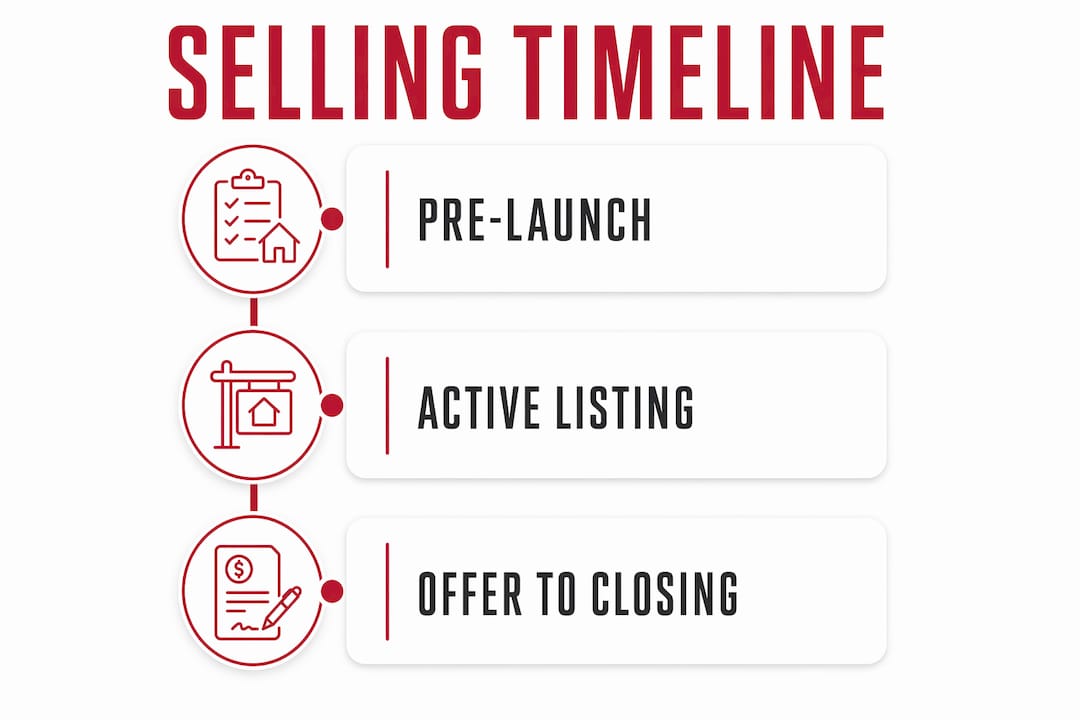
The luxury real estate selling timeline is best understood as three distinct phases: pre-launch preparation, the active listing period, and the contract-to-close window. Each phase has its own timeline, risks, and decision points. Sellers who treat the listing as a single event, rather than a multi-stage process, consistently leave money on the table.
Phase 1: pre-launch preparation (6–12 weeks)
Pre-launch is the most underestimated phase in the luxury home selling process. According to best practices in markets like Palm Beach and La Jolla, 6–12 weeks of preparation before going live is standard. That window covers property assessment, repairs, staging, professional photography and video production, and targeted pre-market outreach to buyer networks.

Complex renovations or permit work can push this phase to three months or longer. Sellers who skip or compress this stage often launch with a property that is not visually or structurally ready, which burns the critical first-impression window with qualified buyers.
Pro Tip: Schedule your stager and photographer at least eight weeks before your target listing date. Production delays are the most common reason luxury launches slip.
Phase 2: active listing period (30–180+ days)
The active listing period is where market conditions take control. In November 2025, the national median luxury DOM was 78 days, but that number masks enormous variation by metro and price tier. Luxury homes average about 64 days to go under contract, compared to 50 days for non-luxury homes. At the ultra-high end, overpriced listings routinely sit for 90–120 days or more before the first serious offer.
The first 30 days on market are the highest-value window. Buyer attention peaks at launch, and a listing that does not generate strong early activity is a signal to recalibrate pricing or presentation before momentum is lost.
Phase 3: offer acceptance to closing (30–60+ days)
Once an offer is accepted, the escrow clock starts. Inspection and financing contingencies typically run 17–21 days, though these windows are negotiable. Standard escrow periods for luxury properties run 30–45 days, though cash buyers can close in as little as 14–21 days post-acceptance. Sellers should build contingency deadlines into the contract from day one to keep the process moving without surprises.
How do typical luxury and ultra-luxury timelines compare?
The gap between a standard luxury home and an ultra-luxury property is not just a matter of price. It is a fundamentally different selling experience with a much longer real estate selling timeline.
Ultra-luxury homes in the U.S. average 319 days on market, with 54% taking more than 180 days to sell and 4% exceeding 1,000 days. That is not a market anomaly. It reflects a buyer pool that is smaller, more deliberate, and more price-sensitive than any other segment.
Pricing discipline is the single biggest variable. Luxury homes listed 10–25% above market value consistently see the longest market times and the steepest eventual price cuts. Homes that sit beyond 180 days face price reductions nearing 20%, compared to roughly 7% for properties that sell quickly. That math makes a compelling case for accurate pricing at launch.
| Category | Typical Luxury | Ultra-Luxury |
|---|---|---|
| Average Days on Market | 64–78 days | ~319 days |
| % Selling After 180 Days | Minority | 54% |
| Typical Price Reduction | ~7% | Up to 20% |
| Buyer Pool Size | Moderate | Very thin |
| Cash Buyer Frequency | Moderate | High |
If your property has been listed for more than 180 days without a serious offer, the data is clear: a pricing and marketing reassessment is not optional. It is the only path to avoiding a deeper discount later.
Why do local markets affect the luxury selling timeline?
Luxury days on market cannot be generalized from national averages. Local conditions shape the luxury home selling timeline steps more than almost any other factor.
The metro-level disparity is striking. San Jose recorded a median luxury DOM of just 56 days in late 2025, while Bend, Oregon came in at 146 days. Naples, Florida sees faster turnover due to strong seasonal demand. Kahului, Hawaii moves slower due to a narrower local buyer base. These are not random fluctuations. They reflect the balance of supply and demand, regional economic conditions, and how each market defines “luxury” by local price percentiles.
Key factors that shape your local timeline include:
-
Local luxury threshold: Luxury is typically defined at the 90th, 95th, or 99th price percentile for a given metro. A $2 million home is ultra-luxury in some markets and merely premium in others.
-
Inventory levels: Low supply in coastal California markets like La Jolla and Rancho Santa Fe compresses timelines. High inventory in slower metros extends them.
-
Buyer pool composition: Markets with a high concentration of tech executives, finance professionals, or retirees with liquid assets move faster than markets dependent on relocating buyers.
-
Property complexity: Homes with recent renovations, clear permits, and updated systems close faster. Properties with deferred maintenance or legal complications add weeks to every phase.
Pro Tip: Before setting a price or a timeline expectation, ask your agent for the median DOM specifically for your price tier and zip code, not the metro average. The difference can be 60 days or more.
The San Diego luxury market in 2026 illustrates this well. Coastal lifestyle demand is driving faster absorption in certain submarkets, while inland properties at similar price points sit longer. Local knowledge is not a luxury. It is a requirement.
How should luxury sellers plan for optimal timing and price?
The steps to sell high-end real estate successfully start well before the listing goes live. Sellers who front-load the process with preparation consistently achieve better prices and shorter active listing periods.
A coordinated pre-listing plan covering staging, repairs, and professional marketing assets produced 6–12 weeks ahead of launch reduces wasted market time and strengthens buyer interest from day one. Here is how to structure that plan:
-
Assemble your team early. A luxury broker, professional stager, real estate attorney, tax counsel, and title company should all be engaged before any work begins. Delays in assembling this team are the most common source of timeline slippage.
-
Complete repairs and staging before photography. Professional photography and video are non-negotiable in luxury sales. Shooting before the property is fully staged wastes production costs and weakens the listing.
-
Use pre-market outreach. Broker previews, private network showings, and targeted digital campaigns build buyer interest before the public launch. This strategy is detailed in Stuharveyestates’ guide on digital marketing for luxury sales.
-
Monitor the first 30 days closely. Track showing volume, online engagement, and offer activity. If traffic is strong but offers are absent, the price may be slightly high. If traffic is low, the marketing reach needs expansion.
-
Prepare contract contingency timelines in advance. Know your inspection, financing, and appraisal deadlines before you accept an offer. Clear deadlines prevent the escrow period from drifting.
Pro Tip: Cash buyers close in 14–21 days post-acceptance. If your buyer pool includes institutional investors or family offices, structure your escrow timeline to accommodate a faster close. It can mean the difference between a clean transaction and a drawn-out one.
For sellers preparing a La Jolla or coastal San Diego property, Stuharveyestates offers a detailed pre-listing preparation guide that covers every step from initial assessment to launch day.
Key takeaways
A successful luxury real estate selling timeline requires accurate pricing, thorough pre-launch preparation, and local market knowledge applied at every stage.
| Point | Details |
|---|---|
| Timeline spans months to a year+ | Most luxury homes take 64–319 days on market depending on price tier and location. |
| Pre-launch prep takes 6–12 weeks | Staging, repairs, and professional media must be completed before the listing goes live. |
| Overpricing costs more over time | Homes listed above market value and sitting 180+ days face price reductions near 20%. |
| Local market data matters most | Median luxury DOM ranges from 56 days in San Jose to 146 days in Bend, OR. |
| Contract-to-close runs 30–60+ days | Inspection and financing contingencies add 17–21 days; cash buyers can close in 14–21 days. |
What matters when planning a home sale
Most luxury sellers come to me with one of two misconceptions. Either they believe their property will sell quickly because it is exceptional, or they assume a long market time is inevitable and price accordingly from the start. Both positions cost money.
The truth is more specific. A well-prepared, accurately priced luxury home in a strong local market will sell in 60–90 days. A property that skips preparation or launches at an aspirational price will sit, and every week it sits, the buyer perception of value drops. I have watched sellers in La Jolla and Rancho Santa Fe turn a 90-day sale into a 300-day ordeal simply by resisting a 5% price correction in week six.
What actually works is treating the pre-launch phase as the most important part of the entire process. The buyers who are most qualified, most motivated, and most likely to pay full price are watching the market constantly. They see new listings the day they appear. If your property is not ready on day one, you have already lost your best opportunity.
Metro variation is also something sellers consistently underestimate. I have had clients compare their La Jolla timeline to a friend’s sale in a different market and draw completely wrong conclusions. The data from markets like San Jose versus Bend, Oregon tells you everything you need to know: local conditions define your timeline, not national averages.
My advice is always the same. Start earlier than you think you need to. Price with data, not hope. And watch the first 30 days like a hawk. The market will tell you what it thinks of your property almost immediately. The sellers who listen and respond quickly are the ones who close at the best price.
— Stu
Plan your luxury sale with Stuharveyestates
Selling a high-value property in Southern California requires more than a listing. It requires a strategy built on local market data, professional presentation, and experienced representation.
Stu Harvey brings more than 15 years of real estate experience and 250+ personal career transactions to his work with sellers. Whether you are six months from listing or ready to launch next quarter, the right preparation starts now. Browse current luxury home listings to understand what the market looks like today, and connect with Stu’s team to build a selling timeline that protects your price and your time.
FAQ
How long does it take to sell a luxury home?
Most luxury homes take 64–78 days to go under contract, though ultra-luxury properties average 319 days on market. Local market conditions and pricing accuracy are the two biggest variables.
What are the main stages in the luxury home selling process?
The luxury home selling process has three stages: pre-launch preparation (6–12 weeks), the active listing period (30–180+ days depending on price tier), and contract-to-close (30–60+ days including contingencies).
What affects how long a luxury home takes to sell?
Pricing relative to market value, local inventory levels, buyer pool size, and property condition all affect the luxury selling timeline. Homes priced 10–25% above market value consistently take the longest to sell and face the steepest price reductions.
How does escrow work for luxury home sales?
After offer acceptance, inspection and financing contingencies typically run 17–21 days, followed by a 30–45 day escrow period. Cash buyers can close in as little as 14–21 days post-acceptance.
Does metro location change the luxury selling timeline?
Yes, significantly. Median luxury days on market ranged from 56 days in San Jose to 146 days in Bend, OR in late 2025. Sellers should use local price-tier data, not national averages, to set realistic expectations.