
A luxury real estate agent is defined by their ability to manage high-stakes transactions where a single misstep can cost you hundreds of thousands of dollars. The questions you ask before signing with any agent are the single most reliable filter for separating genuine expertise from polished self-promotion. Buyers and sellers in markets like La Jolla and Rancho Santa Fe face unique challenges: limited comparable sales, privacy-sensitive transactions, and buyers who expect white-glove service at every step. This guide gives you the exact questions for a luxury real estate agent that expose true competence, not just confidence.
1. Questions that reveal experience and track record
The first category of luxury real estate inquiries targets what an agent has actually done, not what they claim they can do. Ask directly: “How many transactions have you closed in my price range in the last three to six months?” Recent sales volume demonstrates active, relevant market expertise far better than a career total from five years ago. A high total from a different era or a different price band tells you almost nothing about today’s market.

Follow that with: “Can you walk me through a deal that nearly fell apart and how you saved it?” Agents who recount specific deals nearly derailed demonstrate crisis management and negotiation strength in a way no resume can. Vague answers like “I always find a solution” are a red flag. You want a specific story with a specific outcome.
Also ask about negotiation experience with high-stakes contracts. Luxury transactions routinely involve custom contingencies, complex financing structures, and multi-party negotiations. An agent who has only handled standard purchase agreements will struggle when a $4 million deal requires creative problem-solving under time pressure.
-
How many luxury transactions did you close in the past six months?
-
What is your average sale-to-list price ratio in this price range?
-
Can you provide documented proof of recent closed deals?
-
Describe a negotiation where you protected your client from a significant financial loss.
Pro Tip: Request a written summary of the agent’s last five closed transactions in your price range, including list price, sale price, and days on market. This single document tells you more than an hour of conversation.
2. How to question an agent’s market knowledge and listing strategy
Market knowledge in luxury real estate goes well beyond pulling comparable sales. Ask: “How do you price a home with unique features and no direct comps?” This question exposes whether the agent relies on data or defaults to guesswork when the standard tools fall short. Strong agents reference economic indicators, buyer demand trends, and lifestyle value drivers alongside traditional price-per-square-foot analysis.
Top agents provide documented, week-by-week process plans from listing to closing, which demonstrates professionalism and reduces client risk. Ask for this document before you commit. An agent who cannot produce a written process plan is operating on instinct, and instinct alone is not a strategy for a $3 million property.
Ask about recent neighborhood trends and buyer behavior specifically. In San Diego’s luxury corridor, lifestyle-driven buyer preferences are reshaping what features command premium pricing in 2026. An agent who cannot speak to those shifts is working with outdated assumptions.
-
What data sources do you use beyond comparable sales?
-
How do you adjust pricing strategy when inventory is low?
-
What buyer behavior trends are you seeing in this neighborhood right now?
-
Walk me through your week-by-week process from listing to close.
Pro Tip: Ask the agent to tell you the story of your home as if pitching it to a buyer. Luxury marketing is about storytelling, and if the agent cannot articulate your property’s lifestyle appeal in two minutes, their marketing will reflect that gap.
3. What to ask about marketing approach and buyer vetting
Effective luxury marketing combines storytelling with targeted exposure tuned to buyers’ lifestyles and values. Ask the agent directly: “How does your marketing strategy for a $5 million property differ from a $1 million listing?” The answer should include professional architectural photography, cinematic video, targeted digital advertising, and outreach to a curated buyer network. Generic answers signal a generic approach.
Privacy is a non-negotiable in luxury sales. Proof of funds and rigorous buyer vetting prevents unqualified or curiosity-driven buyers from accessing your property, preserving both security and confidentiality. Ask specifically how the agent screens buyers before scheduling showings. Discretion in luxury sales is an operational service involving buyer vetting and controlled marketing. It is not just a verbal promise.
| Marketing channel | Privacy safeguard |
|---|---|
| Targeted digital advertising | Buyer pre-qualification required |
| Private network outreach | Proof of funds before showing |
| Architectural photography and video | NDA for sensitive listings |
| MLS with controlled access | Appointment-only showings |
| Pocket listing strategy | Agent-vetted buyer list only |
Ask whether the agent has experience with pocket listings or discreet off-market sales. For high-profile sellers in communities like Coronado or Pacific Beach, controlled exposure often produces better outcomes than broad public listings.
4. Questions on communication, fees, and conflict of interest
Clear communication expectations prevent the frustration that derails otherwise solid agent relationships. Ask: “Who is my primary point of contact, and how often will I receive updates?” Some agents hand off clients to junior team members after the listing agreement is signed. You need to know this upfront, not after your property has been sitting on the market for 60 days.
Dual agency remains controversial and is central to ethical transparency in any luxury transaction. Ask directly whether the agent practices dual agency and how they manage the conflict when they represent both buyer and seller. A confident, transparent answer is a good sign. Deflection or minimization is not.
Clients must question compensation and vendor referrals to expose potential conflicts. Ask whether the agent receives referral fees or co-marketing payments from photographers, stagers, or inspectors they recommend. This is not an accusation. It is standard due diligence that any professional should welcome.
-
Who handles my transaction day-to-day?
-
Do you practice dual agency, and how do you disclose it?
-
What is your full fee structure, and what is negotiable?
-
Do you receive compensation from any vendors you recommend?
Pro Tip: Request a written fee breakdown before signing anything. Verbal agreements about commissions and vendor relationships create disputes. Written clarity builds trust from day one.
5. Scenario questions that reveal problem-solving capability
Scenario-based questions force agents to display problem-solving over rehearsed pitches, revealing true competence in a way that reviewing a resume cannot. Present a real situation and ask how they would handle it. This approach is the gold standard for evaluating judgment in high-stakes luxury deals.
Use these four scenarios as your framework:
-
No comparable sales: “If my home is unique and there are no direct comps within a mile, how do you establish and defend the asking price?”
-
Multiple competing offers: “How do you evaluate and advise me when three offers arrive simultaneously at different price points with different terms?”
-
Inspection renegotiation: “A buyer’s inspection reveals $200,000 in deferred maintenance. How do you protect my position while keeping the deal alive?”
-
Discreet sale: “I need to sell without public exposure. Walk me through exactly how you would handle that from start to close.”
Strong answers share a common structure: they describe a clear process, reference specific data, acknowledge risk, and explain how client interests are protected at each step. Weak answers are vague, optimistic, and process-free.
“The best agents I have interviewed do not just answer scenario questions. They ask clarifying questions back. That instinct to gather more information before acting is exactly what you want managing a $4 million transaction.”
The agent track record metrics that matter most in luxury real estate are not just volume numbers. They are the stories behind the numbers, specifically how the agent performed when conditions were difficult.
Key takeaways
The most effective approach to hiring a luxury real estate agent is to ask scenario-based, evidence-backed questions that expose process, judgment, and transparency before you sign anything.
| Point | Details |
|---|---|
| Prioritize recent transaction volume | Ask for closed deals in your price range within the past three to six months. |
| Demand a written process plan | Week-by-week documentation from listing to close separates professionals from promisers. |
| Test with scenario questions | Real-world scenarios reveal judgment and crisis management better than any resume. |
| Verify buyer vetting practices | Proof of funds requirements and controlled access protect your privacy and security. |
| Clarify fees and dual agency upfront | Written fee breakdowns and conflict-of-interest disclosures prevent costly surprises. |
What 15 years of agent interviews actually taught me
Most buyers and sellers walk into an agent interview hoping to feel reassured. That is the wrong goal. You should walk in hoping to be challenged, because the questions that make an agent slightly uncomfortable are the ones that tell you the most.
Ask agents how they would handle a difficult appraisal, an inspection concern, or a stalled negotiation. Answers grounded in a clear process and specific examples can help you assess their judgment, though no agent can guarantee a price or outcome.
The red flags I watch for are not dishonesty. They are vagueness. An agent who says “I always find a way” without explaining the way is telling you they are improvising. Improvisation is expensive at $3 million. What you want is a documented methodology, a network of pre-qualified buyers, and a track record of protecting clients when deals go sideways.
One more thing: the best agent relationships I have seen are partnerships, not vendor arrangements. Buyers and sellers who come prepared with specific luxury home buying questions get better service because they signal to the agent that they are serious, informed, and worth the extra effort. Preparation is a two-way signal.
— Stu
Work with a luxury agent who welcomes every question
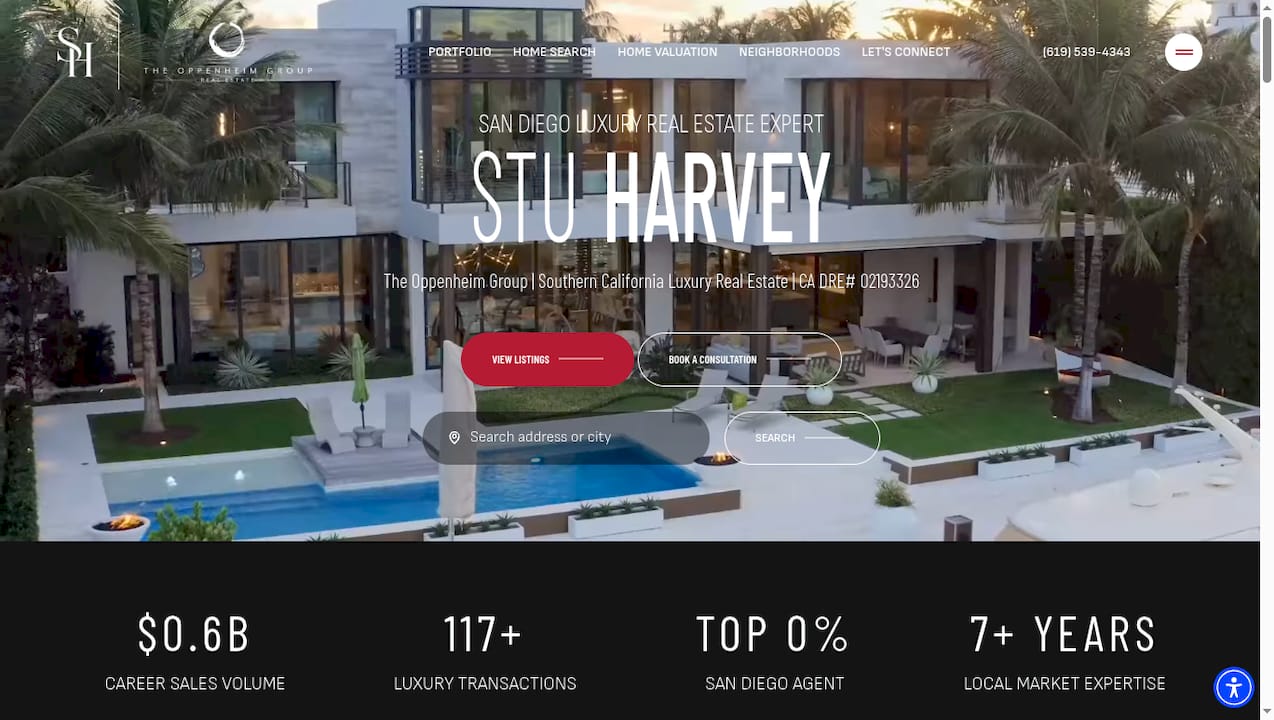
At Stuharveyestates, transparency is not a talking point. It shapes an approach informed by more than 15 years of real estate experience and 250+ personal career transactions. Stu Harvey and his team provide every client with documented processes, clear fee structures, and market analysis grounded in real data, not optimism. Whether you are buying in Pacific Beach or preparing to list a property in La Jolla, the team’s approach is built around the same principle: you deserve answers, not reassurances. Browse current luxury listings and connect with a team that treats your questions as the starting point, not an obstacle.
FAQ
What are the best questions for a luxury real estate agent?
Ask about recent transaction volume in your price range, their week-by-week listing process, buyer vetting practices, dual agency policies, and how they handle deals with no comparable sales. These questions expose process and judgment, not just credentials.
How do I evaluate a luxury agent’s market knowledge?
Request their pricing methodology for unique properties, ask about current buyer behavior trends in your target neighborhood, and ask them to walk you through their data sources beyond standard comparable sales.
What is dual agency and why does it matter in luxury sales?
Dual agency occurs when one agent represents both the buyer and seller in the same transaction. It creates a conflict of interest that can compromise negotiation outcomes, so clarifying this upfront is a standard part of any responsible luxury real estate inquiry.
How should luxury agents vet buyers before showings?
Qualified luxury agents require proof of funds or mortgage pre-approval before scheduling any showing. This protects seller privacy and filters out unqualified or curiosity-driven visitors from accessing high-value properties.
Why are scenario questions better than standard interview questions?
Scenario interviews expose decision-making and judgment in ways that reviewing an agent’s bio cannot. They force the agent to demonstrate their actual process rather than recite prepared answers about their experience.