
Most agents walk into a high-end listing appointment with a polished deck and a rehearsed pitch. Most agents lose. A luxury listing presentation is not a performance. It is a structured, personalized advisory conversation designed to demonstrate deep market expertise, build immediate trust, and show a seller exactly why their $5M property requires a fundamentally different approach than anything generic. Understanding what goes into one, and why it works, separates agents who consistently win luxury listings from those who remain perpetually in second place.
Table of Contents
Key takeaways
| Point | Details |
|---|---|
| It is an advisory conversation | A luxury listing presentation centers on seller needs, not agent credentials or a rehearsed pitch. |
| Nine components form the foundation | From your introduction to a confident call to action, every element must be deliberate and property-specific. |
| Storytelling beats statistics alone | Pairing live market data with a narrative tailored to the seller builds emotional confidence and pricing clarity. |
| Marketing quality signals your value | Cinematic video, drone footage, and branded materials tell sellers you treat their listing as a premium asset. |
| Preparation determines the outcome | Researching the seller, neighborhood history, and price expectations before you arrive controls the entire appointment. |
What a luxury listing presentation really is
A luxury listing presentation is a formal, structured meeting between a real estate agent and a prospective high-end seller, where the agent demonstrates their qualifications, market knowledge, and custom marketing plan to earn the right to represent the property. That definition is accurate but incomplete. The more useful framing: it is the most important sales tool in a luxury agent’s business, and sellers interview 2-3 agents before selecting one. That means every appointment is a direct competition, and the difference between winning and losing often comes down to preparation and personalization, not pedigree.
What separates a luxury presentation from a standard one is the level of specificity required. Generic market reports, templated marketing slides, and credential-heavy introductions do not move sophisticated sellers. These clients have often sold high-value assets before. They recognize effort, and they recognize copy-paste work just as fast. A luxury real estate presentation must speak directly to this property, this seller, and this neighborhood, with data and marketing strategies calibrated accordingly.
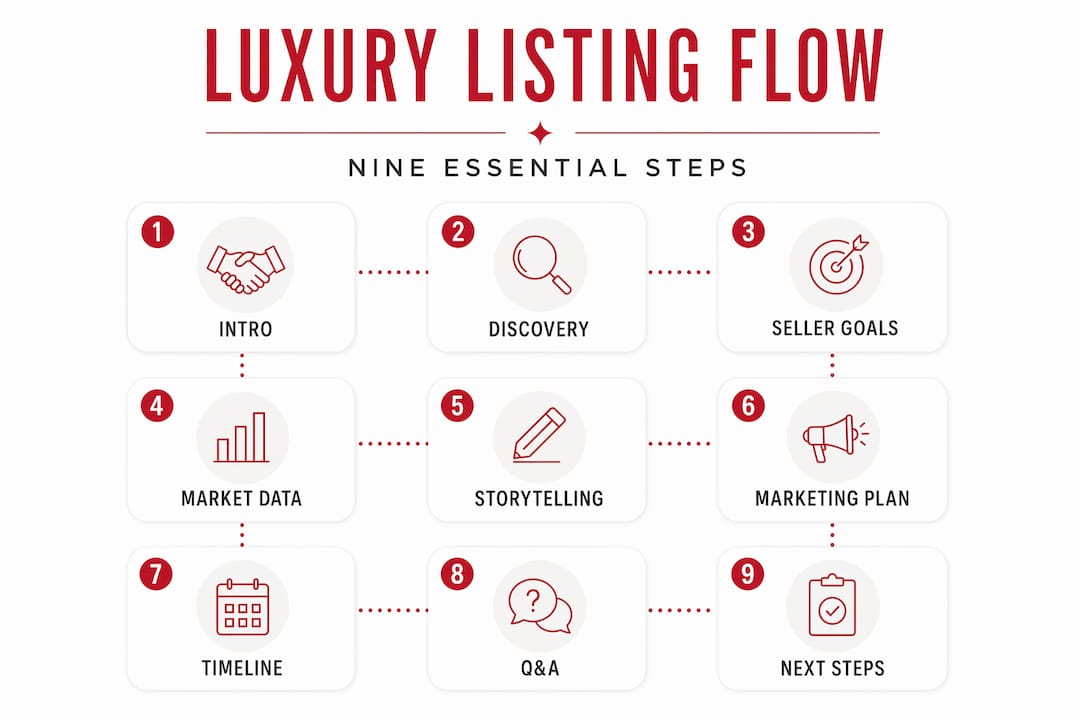
The structure that works best in 2026 follows nine deliberate components. Understanding those components is where your preparation starts.
Core components of a winning presentation
A well-structured presentation moves through each of the following stages with intention:
-
Personalized introduction: Connect your background to this specific property type and neighborhood, not your general resume.
-
Local luxury market data: Present current comparables pulled from live MLS data, including at least 3 to 5 recent sales, to anchor the conversation in reality.
-
Step-by-step selling process: Walk the seller through what actually happens from listing day to closing, including timelines, inspections, and documentation.
-
Pre-listing preparation: Cover staging, repairs, professional photography scheduling, and any work that needs to happen before the property goes live.
-
Data-driven pricing strategy: Present a comparative market analysis with a clear rationale, not just a number that sounds appealing.
-
Custom marketing plan: This section alone can win the listing. Describe exactly where and how the property will be marketed, to whom, and with what visual assets.
-
Showing and communication expectations: Set boundaries and protocols so the seller knows what to expect and when.
-
Negotiation approach: Explain how you handle multiple offers, low-ball offers, and contingencies with concrete examples.
-
Call to action: Close with confidence. Ask for the listing directly.
Pro Tip: Send a pre-listing package 24 to 48 hours before the appointment. This lets the seller arrive prepared and shows operational professionalism before you say a single word.
| Presentation element | Standard approach | Luxury approach |
|---|---|---|
| Market data | Recent sold prices | Live MLS comps with 30-year neighborhood trend context |
| Marketing plan | MLS + Zillow syndication | Cinematic video, architectural photography, targeted paid ads |
| Pricing strategy | Agent’s best estimate | CMA with 3-5 specific comps and absorption rate analysis |
| Introduction | Career summary | Story tied to this property type and community |
The coaching approach that separates top agents
The most common mistake in luxury listing presentations is treating the appointment like an audition. Traditional presentations position agents as performers auditioning for a role, leading with achievements and hoping the seller applauds. Darryl Davis describes this framing as a fundamental error, one that keeps even experienced agents stuck at lower conversion rates.
The alternative is a coaching approach. You lead with curiosity. You spend the first 15 to 20 minutes asking diagnostic questions about what matters most to the seller. What is driving the sale? Is there a timeline that cannot move? Are there concerns about privacy during showings? Has a previous agent ever disappointed them and why?
Those questions do three things simultaneously. They give you information you cannot get anywhere else. They demonstrate that you genuinely listen. And they allow you to tailor the second half of the presentation entirely to what the seller just told you. When your pricing strategy references a concern the seller raised five minutes earlier, the room shifts.
Josh Flagg, one of the top-producing luxury agents in the country, advises presenting the seller’s story first rather than leading with your own credentials. Position yourself as the guide to their outcome, not the hero of your own career narrative. That shift, subtle in language but significant in effect, changes how sellers perceive your entire presentation.
Pro Tip: Prepare five to seven diagnostic questions before the appointment, written out in advance. These should address motivation, timeline, pricing expectations, and any past experiences with agents. Having them ready prevents you from filling silence with your own pitch.
Market data and storytelling working together
Data without context is just numbers. The agents who win luxury listings understand that a well-built CMA is not just a pricing tool; it is the foundation of a narrative about where this property sits in the market and why now is the right time to sell at a specific price.
Start your market analysis section with the seller’s story, not the spreadsheet. What makes this property distinct? What has the neighborhood done over the past decade? Are comparable properties sitting or selling? Use current MLS data paired with historical neighborhood trends to give the seller a full picture, not a snapshot. That depth signals that you understand their asset better than any agent who arrived with a one-page print-out.
“There is no neutral ground. Every aspect of your presentation either builds or erodes trust with luxury sellers.” — Luxury Presence
This is why property-specific storytelling matters so much. When you open a section by describing the architectural history of a Rancho Santa Fe estate, or the specific buyer profile that typically purchases in La Jolla Farms, you demonstrate local depth that no template can fake. Sellers feel the difference between an agent who prepared for this property and one who prepared a deck.
Pro Tip: Before the appointment, research the neighborhood’s sales history and call the seller to gather their price expectations. Knowing their number in advance lets you build a data narrative that either validates or gently reframes their thinking before you sit down together.
High-end marketing tactics that matter to sellers
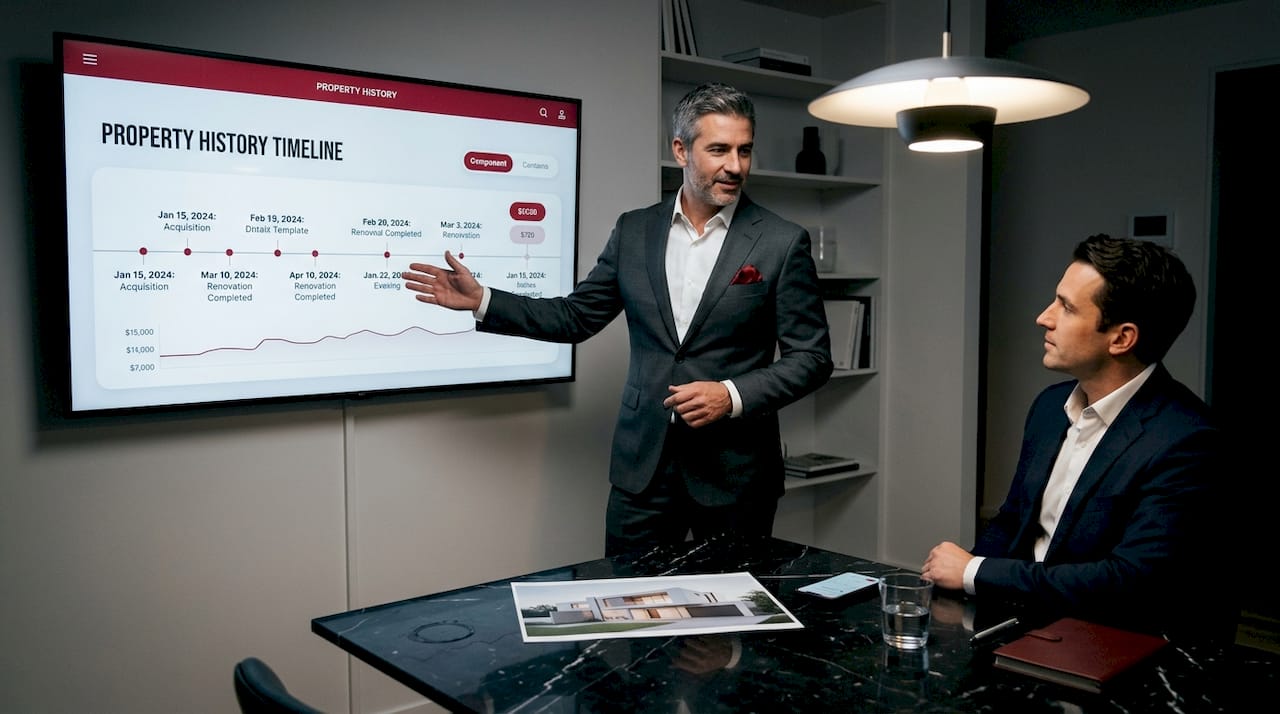
Luxury sellers are not comparing you to discount agents. They are comparing you to other luxury agents, many of whom also promise exceptional marketing. The difference has to be visible and specific. High-end marketing for luxury listings includes cinematic video production, architectural photography, drone footage, and bespoke strategies that put the property in front of qualified buyers rather than just generating clicks.
Your presentation must show sellers exactly what this looks like in practice:
-
Cinematic walkthrough video with professional lighting and original soundtrack
-
Drone footage capturing the property’s relationship to surrounding land, views, or coastline
-
Architectural photography with a minimum of 40 edited images from multiple perspectives
-
Targeted digital advertising toward buyer profiles based on income, search behavior, and geography
-
Placement in luxury print publications and international networks for $5M+ properties
-
Consistent visual branding across listing materials, your website, and social media channels
The goal is not to impress sellers with a long list. It is to show them a plan with a clear target audience. Who is actually going to buy this property? What platforms do those buyers use? When you segment your marketing strategy by buyer profile, you demonstrate a level of thinking that generic agents never reach. Current San Diego luxury market trends show that lifestyle-driven buyers require lifestyle-oriented marketing. Your presentation needs to reflect that reality.
One often-overlooked element: timing. Getting the property onto MLS within 48 hours of going live prevents the “what’s wrong with it” perception that builds when listings linger in pre-market limbo. Include your launch timeline explicitly in the presentation.
Tips for preparing and delivering effectively
Preparation is where luxury listing presentations are won or lost, long before you walk through the door. Here is what the best agents do differently:
-
Research the property and seller before any contact. Pull the property’s full history, review the seller’s LinkedIn or public profile, and understand the neighborhood’s three-decade sales context. Deep pre-appointment research controls the narrative and strengthens your position on pricing and strategy.
-
Send your pre-listing package 24 to 48 hours early. Include your bio, a market overview, and sample marketing materials. This primes the seller and signals a level of organization that competitors rarely match.
-
Silence your phone completely before entering the property. This sounds minor. In luxury presentations, it is not. Full presence signals respect and focus.
-
Use MLS-integrated presentation tools. Branded platforms that auto-populate comparables save hours on preparation and maintain visual consistency across every deck you build. Over 30% of top agents now use these tools as a standard part of their workflow.
-
Prepare for objections before they arise. If the seller mentions a higher price expectation than your CMA supports, have your reframing language ready. “Here is what the data shows, and here is what we can do to capture maximum value within that reality” is a much stronger answer than a pause and a retreat.
-
Ask for the listing directly. A clear call to action with genuine confidence is the single most important close in any luxury presentation. State your ask plainly and let the silence after it work for you.
Pro Tip: Practice your call to action out loud before the appointment. Most agents stumble here because they have not rehearsed it as many times as the rest of their presentation. The close should feel as natural as the introduction.
My perspective on what actually works
I have sat across from hundreds of luxury sellers in Southern California over 15 years. And I will tell you directly: the agents who consistently lose listings are the ones who spent the most time perfecting their deck and the least time thinking about the seller across the table.
The shift I made years ago was treating every appointment as a consultation first and a presentation second. I walk in with questions before I open any slides. I want to know what keeps the seller up at night about this sale. I want to know if they have concerns about their home being walked through by strangers. I want to understand their timeline in detail, because a seller who needs to close in 60 days has different priorities than one who can wait for the right buyer.
When you do this, something genuinely useful happens. The second half of your presentation stops being generic and starts being surgical. You are not showing them your standard marketing plan. You are showing them the marketing plan you built for this property, using the concerns they just raised, in the exact language that matters to them.
What I have learned from working with some of the most discerning sellers in La Jolla and Rancho Santa Fe is that trust is earned in the first ten minutes, mostly through listening. Credentials matter. Track record matters. But neither matters as much as making the seller feel that you are genuinely focused on their outcome, not your commission. Experiment with front-loading your questions. Give yourself permission to say less and hear more. The results will change.
— Stu
Work with Stuharveyestates for your luxury listing
If you are an agent refining your approach, or a seller preparing for the market in San Diego, seeing what a truly personalized luxury listing presentation looks like in practice makes all the difference. At Stuharveyestates, every listing engagement starts with exactly the kind of diagnostic consultation described here. Stu Harvey brings more than 15 years of real estate experience and 250+ personal career transactions to his work with sellers, with a process tailored to each property. Browse the active luxury listings to see the standard of marketing applied across each property, and explore neighborhood guides for communities like Coronado to understand how deep local knowledge shapes every presentation. Contact Stuharveyestates directly to discuss your listing goals.
FAQ
What is a luxury listing presentation?
A luxury listing presentation is a structured meeting where a real estate agent presents their market expertise, pricing strategy, and custom marketing plan to earn the right to represent a high-end property. Unlike standard presentations, it centers on personalized storytelling and advisory conversation rather than generic pitches.
What should you include in a luxury listing presentation?
A strong luxury listing presentation includes a personalized introduction, live market comparables, a detailed pricing strategy, a custom marketing plan with high-end visuals, showing protocols, a negotiation approach, and a direct call to action. A pre-listing package should be sent 24 to 48 hours before the meeting.
How long should the first part of a luxury listing appointment be?
Top agents spend the first 15 to 20 minutes asking diagnostic questions about seller motivation, timeline, and concerns before presenting any data or marketing materials. This coaching approach builds trust and allows the rest of the presentation to be tailored specifically to the seller.
Why does storytelling matter in luxury listing presentations?
Storytelling connects market data to a seller’s specific situation, creating an emotional narrative around pricing and timing rather than leaving the seller with abstract numbers. Josh Flagg credits property-specific storytelling as a key differentiator for winning high-end listings consistently.
How do you win more luxury listing presentations?
Prepare more deeply than your competition by researching neighborhood history, understanding the seller’s expectations before the appointment, and using branded MLS-integrated tools to build property-specific decks quickly. Then lead with questions, not slides. Sellers who feel genuinely heard are far more likely to sign.