
Pricing strategy is the single most powerful lever a luxury home seller controls. Set the price right, and qualified buyers compete. Set it wrong, and even a spectacular property sits. The industry standard for optimal pricing places the list price within 2–3% of the expected final sale price. That narrow window is not arbitrary. It reflects how sophisticated luxury buyers respond to perceived value, and why pricing strategy affects luxury home sale outcomes more than staging, photography, or marketing combined. Stu Harvey brings 15+ years of real estate experience and 250+ personal career transactions to his work with buyers and sellers.
Why pricing strategy affects luxury home sales from day one
The list price is a psychological anchor. Buyers and their agents form an immediate opinion about a property’s value the moment it hits the market. That first impression is nearly impossible to reverse. Optimal list prices for luxury homes fall within 2–3% of the target final sale price, and homes priced inside that window sell faster and at better prices than those priced outside it.
The first week a luxury listing is active is its most valuable window. Serious buyers with saved searches and active agents receive alerts immediately. Showing requests cluster in days one through seven. A price that feels even slightly inflated causes those buyers to pass, often permanently, because they assume the seller is unrealistic or the property has a hidden flaw.

The impact of pricing on luxury sales compounds quickly. A home that sits for 30 days without an offer signals to the market that something is wrong. Buyers who see a listing age begin to wonder what others have already rejected. That perception is hard to shake even after a price reduction.
How does pricing influence buyer behavior and market attention?
Luxury buyers are not impulsive. They study the market, compare properties across multiple neighborhoods, and often consult financial advisors before making an offer. This analytical rigor means they notice pricing signals that casual buyers might miss.
Three specific behaviors shift when a luxury home is overpriced:
-
Showing volume drops. Buyers and agents filter out listings that appear overpriced relative to recent comparable sales. Fewer showings mean fewer offers.
-
Negotiating leverage shifts. When a listing sits, buyers gain the upper hand. They know the seller is under pressure, and they offer less aggressively.
-
Listing stigma sets in. Overpriced luxury homes become “leftover” listings with stagnated momentum and lower final sale prices compared to properly priced homes. Miami luxury market analysis from 2026 confirms this pattern directly.
The opposite effect occurs when pricing is calibrated correctly. A well-priced luxury home creates urgency. Buyers who have been watching the market recognize the value immediately. Multiple offers become possible, and the seller negotiates from strength rather than desperation.
Pro Tip: Track the original list-price-to-final-sale-price ratio when evaluating an agent’s track record. A tight ratio and short market time signal accurate pricing. A large gap signals a history of overpricing.
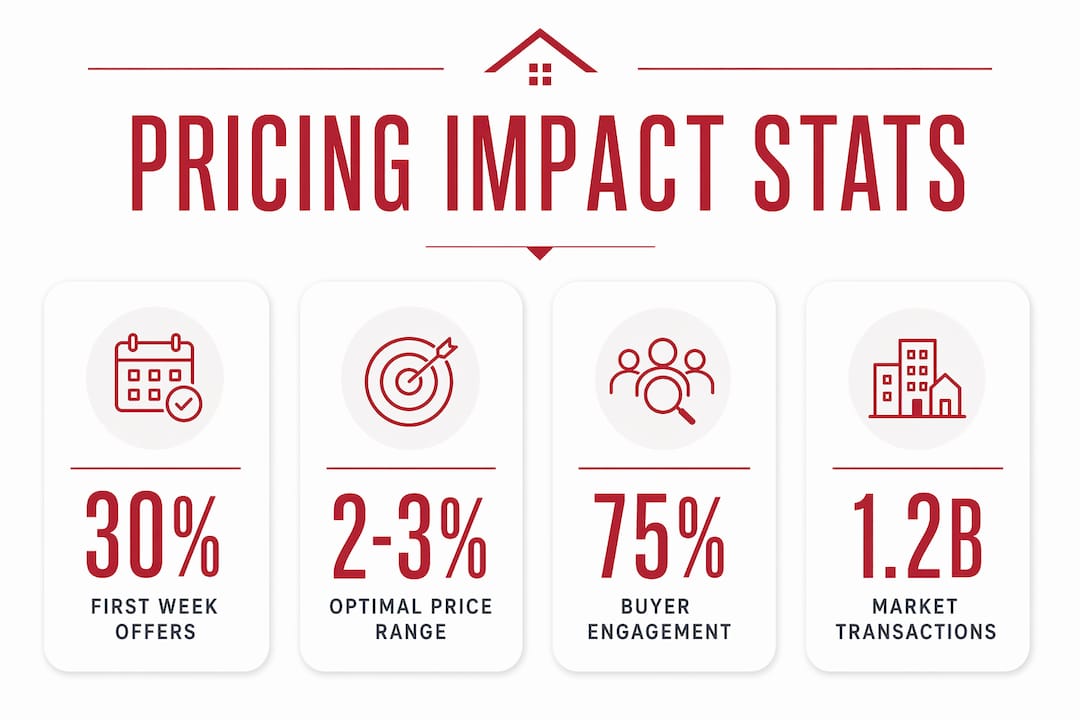
The original list-to-sale ratio is the most honest metric for evaluating agent pricing effectiveness. It reveals whether an agent prices to sell or prices to win the listing and reduce later.
What market factors shape effective luxury home pricing strategies?
Luxury home pricing does not happen in a vacuum. Macroeconomic conditions, local inventory levels, and buyer expectations all shape what a given property can realistically command.
The global luxury sector is growing at a modest 2–4% rate in 2026. That market normalization means sellers cannot rely on a rising tide to justify aggressive pricing. Buyers are more selective, and they expect clear evidence of value before they engage seriously.
Interest rates and liquidity affect how luxury buyers structure purchases. Even cash buyers, who dominate the upper end of the market, factor in opportunity cost. When capital is expensive elsewhere, buyers push back harder on prices they consider inflated.
Local inventory is equally decisive. In markets with limited supply, like coastal San Diego, sellers have more pricing power. In markets with abundant comparable listings, buyers have options and will wait for a seller who prices realistically. Understanding San Diego luxury trends in 2026 requires reading both the data and the buyer sentiment behind it.
Luxury buyers also demand confirmation of value through what market experts call “scarcity by category.” A property with a zoning-protected ocean view or documented architectural uniqueness can justify a premium. A property without those differentiators cannot price as if it has them.
What are common pitfalls in pricing luxury homes?
Emotional pricing is the most common and most costly mistake luxury sellers make. A seller who has lived in a home for 20 years attaches personal value to it that the market does not share. That emotional premium, when baked into the list price, creates an immediate disconnect with buyers.
The second major pitfall is ignoring real-time market feedback. Ignoring showing counts and agent comments causes listings to become stale, which forces larger concessions later. A home that generates 12 showings and zero offers in the first two weeks is sending a clear message. Sellers who dismiss that signal pay for it at closing.
Common pricing mistakes that hurt luxury sellers include:
-
Setting the list price based on what a neighbor sold for two years ago, without adjusting for current conditions
-
Refusing to reduce after 45 days of low activity because the seller “knows what the home is worth”
-
Pricing to leave room for negotiation in a market where buyers interpret high prices as disqualifying, not as an opening bid
-
Skipping a professional appraisal or comparative market analysis before listing
Extended market time is the most visible consequence of these mistakes. Every week a luxury home sits unsold, its perceived value drops in the eyes of active buyers. A price reduction after 60 days rarely recovers the momentum lost in the first two weeks.
Pro Tip: If showing activity is strong but offers are absent, the price is close but not right. If showings are sparse, the price is the problem, not the marketing.
How should sellers apply pricing strategies in competitive luxury markets?
Practical pricing for luxury homes follows a clear sequence. Start with a private internal estimate of the final sale price before setting the list price. Experienced agents make this estimate by blending hard data, including comparable sales and absorption rates, with judgment built from years of market experience. That internal number becomes the anchor for every subsequent pricing decision.
The practical steps for setting a defensible luxury list price are:
-
Commission a detailed comparative market analysis. Pull recent sales within the same price tier, neighborhood, and property type. Adjust for square footage, lot size, condition, and unique features.
-
Set the list price within 2–3% of the internal sale price estimate. This range captures buyer attention without leaving money on the table or triggering the “overpriced” filter.
-
Document every differentiator. Aspirational pricing works only when justified by documented differentiators and matched by compelling presentation. List the features that make the property scarce: views, architecture, land, provenance.
-
Build a staged pricing schedule before listing. Decide in advance at what point and by how much you will reduce if the market does not respond. Having this plan removes emotion from the decision later.
-
Collect and act on feedback within 14 days. Agent comments from showings are market intelligence. Use them to refine the price or the presentation before momentum is lost.
The list price as a strategic instrument works best when it blends data analysis with buyer feedback, not as an emotional wish or a ceiling. Sellers who treat the list price as a starting point for a conversation rather than a statement of value consistently achieve better outcomes.
For sellers preparing a property in competitive coastal markets, aligning list price with market expectations from the first day of listing is the single most effective way to maximize buyer interest and final sale price.
Key Takeaways
Pricing strategy is the primary driver of luxury home sale speed, buyer competition, and final sale price, and sellers who price within 2–3% of market value consistently outperform those who do not.
| Point | Details |
|---|---|
| Price within 2–3% of target | Homes priced in this range attract more buyers and sell faster at stronger prices. |
| First week is critical | Luxury buyer attention peaks in days one through seven; overpricing kills that window permanently. |
| Emotional pricing costs money | List prices based on personal attachment rather than market data lead to longer market times and larger concessions. |
| Document every differentiator | Aspirational pricing only holds when unique features are verified and prominently presented in all marketing. |
| Act on feedback within 14 days | Showing activity and agent comments are real-time market signals; ignoring them accelerates listing fatigue. |
Pricing is a strategy, not a wish
A pricing strategy should account for recent comparable sales, current competition, buyer demand, and the property’s individual features. The sellers who win treat the list price as a tool. They ask hard questions: What have comparable homes actually sold for? What does the buyer pool look like right now? What makes this property genuinely scarce?
The sellers who struggle treat pricing as a statement of how much they love their home. That is understandable. It is also expensive. I have seen beautifully staged, professionally photographed properties sit for 90 days because the list price was $400,000 above where the market was willing to go. The eventual sale price, after two reductions and a negotiation from a position of weakness, was lower than where the home should have been priced on day one.
The market in La Jolla, Rancho Santa Fe, and coastal San Diego rewards sellers who price with discipline. Buyers in these markets are sophisticated. They have seen the comps. They know when a price is aspirational without justification, and they move on. The homes that generate multiple offers and close above list price are almost always the ones that were priced right from the start, not the ones that chased the market down with reductions.
My advice is direct: request the original list-to-sale ratio from any agent you consider hiring. If their listings consistently close far below the original list price, that is a pricing problem, not a market problem. Work with someone who prices to sell, not to impress you at the listing presentation.
— Stu
Work with Stuharveyestates on your luxury sale
Pricing a luxury home correctly requires more than a number. It requires deep market knowledge, real buyer data, and the discipline to hold a strategy under pressure.
Stu Harvey’s personal career includes 250+ transactions and 15+ years of real estate experience. Whether you are preparing to list in La Jolla, Rancho Santa Fe, or anywhere along the coast, the team at Stuharveyestates builds pricing strategies grounded in current data and honest market feedback. Browse current luxury listings to see how well-priced properties are positioned and presented, or reach out directly for a personalized home valuation built around your property’s specific strengths.
FAQ
Why does pricing strategy affect luxury home sales so much?
Pricing strategy sets the buyer’s first impression and determines whether a property enters the market with urgency or skepticism. Homes priced within 2–3% of their expected sale price attract more qualified buyers and generate stronger offers in the critical first week.
What happens when a luxury home is overpriced?
Overpriced luxury listings accumulate market time, develop a “leftover” stigma, and ultimately sell for less than they would have if priced correctly from the start. Buyers interpret a long market time as evidence that other buyers have already rejected the property.
How do luxury buyers evaluate whether a price is justified?
Luxury buyers analyze comparable sales, absorption rates, and unique property features. They expect sellers to document differentiators like protected views or architectural rarity to justify any premium above recent comparable sales.
What is the original list-to-sale ratio and why does it matter?
The original list-to-sale ratio compares the first list price to the final sale price. A tight ratio signals accurate pricing; a large gap signals the property was overpriced and required reductions, which weakens the seller’s negotiating position.
When should a seller reduce the price on a luxury listing?
A seller should reduce the price if showing activity is low or if multiple showings produce no offers within the first 14 days. Acting on that signal quickly preserves momentum and avoids the deeper concessions that come with extended market time.