
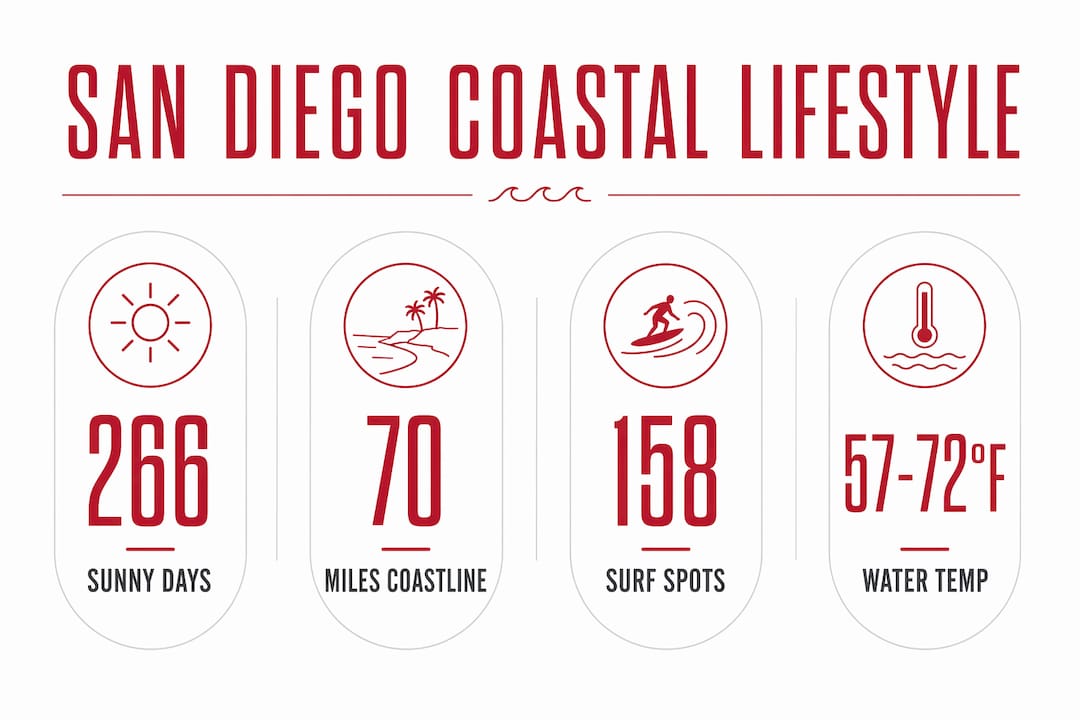
San Diego's coastal lifestyle is defined by a locals-first culture, roughly 70 miles of accessible coastline, and 266 sunny days annually that make outdoor living a daily reality rather than a weekend escape. This is not a beach city built around tourism. It is a place where multigenerational surf families share breaks with beginners, where Baja-influenced food culture shapes the social fabric, and where the pace of life runs deliberately slower than neighboring Los Angeles. Understanding why San Diego coastal lifestyle is distinctive requires looking past the postcard images and into the rhythms that actual residents live every day.
Why San Diego's coastal lifestyle is distinctive: climate and geography
San Diego's weather is the foundation everything else is built on. The city averages 266 sunny days per year, and mild winter temperatures keep beaches usable well beyond the summer season. That consistency changes how residents relate to outdoor space. A morning run along the shore in january feels as natural as one in july.
The coastline itself spans approximately 70 miles, stretching from the Mexican border north through communities like Imperial Beach, Ocean Beach, Pacific Beach, La Jolla, Del Mar, and Carlsbad. That geographic range means no single beach defines the experience. Each stretch of coast attracts a different crowd, supports different activities, and carries a different atmosphere.
Water temperature is a key factor that separates San Diego from other California coastal cities. Water temps typically range 57–72°F throughout the year. That range is cold enough to require a wetsuit in winter but warm enough to support year-round surfing, paddleboarding, and open-water swimming. Residents do not pack away their boards when the calendar turns to october.
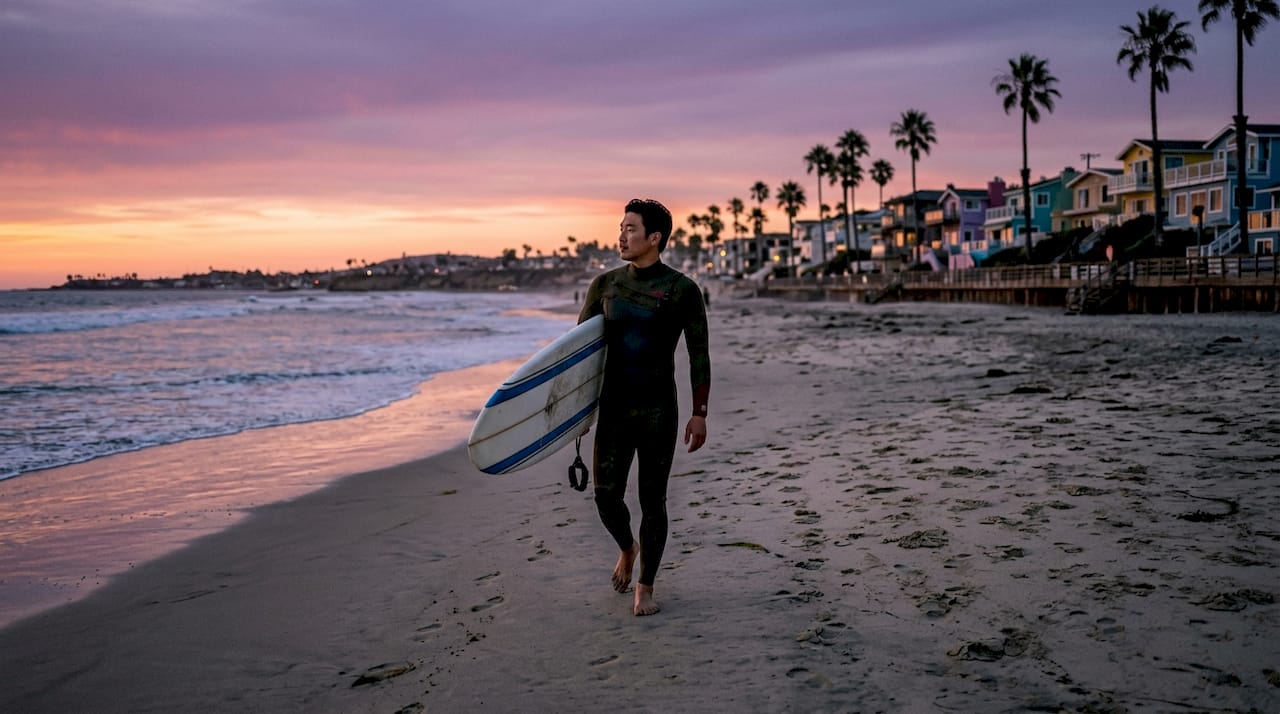
Pro Tip: Arrive at any west-facing San Diego beach 20–30 minutes after sunset to experience the Blue Hour. The Blue Hour light conditions turn the water a deep sapphire and create a visual and atmospheric quality that photographers and longtime locals treat as one of the coast's best-kept secrets.
The west-facing orientation of San Diego's coastline also means the sun sets directly over the ocean. That single geographic fact produces evening light that other California coastal cities simply do not get in the same way. It shapes everything from outdoor dining culture to the informal gathering rituals that define beachfront community life here.
How does San Diego's surf culture shape daily life?
San Diego has 158 recognized surf spots categorized by skill level: 68 beginner, 60 intermediate, and 30 advanced. That breakdown matters because it means surf culture here is not exclusive. A first-timer at Mission Beach and a seasoned local at Black's Beach are both participating in the same broader culture, just at different points on the spectrum.
Surf culture in San Diego functions as a lifestyle framework, not just a sport. It sets the pace of mornings, influences what people eat before work, and shapes how neighborhoods develop their identities. The culture is also multigenerational in a way that distinguishes it from trendier surf markets.
At spots like Windansea Beach, the Windansea Surf Shack stands as a historic landmark that locals treat as sacred ground. The unwritten rules here are real: wait your turn, read the lineup, and respect the people who have been surfing that break for decades. Newcomers who ignore those protocols do not last long in the water.
Respecting local surf protocols is not optional at San Diego's iconic breaks. It is the price of admission to a community that values tradition and earned respect over visibility.
Key surf culture behaviors that define the San Diego experience:
- Drop-in rules are enforced socially. The surfer closest to the peak has the right of way. Violating this is the fastest way to lose credibility in the water.
- Dawn patrol is a real practice. Many locals surf before work, arriving at first light to catch uncrowded waves. It is a ritual that structures the entire day.
- Leash etiquette matters. Losing a board in a crowded break is dangerous. Locals notice who is in control of their equipment.
- Silence in the lineup is normal. San Diego surf culture is not performative. Experienced surfers often sit quietly, read the ocean, and wait.
Pro Tip: If you are new to a San Diego break, sit on the shoulder for the first session. Watch how locals position themselves, how they communicate, and how they read the sets. Entering respectfully earns you far more goodwill than paddling straight to the peak.
What cultural elements make San Diego's coastal community unique?
San Diego's cultural pace is slower and more deliberate than Los Angeles, and that difference is not accidental. It reflects a community that has chosen to prioritize livability over visibility. Beaches here are less crowded outside of peak summer, and weekday mornings often produce nearly empty shores. That accessibility reinforces the locals-first atmosphere that residents actively protect.
The Baja influence on San Diego's food and social culture is another defining feature. Fish tacos, craft breweries, and neighborhood taquerias are not trends here. They are institutions. The cultural and culinary connection to Baja California gives San Diego a cross-border identity that no other major American coastal city shares.
Four cultural pillars that separate San Diego's coastal living from other California markets:
- Locals-first beach access. Residents treat the coast as a daily resource, not a destination. That mindset produces a protective, community-oriented relationship with public beach space.
- Baja-influenced food culture. The proximity to Mexico shapes menus, social rituals, and the general openness to cross-cultural exchange in ways that feel organic rather than curated.
- Neighborhood distinctiveness. Each coastal community maintains its own identity. Ocean Beach feels nothing like La Jolla. That variety creates genuine choice for residents rather than a homogenized beach city experience.
- Sustainable lifestyle orientation. Farmers markets, bike paths, and conservation-minded community groups are woven into coastal neighborhood life across San Diego.
The regional economy supports this lifestyle mix. Strong sectors in healthcare, life sciences, defense, and tourism create a diverse workforce that values outdoor access alongside professional opportunity. Residents are not choosing between career and coast. They are building lives that include both.
What makes each San Diego coastal neighborhood unique?
San Diego's coastal communities each carry a distinct personality. La Jolla, Pacific Beach, Ocean Beach, and Coronado represent four entirely different versions of coastal living, and that range is one of the region's greatest assets.
La Jolla sits at the top of the prestige spectrum. Dramatic cliffs, protected coves, and world-class dining define the neighborhood. It attracts buyers who want luxury coastal living with a quieter, more refined atmosphere. Pacific Beach runs younger and louder, with a dense bar and restaurant scene along Garnet Avenue and a beach culture built around high energy and social connection.
Ocean Beach operates on its own frequency entirely. It is San Diego's most deliberately counterculture coastal neighborhood, with an independent business community, a strong local identity, and a resistance to the kind of development that has changed other beach towns. Coronado sits across the bay on a peninsula and feels like a self-contained island community, with wide beaches, historic architecture, and a pace that is genuinely unhurried.
| Neighborhood | Vibe | Best for | Housing style |
|---|---|---|---|
| La Jolla | Refined, upscale | Luxury buyers, families | Single-family estates, condos |
| Pacific Beach | Energetic, social | Young professionals | Condos, bungalows |
| Ocean Beach | Laid-back, independent | Creatives, long-term locals | Cottages, mixed residential |
| Coronado | Quiet, historic | Families, retirees | Single-family homes, estates |
| Del Mar | Relaxed, affluent | Professionals, equestrians | Luxury homes, beach cottages |
Relocation decisions in San Diego consistently come down to commute, neighborhood fit, and economic access rather than ocean proximity alone. The coast is a given. The real question is which version of coastal living matches your actual life.
Key Takeaways
San Diego's coastal lifestyle is distinctive because it combines year-round outdoor access, a locals-first culture, multigenerational surf traditions, and a Baja-influenced community identity that no other American beach city replicates.
| Point | Details |
|---|---|
| Climate drives daily outdoor living | With 266 sunny days annually, outdoor and beach activity is a year-round routine, not a seasonal event. |
| Surf culture is a lifestyle framework | 158 recognized surf spots support all skill levels, and local protocols create a community built on earned respect. |
| Cultural pace is deliberately slower | San Diego's beach culture prioritizes locals over tourists, producing manageable crowds and authentic community life. |
| Neighborhoods offer genuine variety | La Jolla, Pacific Beach, Ocean Beach, Coronado, and Del Mar each carry distinct identities and housing options. |
| Relocation requires more than ocean views | Commute, neighborhood fit, and economic access shape long-term satisfaction more than proximity to the water alone. |
What I have learned from 15 years of San Diego coastal real estate
People consistently underestimate how much neighborhood personality matters when they move to the San Diego coast. They focus on the view and the weather, which are real and significant. But the lifestyle you actually live is determined by the community around you, not the distance to the waterline.
I have watched buyers fall in love with La Jolla's cliffs and then realize six months later that they wanted the energy of Pacific Beach. I have seen the opposite happen too. The postcard version of San Diego coastal living is real, but it is not the same in every zip code. Getting that match right is the work.
The surf culture piece surprises newcomers most. San Diego's beach communities have unwritten rules that long-term residents take seriously. Ignoring them does not just create friction in the water. It creates friction with neighbors, local businesses, and the broader community. The people who integrate most successfully are the ones who arrive curious and patient rather than assuming the lifestyle will simply absorb them.
My honest observation after over 250 luxury transactions in this market: the clients who thrive here are the ones who treat coastal living as a practice, not a backdrop. They learn the rhythms of their neighborhood, they show up at the farmers market, they figure out which break suits their skill level, and they build relationships with the people who have been here for decades. That is what makes San Diego feel like home rather than a vacation that never ended.
— Stu
Finding your place in San Diego's coastal communities
Understanding the character of each coastal neighborhood is the first step toward finding a home that fits your actual life, not just your ideal image of it.
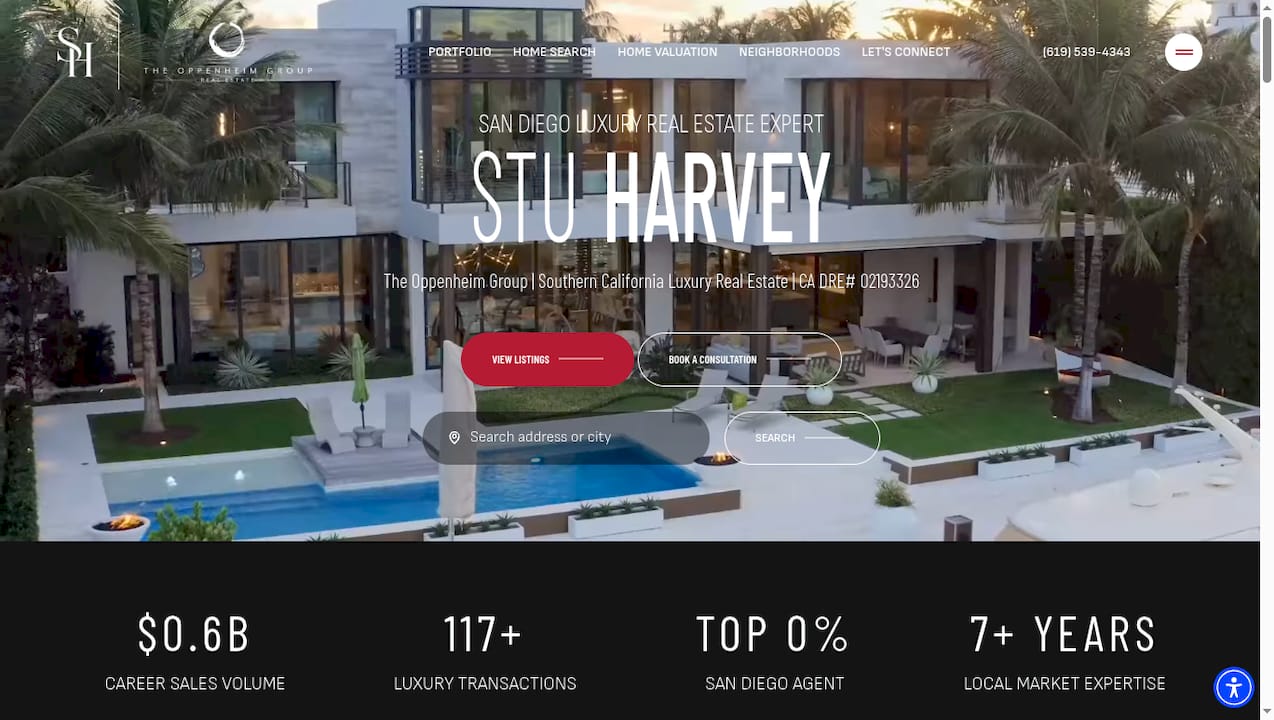
Stuharveyestates brings more than 15 years of San Diego coastal market experience and over $1.2 billion in sales to every client search. Whether you are drawn to the luxury cliffs of La Jolla, the relaxed energy of Pacific Beach, or the quiet prestige of Coronado, the right neighborhood match starts with knowing what each community actually offers. Browse current San Diego coastal listings or explore the full San Diego neighborhoods guide to start matching lifestyle to location with the clarity that only deep local knowledge provides.
FAQ
Why is San Diego's coastal lifestyle different from Los Angeles?
San Diego operates on a locals-first culture with manageable beach crowds and a slower pace, while Los Angeles leans toward a tourist-heavy, trend-driven beach scene. The Baja-influenced food culture and multigenerational surf traditions in San Diego create a more rooted, community-oriented coastal identity.
How many surf spots does San Diego have?
San Diego has 158 recognized surf spots, divided into 68 beginner, 60 intermediate, and 30 advanced breaks. That range supports a broad, inclusive surf community rather than an elite or exclusive one.
What is the best time of year to experience San Diego beach culture?
San Diego's coastal lifestyle is genuinely year-round. Water temperatures range 57–72°F, and the city averages 266 sunny days annually, which means beaches and outdoor activities remain accessible well outside the summer peak season.
Which San Diego coastal neighborhood is best for luxury living?
La Jolla is San Diego's premier luxury coastal neighborhood, known for dramatic cliffs, protected coves, and high-end dining and real estate. Coronado and Del Mar also offer upscale coastal living with distinct community characters.
What should newcomers know before moving to a San Diego coastal community?
Newcomers should prioritize neighborhood fit, commute, and economic access over ocean proximity alone. Respecting local surf protocols and community rhythms is equally important for integrating authentically into San Diego's coastal culture.