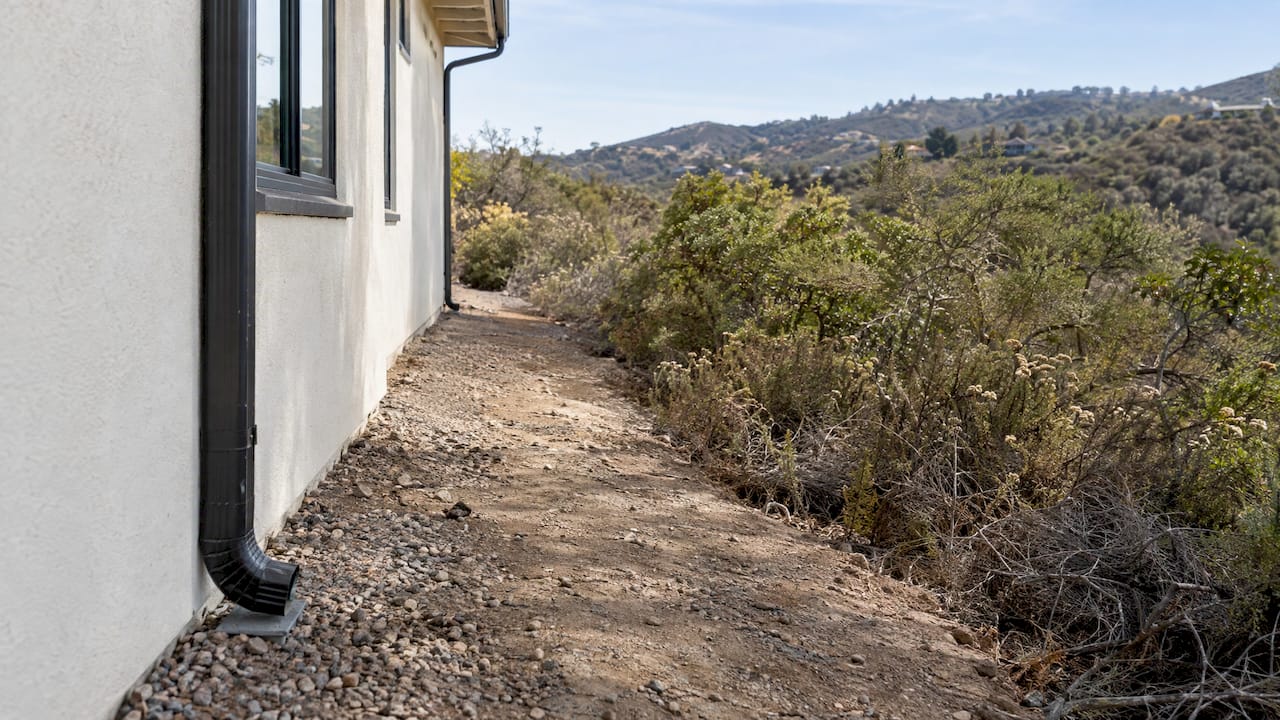
Brush management in San Diego means maintaining vegetation in set zones out to 100 feet from your home so a wildfire has less fuel to carry flames and embers to the structure. If you own a canyon-edge or hillside home, are buying one, or plan to sell one, the rules decide what you can clear, when you can clear it, what a buyer will ask for, and what a missed notice can cost. Our job at Stu Harvey Estates is to help buyers and sellers across San Diego make property decisions with the facts in front of them, and vegetation around a home is one of those facts.
This guide covers the zones, the calendar, the permits, the penalties and the transaction checks. It is general information, not legal or tax advice. For a specific parcel, confirm the rules with your fire authority, which differs between the City of San Diego, unincorporated County areas and individual fire districts.
TL;DR
- Defensible space runs in three zones out to 100 feet: Zone 0 (0 to 5 feet), Zone 1 (5 to 30 feet) and Zone 2 (30 to 100 feet).
- Zone 0 means no vegetation or flammable material within 5 feet of the structure, with hardscape instead. Existing owners are urged to meet the state guidelines by February 2027.
- Timing matters near habitat: in sensitive City habitats, clearing is allowed August 16 through January 31, and nesting season (February 15 to August 15) can require a biologist's survey.
- Violations in the unincorporated County can be misdemeanors, and each day counts as a separate offense.
- Sellers in high or very high fire hazard zones have disclosure duties under California law, so documented brush management helps a sale move cleanly.
Table of Contents
- What the three zones require
- Plants, water and soil: clearing the right way
- When you can clear: the habitat calendar
- Permits: City open space and unincorporated County
- What happens when brush management goes wrong
- What brush management costs
- If you are buying: what to check
- If you are selling: documentation that helps
- How Stu Harvey Estates can help
- FAQ
- Sources
What the three zones require
The City of San Diego's defensible space guide for property owners describes fuel modification in three bands measured from the structure. The point is to slow or stop a fire and give firefighters room to defend the home against flames and wind-driven embers.
| Zone | Distance from structure | What the City guide asks for |
|---|---|---|
| Zone 0 | 0 to 5 feet | Remove vegetation and flammable materials. Use concrete, gravel, pavers or bare soil. Properly maintained trees are allowed. |
| Zone 1 | 5 to 30 feet | Remove dead and dying plants. Keep plants under 4 feet, fire-resistant, watered and maintained. |
| Zone 2 | 30 to 100 feet | Thin 50% of vegetation, prune, and remove invasive and dead material. |
In Zone 1, the same guide asks that tree branches stay at least 5 feet from roofs and walls, and that the mature canopy sit at least 10 feet from the structure and 10 feet from other trees. Fire-resistant plants are those on the County's list of fire-resistant species.
Why Zone 0 is so strict
It surprises owners that even native plants and mulch are out within 5 feet. The City's 2025 code change report explains that the region's hot, dry climate and steep terrain create extreme wildfire conditions, and that embers, not direct flame, are the main ignition threat in that first 5 feet. A bed of bark next to a stucco wall is exactly where a drifting ember lands and smolders.
The same report proposes adopting the 2025 California Wildland-Urban Interface Code locally. It describes a standard 100-foot fuel-modification area with Zone 0 at 0 to 5 feet, and lets the Fire Code Official increase the area based on fuel or topography. Because that is a proposal, check the City's page for the adopted version before you plan work.
The Zone 0 dates
Per the City's guide, Zone 0 is required for new structures in Very High Fire Severity Zones after February 28, 2026. Existing owners should aim to meet the state's AB 3074 guidelines by February 2027. If you are buying an older hillside home in 2026 or 2027, treat Zone 0 as a project that may land on your to-do list soon after closing.
Plants, water and soil: clearing the right way
Brush management is thinning and maintenance, not stripping a lot bare. San Diego County Planning & Development Services says in its fire-resistant landscaping guidance that fire-resistant, irrigated landscaping is allowed in the first 50 feet, except in open space easements. In the outer 50 feet, natural vegetation should be thinned and cut back to no more than 6 inches above ground, and bare soil should be avoided to prevent erosion.
Two practical points from the County:
- Some cover must stay. Complete removal is counterproductive because roots and ground cover hold the slope. Do not disturb root systems.
- Water protects plants. As little as 1 inch of water per month keeps drought-adapted plants from readily burning. The County recommends deep watering at least monthly for drought-tolerant species (weekly for high-water plants), with permanent irrigation limited to the first 50 feet.
If you are redesigning planting beds near the house, this is where plant choice, irrigation layout and erosion control all meet. These backyard landscape and irrigation ideas can help you think through plant selection and watering, though your zone rules come first. San Diego's seasonal swings also stress landscaping, which we cover in our guide to how San Diego weather affects property features.
Annual upkeep
The City guide asks for annual pruning as plants grow back. A one-time clearing that is never repeated leaves a home out of compliance by the next fire season. When you view a hillside property, look at how far vegetation has regrown against the structure and along fence lines. That tells you how well it has been kept.
When you can clear: the habitat calendar
Much of San Diego's brush sits in or beside coastal sage-chaparral habitat that shelters protected species. The City's December 2024 announcement of brush management resources notes that work timing matters to minimize impacts on threatened species such as the California gnatcatcher and the western burrowing owl.
The City's defensible space guide sets the calendar:
- August 16 through January 31: brush clearing is allowed in sensitive City habitats.
- February 15 through August 15 (bird breeding season): for private property within or adjacent to the Multi-Habitat Planning Area (MHPA, the City's mapped habitat preserve) or open space, a qualified biologist must survey for nests and submit a letter.
- Outside breeding season: no survey is needed.
If you are closing in spring and want to clear before listing, plan around that window. Starting in late summer or fall avoids most of the paperwork.
Permits: City open space and unincorporated County
Brush next to City-owned open space
Many canyon homes back onto city land. You cannot simply cross the line with a mower. Under the City's Open Space Brush Management Program (January 2025 document), private owners can perform brush management on city-owned open space by obtaining a Right of Entry permit. It is applied for online, with about 30 days allowed for processing, and contractors must follow all applicable regulations.
The cost of getting this wrong is real. A news report covered a case where the City fined a family $53,367 after a homeowner cleared brush in a city-owned preserve.
Unincorporated County
The County's Vegetation Clearing FAQ (September 2021) sets these basics:
- A property with an existing dwelling may clear up to 5 acres without a permit outside the County's Multiple Species Conservation Program (MSCP) area. Inside the MSCP, the limit is 5 acres outside a Pre-Approved Mitigation Area (PAMA) and 2 acres inside one.
- Clearing vacant land, or going over those limits, may be allowed with an approved Administrative Brushing and Clearing Permit.
- Owners may clear up to 100 feet from an improvement, or to the property line if closer, for fire protection without a permit under Defensible Space Ordinance Section 68.402.
- If the local fire district asks for more clearing, it must say so in a written letter.
Because the document dates from 2021, confirm current limits with the County before starting work.
What happens when brush management goes wrong
The County's grading and clearing ordinance treats violations as misdemeanors unless charged as infractions. A misdemeanor can carry up to six months in jail, a fine up to $1,000, or both. Infraction fines range from $100 to $500. Each day is a separate offense, and certain illegal clearing violations are grounds to deny specified land-development applications for five years. That last point matters if you hope to add an ADU or remodel after clearing without authorization.

Notices on vacant lots
If you own an unimproved parcel in the City, you may receive a weed abatement notice. The City's 2025 to 2029 abatement fee schedule shows what forced abatement costs when you miss the deadline:
| Item | Fee |
|---|---|
| Tractor mowing, up to 7,500 sq ft | $300 per parcel |
| Up to 15,000 sq ft | $390 |
| Up to 30,000 sq ft | $480 |
| Up to one acre | $540 |
| Over one acre | $0.04 per sq ft |
| Hand labor | $0.14 per sq ft |
| Administrative fee for missing the notice deadline | $450 |
| Cost-confirmation fee | $350 |
Notices of assessment carry 10% APR interest per the schedule. The practical lesson: doing the work yourself by the notice deadline avoids the administrative and confirmation fees, which together add $800 on top of the mowing charge.
What brush management costs
Costs depend on lot size, slope, vegetation density and access. Steep ground and heavy chaparral cost more because crews work by hand and haul material off. Rather than quote a single figure that will age, get written, itemized bids that name the zones being cleared, whether debris is hauled away, and whether roof and gutter cleaning is included. Ask each contractor how they handle the habitat calendar above, since work in the wrong season on a habitat-adjacent lot can create the penalties described earlier.
For a personalized look at defensible space on your own property, San Diego Fire-Rescue offers a Home Risk Assessment. The City's wildfire preparedness page listed the fee at $163 in 2025, with guidance covering defensible space and Zone 0.
If you are buying: what to check
A hillside or canyon-edge home can be worth it for the view and privacy, and brush management is part of owning one. Before you commit, ask:
- Which zone and authority apply? City of San Diego, unincorporated County or a fire district such as those the County describes enforcing the 100-foot requirement under Public Resources Code 4291.
- Is the home in a high or very high fire hazard severity zone? That triggers seller disclosures (below).
- Does Zone 0 look compliant today? Mulch beds, wooden fences or planters against the walls are the usual fixes, and they have a cost.
- Is the lot next to open space or habitat? Then a Right of Entry permit or breeding-season survey may apply to your maintenance.
- What does insurance look like? Defensible space and coverage are linked. Our California wildfire insurance guide covers the FAIR Plan, 2026 reforms and luxury homes.
If you want help comparing canyon, coastal and hillside communities with these costs in mind, our buyer services page is the place to start.
If you are selling: documentation that helps
Under Civil Code section 1102.19, effective July 1, 2021, sellers of covered property in a high or very high fire hazard severity zone must provide applicable compliance documentation under a local ordinance. Where no local ordinance exists but an eligible agency or nonprofit provides inspections, the seller must provide documentation obtained within six months before the sale. If it has not been obtained, seller and buyer must agree in writing that the buyer will obtain it, and where no local ordinance applies, the deadline is within one year after close of escrow.
The C.A.R. Fire Hardening and Defensible Space Disclosure and Addendum applies to qualifying sellers of one to four unit properties in those zones. It asks whether a local vegetation management ordinance applies, about the seller's awareness of compliance, and whether an Authorized Defensible Space Inspector report exists. Ask your escrow officer or attorney how these forms apply to your sale.
A sensible timeline for a seller:
- Months before listing: walk the property and map Zones 0, 1 and 2. Schedule clearing in the allowed habitat window.
- Before photos: a cleared, well-kept perimeter shows better and answers a buyer's first question.
- At listing: have the disclosures and any inspection or receipts ready.
Our seller services page outlines how we help prepare and position a home, and a home valuation is a practical first step to see how your property's setting fits into pricing.
How Stu Harvey Estates can help
Stu Harvey works with The Oppenheim Group's marketing platform and brings 15+ years of real estate experience and 250+ personal career transactions. For a hillside, canyon or coastal-adjacent home, we help buyers compare communities and evaluate properties, and we help sellers prepare and position homes before they list. If you want a value read on a property with brush management considerations, start with the home valuation page, or browse the buyers and sellers pages to talk through your plans.
FAQ
Is brush management the same as defensible space?
They describe the same goal. Brush management is the work, such as thinning, pruning and removing dead material. Defensible space is the buffer it creates around the home, extending 100 feet in the City's three-zone model.
When can I clear brush near habitat in San Diego?
The City's guide allows brush clearing in sensitive City habitats from August 16 through January 31. During bird breeding season, February 15 through August 15, private property within or adjacent to the MHPA or open space needs a qualified biologist's nest survey and letter.
Do I need a permit to clear brush on city-owned open space behind my home?
Yes. The City's Open Space Brush Management Program requires a Right of Entry permit, applied for online, with about 30 days allowed for processing. Clearing city land without one can lead to substantial fines.
What is Zone 0?
Zone 0 is the area within 5 feet of a home or building. It should be free of vegetation and flammable materials, using concrete, gravel, pavers or bare soil, and properly maintained trees are allowed. It is required for new structures in Very High Fire Severity Zones after February 28, 2026, and existing owners should aim to meet the state guidelines by February 2027.
Sources
- Guide to Defensible Space: Property Owners, City of San Diego
- Fire, Defensible Space, and You, San Diego County PDS
- Code Change Report: 2025 California Wildland-Urban Interface Code, City of San Diego
- City of San Diego brush management resources announcement, December 5, 2024
- Open Space Brush Management Program, City of San Diego
- Vegetation Clearing FAQ Sheet, San Diego County
- Grading, Clearing and Watercourses Ordinance, San Diego County
- Abatement and weed control services fee schedule, City of San Diego
- Wildfire Preparedness, City of San Diego
- California Civil Code section 1102.19
- Fire Hardening and Defensible Space disclosure booklet