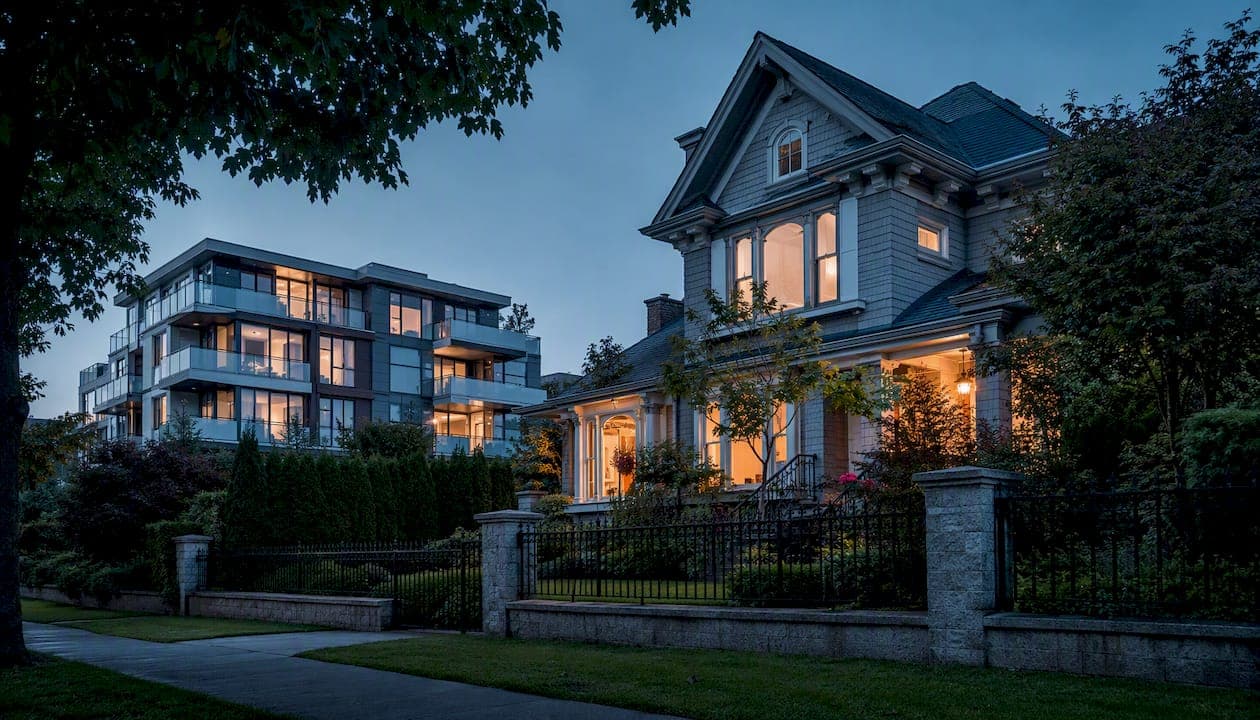
Fee simple means you own the land and everything built on it, indefinitely. A condo typically means you own your unit’s interior airspace plus an undivided share of common elements like hallways, roofs, and pools. That single distinction drives nearly every practical difference between the two ownership types.
Quick tradeoffs to scan:
-
Privacy and control: Fee simple gives you a yard, exterior walls, and no board approval for renovations. Condos trade that control for shared amenities and less exterior responsibility.
-
Monthly costs: Condos carry mandatory association fees on top of your mortgage. Fee simple shifts all maintenance costs directly to you, but there is no monthly HOA line item.
-
Resale and financing: Fee simple homes tend to sell faster in most U.S. markets. Condos face additional lender scrutiny around association finances and owner-occupancy ratios.
Key Takeaways
Fee simple ownership and condo ownership differ most in what you own, who maintains it, and how much governance you accept in exchange for lower maintenance burden.
| Point | Details |
|---|---|
| What you actually own | Fee simple includes land and structure; condos give you the unit interior plus a shared interest in common elements. |
| Condo governance matters | Associations enforce bylaws on rentals, pets, and renovations; always review reserve fund health before buying. |
| Verify title type | Most U.S. condo units are fee simple for the unit itself, but leasehold condos exist and carry financing and resale risk. |
| Model total carrying costs | Association fees and special assessments can offset a condo’s lower purchase price over a 5–10 year horizon. |
| Stu Harvey Estates | Provides full HOA due diligence, reserve study review, and local-market comparables across Southern California. |
Table of Contents
-
What condominium ownership actually means and how title works
-
How costs and financing differ between fee simple and condos
-
Who should choose fee simple, and who should choose a condo?
-
Townhouses, PUDs, leasehold condos, and other hybrid structures
-
What an experienced agent actually watches when advising buyers
-
Stu Harvey Estates can guide you through both ownership types
How do fee simple and condo ownership compare side by side?
| Dimension | Fee Simple | Condo |
|---|---|---|
| What you own | Land + structure, indefinitely | Unit interior + undivided share of common elements |
| Maintenance responsibility | Owner handles everything: roof, exterior, landscaping | Association handles common areas; owner handles interior |
| Monthly/ongoing costs | Mortgage, taxes, all maintenance | Mortgage, taxes, HOA/COA fees, possible special assessments |
| Governance and rules | Municipal zoning, recorded CC&Rs only | Board, bylaws, rental rules, pet policies, renovation approvals |
| Financing/insurance complexity | Straightforward; lender evaluates property and borrower | Lender also evaluates the condo project’s finances and occupancy mix |
| Typical buyer fit | Privacy seekers, families, buyers wanting yard or exterior control | First-time buyers, downsizers, buyers prioritizing location and low maintenance |
The biggest practical gap is governance. Condo associations enforce bylaws covering pets, noise, short-term rentals, and renovations, and collect fees to maintain common elements. Fee simple owners answer to zoning boards and any recorded CC&Rs, but there is no corporate association structure telling you what color to paint your front door.
HOA fees on condos vary widely. Association fees typically cover common-area maintenance, exterior repairs, insurance for shared structures, landscaping, and management services. They can also increase annually and trigger special assessments when reserves run short.
What fee simple ownership actually means in the U.S.
Fee simple is the broadest form of property ownership recognized in U.S. law. You own the land, the structure, and all improvements, with no expiration date on that ownership. The only limits are government zoning, eminent domain, and any restrictions recorded in your deed or CC&Rs.
Practical responsibilities that come with fee simple title:
-
Exterior maintenance: Roof, siding, driveway, fencing — all yours.
-
Landscaping: Front yard, backyard, trees, irrigation.
-
Insurance: You carry a standard homeowner’s policy covering the structure and land.
-
Property taxes: Assessed on land and improvements combined.
-
Capital repairs: A new HVAC, foundation work, or roof replacement comes entirely out of your pocket.
Fee simple does not always mean a detached house. Fee-simple townhouses, zero-lot-line homes, and planned unit developments (PUDs) are all common formats where the marketing label can look similar to a condo but the legal structure is different. In a fee-simple townhouse development, you own the land under your unit and the structure above it. An HOA may still govern shared roads or amenity areas, but the ownership of the dwelling itself is fee simple.
Pro Tip: Before closing on any property with an HOA, pull the recorded CC&Rs and confirm whether exterior maintenance is your obligation or the association’s. The deed and the CC&Rs together tell the real story, not the marketing brochure.
Understanding how ownership type affects recordkeeping and documentation is especially relevant for luxury buyers, where title complexity and recorded restrictions are more common.
What condominium ownership actually means and how title works
Here is the misconception worth clearing up immediately: most U.S. condo units are held in fee simple for the unit itself. What you do not own fee simple is the building’s exterior, the roof, the hallways, or the parking structure. Those are common elements owned collectively by all unit owners through the association.
What condo fees typically cover:
-
Common-area maintenance and cleaning
-
Exterior repairs and building insurance for shared structures
-
Amenities (pool, gym, concierge)
-
Professional management and administration
What you maintain yourself: interior finishes, appliances, flooring, plumbing fixtures inside your unit walls.
Governance runs through a condo owners association (COA) or HOA. A board of elected owners enforces bylaws, approves budgets, and manages the reserve fund. That reserve fund is the financial cushion for major capital projects. A thin reserve fund is one of the clearest warning signs a building is heading toward a large special assessment.
Pro Tip: Request the reserve study and check the percent-funded figure. A reserve fund below 70% funded is a yellow flag; below 50% is a serious concern and often signals a special assessment is coming.
Documents to request before buying any condo:
-
Declaration and CC&Rs
-
Bylaws and articles of incorporation
-
Current budget and audited financials
-
Reserve study (most recent)
-
Minutes from the last 12–24 months of board meetings
-
Insurance certificates
-
Delinquency rate on dues
-
Pending or recent litigation disclosures
-
Special assessment history
Note that some condos are leasehold rather than fee simple. A leasehold condo grants rights for a fixed term, often 40–99 years. As that term shortens, depreciation risk increases and financing becomes harder to secure. Always verify whether a unit is fee simple or leasehold before making an offer.
How costs and financing differ between fee simple and condos
Condos often carry lower purchase prices than comparable single-family homes in the same market, but mandatory association fees and potential special assessments affect total carrying costs significantly. Fee simple properties cost more up front and shift all maintenance expenses to the owner, but there is no monthly association fee.
Cost buckets to compare:
-
Purchase price: Condos typically lower; fee simple typically higher for comparable square footage.
-
Monthly HOA/COA fees: Condos always carry them; fee simple homes may have a small HOA for shared roads or amenities, but often none.
-
Maintenance: Fee simple owners budget 1–2% of home value annually for upkeep. Condo owners budget less for interior maintenance but have no control over association-driven cost increases.
-
Insurance: Fee simple requires a full homeowner’s policy. Condo owners carry an HO-6 policy covering interior and personal property; the association insures the building shell.
-
Special assessments: Unique to condos and PUDs. A single assessment for a roof replacement or elevator repair can run tens of thousands of dollars per unit.
-
Property taxes: Both ownership types are subject to property taxes, though the assessed value for a condo unit excludes common elements.
Financing a condo adds a layer of lender scrutiny that fee simple purchases do not face. Lenders evaluate the condo project itself: owner-occupancy rates, HOA financial health, reserve fund adequacy, and any pending litigation. A project with too many investor-owned units or an underfunded reserve can disqualify buyers from conventional financing. Leasehold condos add another layer of complexity, since many lenders will not underwrite a loan on a lease with fewer than 30 years remaining beyond the loan term.
Modeling 5–10 years of carrying costs is the move most buyers skip. Association fees and special assessments can erode the purchase-price advantage of a condo over time. Run both scenarios before deciding.
What should you check before buying a condo?
Focus on association finances, deed type, and pending litigation first. Everything else is secondary.
Prioritized checklist:
-
Confirm fee simple vs leasehold title in the declaration.
-
Review the reserve study and percent-funded figure.
-
Read the last 12–24 months of board meeting minutes for recurring issues.
-
Check the delinquency rate on dues (above 15% is a red flag for lenders and a sign of financial stress).
-
Request litigation disclosures and insurance certificates.
-
Review the current budget and audited financials for deficit spending.
-
Ask about special assessment history and any pending assessments.
-
Confirm rental restrictions if you plan to lease the unit.
For fee simple purchases, the checklist shifts: pull a title search for easements and encumbrances, confirm whether any HOA governs shared roads or amenities, and verify exterior maintenance responsibilities in the CC&Rs.
Pro Tip: Repeated special assessments in the minutes, combined with a low reserve fund, are the clearest signal of deferred maintenance. One assessment is normal; two in five years suggests a management problem.
The luxury home buying checklist at Stu Harvey Estates covers these document requests in detail for high-value transactions where the stakes are higher.
Who should choose fee simple, and who should choose a condo?
Match your priorities to the ownership type. Buyers who want control over their exterior, a private yard, and no board approval process belong in fee simple. Buyers who want low exterior maintenance, shared amenities, and a lower entry price often fit condos better.
Buyer profile mapping:
-
First-time buyer: Condos often make sense for lower purchase price and reduced maintenance burden, per FindLaw’s analysis of condo advantages. Verify HOA health carefully.
-
Downsizer: Condos are a natural fit. Less exterior responsibility, often better locations near urban amenities.
-
Investor: Depends on rental restrictions. Fee simple gives more flexibility; condos in buildings with rental caps can limit income potential. See how ownership type affects investment returns.
-
Buyer wanting yard and privacy: Fee simple, full stop. No HOA board, no shared walls, no approval process for a deck addition.
-
Second-home or vacation buyer: Condos near resort areas can work well, but short-term rental rules vary sharply by association. Read the bylaws before you buy.
Quick decision check:
| Priority | Better fit |
|---|---|
| Low exterior maintenance | Condo |
| Private yard and exterior control | Fee simple |
| Lower purchase price | Condo (typically) |
| No monthly association fee | Fee simple |
| Urban location with amenities | Condo |
| Maximum renovation freedom | Fee simple |
Townhouses, PUDs, leasehold condos, and other hybrid structures
The label on a listing does not always match the legal structure underneath it. Four hybrid forms come up regularly:
-
Fee-simple townhouse: You own the land under your unit and the structure above it. An HOA may govern shared driveways or amenity areas, but the dwelling itself is fee simple. More maintenance responsibility than a condo, more control than a standard condo unit.
-
Bare-land condominium: The association owns only the land; individual owners hold fee simple title to their structures. Common in resort and rural markets. Shifts more maintenance responsibility to individual owners.
-
Planned unit development (PUD): Owners hold fee simple title to their lots and structures. A master HOA governs shared infrastructure. Ownership structure in PUDs determines maintenance responsibilities and fee levels in ways that differ from standard condos.
-
Leasehold condo: You own the unit improvements but lease the underlying land from a ground lessor. As the lease term shortens, resale value can drop and lender appetite shrinks. Review escalation clauses and renewal provisions carefully.
Understanding which form of ownership applies determines who pays for exterior repairs, who carries which insurance, and how taxes are structured. A property marketed as a condo might be any of these. Always read the declaration.
For HOA fee structures in specific communities, resources like this breakdown of HOA fees and rules illustrate how widely governance terms can vary from one development to the next.
What an experienced agent actually watches when advising buyers
The first questions worth asking a buyer are not about square footage. They are about maintenance tolerance, resale horizon, and whether the buyer can absorb a surprise $15,000 special assessment without stress.
Three signals worth checking on every condo:
-
Reserve fund health. A well-funded reserve (70%+) means the association is not deferring problems. Below 50% and you are likely buying into a future assessment.
-
Owner-occupancy ratio. Lenders want to see at least 50% owner-occupied units in most conventional loan programs. A building trending toward investor-heavy occupancy can limit your exit options.
-
Local demand for the product type. In Southern California markets, low-maintenance condos near transit corridors in San Diego and Los Angeles consistently draw strong buyer demand. Fee-simple homes with private yards command a premium in coastal suburbs like La Jolla and Newport Beach, where land is scarce and outdoor living is a genuine lifestyle driver.
The practical reality: most buyers come in with a preference, but the association’s financial health is what determines whether that preference is a good investment. A beautiful condo in a poorly managed building is a liability. A modest fee-simple home in a strong neighborhood holds value through almost any cycle.
Stu Harvey Estates can guide you through both ownership types
Choosing between fee simple and condo ownership is straightforward in theory. Executing it well in a competitive Southern California market requires knowing which buildings have healthy reserves, which HOAs are heading toward a special assessment, and which fee-simple neighborhoods are outperforming on resale. That is exactly what Stu Harvey Estates delivers.
With 15+ years of real estate experience and 250+ personal career transactions, Stu Harvey helps buyers review HOA documents, reserve studies, and inspection contingencies with the appropriate professionals.

Whether you are comparing a La Jolla condo to a Rancho Santa Fe fee-simple estate, or evaluating a downtown San Diego high-rise against a Newport Beach townhouse, start your property search here or reach out directly to schedule a consultation.
Sources
Documents to request from sellers and associations: reserve study, declaration and CC&Rs, bylaws, audited financials, recent board meeting minutes, insurance certificates, and any pending litigation disclosures.
This article is general information, not a substitute for advice from a qualified financial advisor. Consult a qualified financial professional about your own circumstances before acting on anything here.