An accessory dwelling unit (ADU) is a permitted second home with a full kitchen, bathroom, and independent living space that local code recognizes as a legal dwelling. A guest house is an accessory structure that typically skips the full kitchen and stays off the books as a rentable residence. If there's any chance you'll rent it out or house someone long term, permit it as an ADU. If you just need occasional space for visitors and an ADU isn't allowed or affordable where you live, a guest house is the practical fallback.
TL;DR:
- Converting an unpermitted "guest house" into a legal ADU often requires full permits, inspections, and utility upgrades, increasing costs significantly.
- A full kitchen, separate utility meter, and certain size thresholds are key factors that categorize a structure as an ADU versus a guest house.
- Local regulations vary but generally include restrictions on size, setbacks, owner occupancy, and plumbing, which can prevent or limit ADU construction.
- Building an ADU with a full kitchen typically costs tens of thousands more than a guest house, but it offers the opportunity for long-term rental income and property value increase.
- Confirming permit history, zoning, and utility capacity before construction can prevent costly redesigns or legal issues later.
Table of Contents
- ADU vs Guest House: What Actually Changes When You Add a Kitchen
- What Permit and Zoning Rules Trigger ADU Classification?
- How Do Utilities and Inspections Change the Timeline?
- What Does an ADU Actually Cost, and How Do You Finance It?
- How Do You Decide Between an ADU and a Guest House?
- What Does a Real Estate Agent Look for in ADU Potential?
- What the Kitchen Rule Gets Overlooked
- Thinking About ADU Potential in Your Next Property Search?
- Where to Check Your Own City's ADU Rules
- Sources
ADU vs Guest House: What Actually Changes When You Add a Kitchen
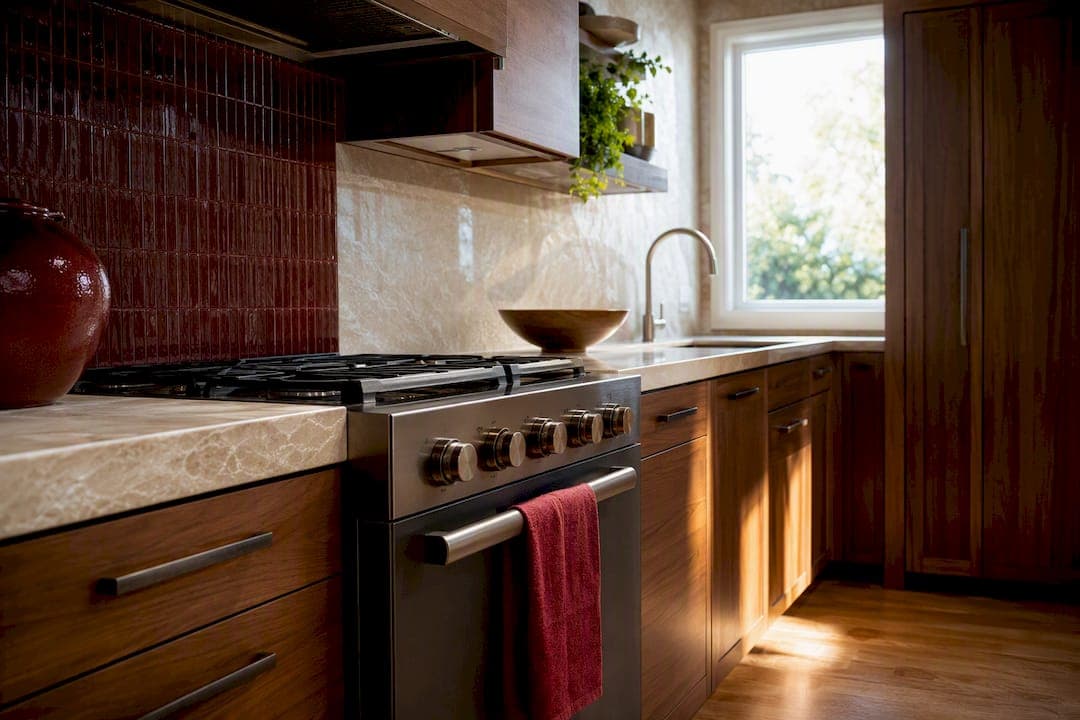
The line between these two structures isn't architectural. It's regulatory, and it hinges almost entirely on one appliance: the range. A building with a full kitchen, defined by most jurisdictions as a permanent cooking appliance, sink, and food storage, gets classified as a dwelling unit. Pull that kitchen out, or downgrade it to a wet bar with a mini-fridge, and the same square footage often qualifies as an accessory structure instead.
That distinction cascades into everything else. An ADU can typically be rented on a long-term lease, counted as livable square footage by an appraiser, and financed alongside the primary home's value. A guest house usually can't be leased as a separate unit, doesn't add the same appraisal weight, and in many markets can't legally host a paying tenant at all.
Here's how the two compare at a glance:
- Kitchen: ADU requires a full kitchen; guest house typically limited to a wet bar or none at all.
- Rentability: ADU can usually be leased long term; guest house generally cannot be rented as an independent unit.
- Typical size: Guest houses often run in a moderate size range; ADUs commonly have a larger size range depending on local caps.
- Typical cost: Guest houses tend to cost less to build since they skip full kitchen plumbing and separate metering; ADUs run higher because of the added utility work and dwelling-grade inspections.
Quick math: industry cost guides put the price difference between a bare-bones guest house and a fully permitted ADU at tens of thousands of dollars, largely driven by kitchen plumbing, electrical upgrades, and the extra inspection rounds a dwelling unit requires.
What Permit and Zoning Rules Trigger ADU Classification?
Every city treats ADUs a little differently, but the checklist your local planning department runs through tends to hit the same points. Before you break ground, or before you buy a property that already has a "bonus structure," walk through this list:
- Kitchen scope. Full range, sink, and permanent cabinetry usually trip the dwelling classification.
- Plumbing and sewer connection. A separate bathroom is fine for a guest house; a full kitchen sink tied into main plumbing usually is not.
- Utility metering. Some jurisdictions require a separate meter or sub-meter once a unit is classified as a dwelling.
- Setbacks and lot coverage. ADUs often face different setback minimums than accessory structures under the same code.
- Size caps. Many cities cap ADU square footage as a percentage of the primary home or a flat maximum.
- Owner-occupancy and rental rules. Some municipalities require the owner to live on-site to rent out an ADU; others don't.
Portland's ADU permitting page lays out this exact sequence, and Scottsdale's accessory dwelling unit code shows how a different state applies similar logic with its own size and setback thresholds. Both are worth reading even if you don't live there, just to see the pattern. Underlying safety standards for electrical, plumbing, and fire separation generally trace back to the ICC model codes, which most local jurisdictions adopt with local amendments.
Pro Tip: Never assume a structure's past use tells you its legal status. A "guest house" built in 1985 with a full kitchen might already be an unpermitted ADU in the eyes of your city, which means back permits, fines, or a forced downgrade before you can sell.
How Do Utilities and Inspections Change the Timeline?
A guest house with a half bath and a mini-fridge rarely needs more than a standard electrical permit and a basic plumbing inspection. An ADU with a full kitchen is a different animal entirely, and it shows up fast once you start scheduling inspectors.
- Water and sewer: Full kitchens usually need dedicated supply lines and sometimes a separate sewer tap, especially on septic systems.
- Electrical service: A range, dishwasher, and washer/dryer combo often require panel upgrades or a sub-panel sized for dwelling-level loads.
- Inspection rounds: Expect separate inspections for framing, electrical, plumbing, and final occupancy, roughly double what a simple accessory structure needs.
- Timeline impact: Contractors who build ADUs regularly plan for several extra weeks of inspection scheduling compared to a guest house build.
The practical fix: order a utility capacity assessment before you finalize the floor plan, not after. Contractors who specialize in ADU work, like the budgeting guidance from Upright Construction & HVAC, routinely flag panel and sewer capacity as the two issues that blow past initial estimates.
What Does an ADU Actually Cost, and How Do You Finance It?
Guest houses generally run cheaper because they skip the dwelling-grade plumbing and electrical work. ADUs cost more upfront but come with a return path guest houses don't have: rent.
Cost guides tracking both structure types put fully permitted ADUs tens of thousands of dollars above comparable guest house builds, primarily from kitchen infrastructure, separate metering, and the added inspection cycles. Financing options differ too:
- HELOC or cash-out refinance: Common for homeowners with equity, since the ADU adds appraised value on completion.
- Renovation loans (like a Fannie Mae HomeStyle loan): Roll construction costs into a single mortgage.
- ADU-specific construction loans: Offered by some regional lenders, disbursed in draws tied to inspection milestones.
Here's the ROI logic in simple terms: if your ADU costs $40,000 more to build than a guest house would, and you rent it for $1,800 a month, you recover that premium in roughly two years, then it's pure upside. Guest houses can't run that math because they typically can't be leased at all. For coastal California markets, this appraisal lift often shows up clearly in luxury home features that boost resale value.
How Do You Decide Between an ADU and a Guest House?
Your decision comes down to three questions: what will you actually use the space for, what does your zoning allow, and what are you optimizing for at resale. Run through this sequence before you commit to either path:
- Look up your city's ADU ordinance using its planning department website.
- Call the planning department directly and ask specifically whether your lot qualifies and what size cap applies.
- Confirm utility capacity with your utility provider or a licensed contractor, especially sewer and electrical panel headroom.
- Get a rough budget estimate from at least two contractors experienced with ADU permitting.
- Consult an architect or contractor on layout options that maximize your allowed square footage.
- Submit for a permit pre-check if your city offers one, before finalizing construction drawings.
Watch for red flags early: some municipalities still prohibit ADUs outright, HOA covenants can block them even where city code allows them, and septic systems with limited capacity can kill a kitchen addition before it starts.
Pro Tip: Call your planning department before you call an architect. A five-minute phone call can save you weeks of redesign if your lot doesn't qualify for the size or setback you had planned.
What Does a Real Estate Agent Look for in ADU Potential?
Stu Harvey has spent more than 15 years working Southern California's luxury market, closing over $1.2 billion in sales across San Diego, Los Angeles, Orange County, and the coastal corridor between La Jolla and Newport Beach. Evaluating ADU potential is now a routine part of that work.
When Stu walks a property with ADU potential, the checks go beyond square footage: permit history on file with the county, neighborhood comparables that show whether a permitted ADU actually moves sale price, and zoning overlays that can quietly restrict what a buyer assumes is buildable. One recurring pattern from recent transactions: buyers who paid a premium for "guest house" structures that turned out to be unpermitted ADUs, then had to disclose and often remediate before closing, a headache that a permit-history check up front would have caught.
What the Kitchen Rule Gets Overlooked
Most advice on this topic treats the ADU decision as a construction question. It's not. It's a permitting question first, and a construction question second. Homeowners who get burned almost always made the classification call themselves instead of confirming it with their local planning office, then discovered years later that their "guest house" was legally an unpermitted dwelling.
The conventional wisdom, build cheap now, upgrade later if you decide to rent, gets the sequencing backward in most cases. Converting an accessory structure into a permitted ADU after the fact typically means a full new permit, fresh inspections, and utility upgrades you could have built in from day one at a lower incremental cost.
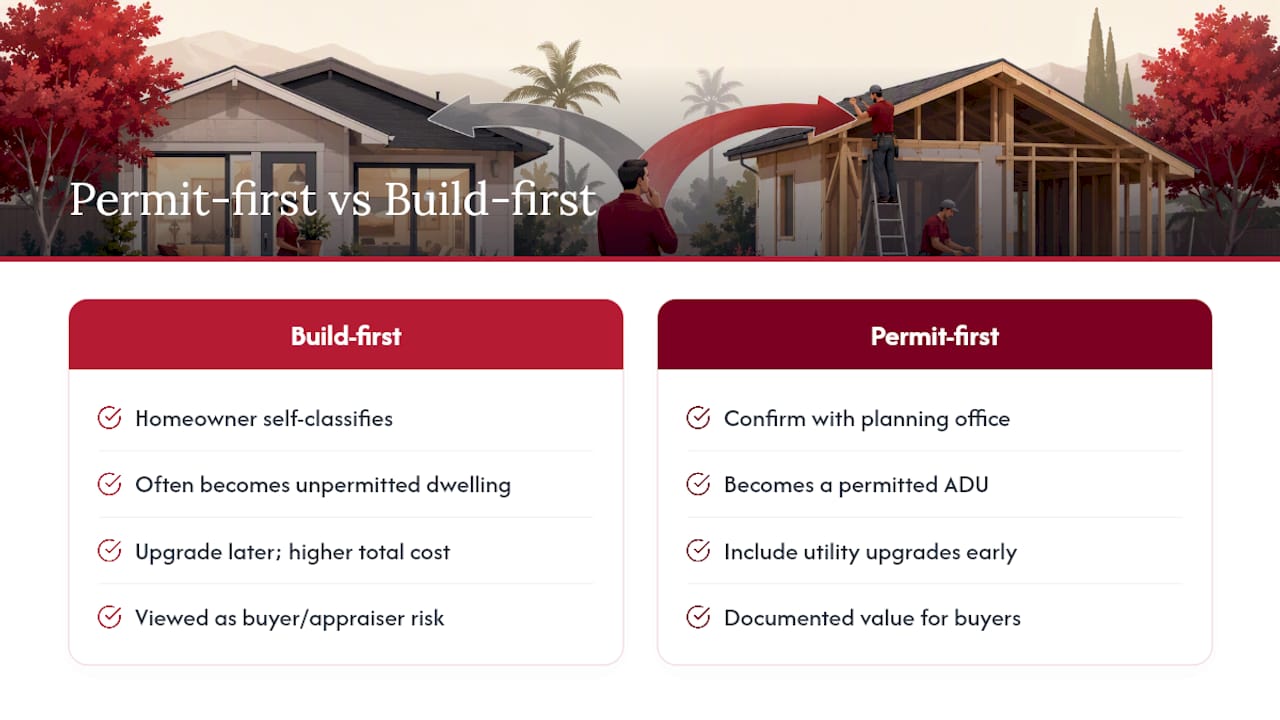
For coastal California specifically, permit history increasingly shows up in how buyers and appraisers evaluate a property. A permitted ADU reads as documented value. An unpermitted one reads as risk, and sophisticated buyers price that risk in during negotiations, not after closing.
If you take one thing from this, confirm the kitchen and permit question with your city before you build anything, not after.
— Stu Harvey
Thinking About ADU Potential in Your Next Property Search?
Finding a property with real ADU upside, one where the zoning actually allows it, the lot has utility capacity, and the neighborhood comparables support the appraisal lift, takes more than a listing search. It takes someone who checks permit history and local code before you fall in love with a floor plan. That's the gap Stu Harvey Estates fills for buyers and sellers across San Diego, Los Angeles, Orange County, and the coastal Southern California market.

Stu Harvey Estates helps you evaluate properties for genuine ADU feasibility, not just square footage on a listing sheet, pulling in local regulatory context and connecting you with ADU specialists when a project needs a contractor's eye. If you're weighing a purchase with rental or multigenerational potential in mind, search current listings and start with properties where the ADU math actually works in your favor.
Where to Check Your Own City's ADU Rules
Every jurisdiction writes its own ADU code, so treat these as starting points, not final answers. Portland's ADU page shows a full permit walkthrough. Scottsdale's code page shows how Arizona handles the same questions differently. The ICC model codes explain the safety standards behind inspections, and the NAHB tracks broader ADU adoption trends worth watching if you're buying for the long term.
Sources
- Portland
- Scottsdaleaz
- ICC codes — Model building codes
- NAHB — ADU resources and analysis
- Perch — Guest house vs ADU comparison (2026)