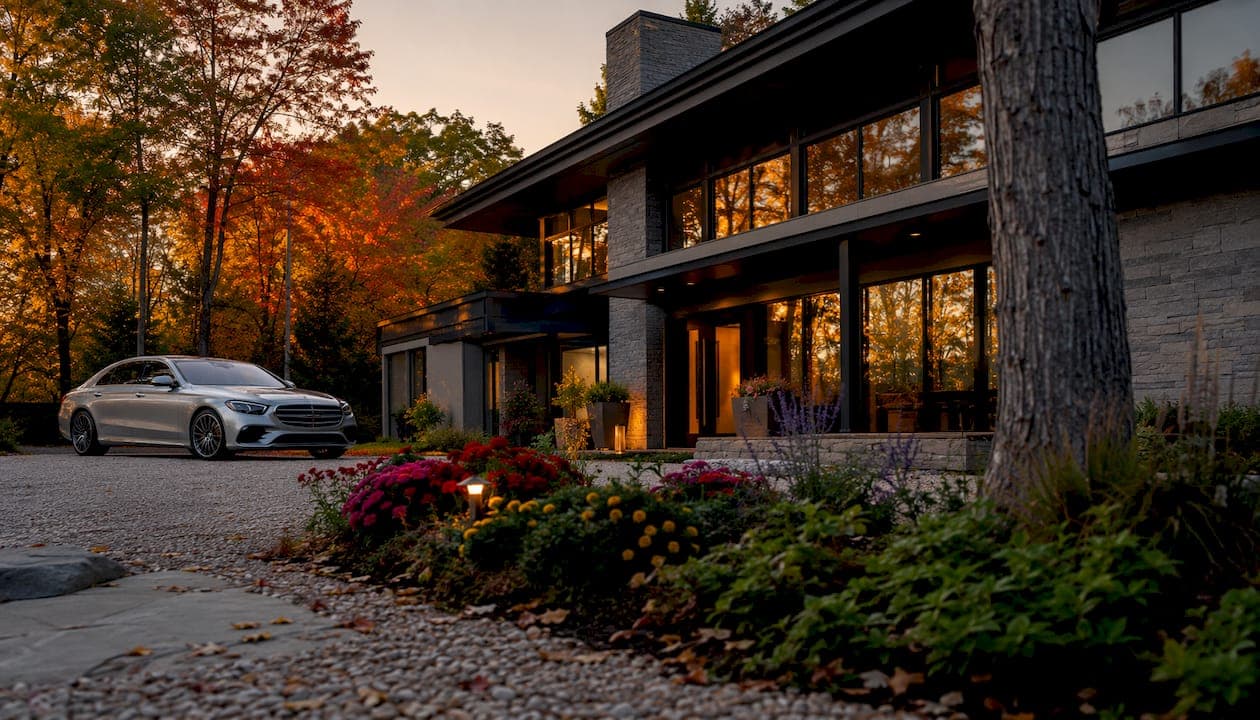
The features that boost luxury home value most reliably in 2026 share three traits: they serve daily life well, they photograph beautifully, and they hold up under buyer scrutiny. Gourmet kitchens, spa-caliber bathrooms, whole-home automation, and outdoor living spaces consistently top the list. Wellness amenities, bespoke architectural details, and privacy-focused landscaping round out the tier. Here is what actually moves the needle:
- Smart home automation (lighting, climate, security, entertainment)
- Gourmet kitchens with professional-grade appliances
- Spa-like bathrooms with heated floors, soaking tubs, and rainfall showers
- Outdoor living spaces including kitchens, fireplaces, and covered patios
- Home theaters with acoustic treatment and tiered seating
- Energy-efficient systems including solar, triple-pane windows, and smart HVAC
- Bespoke architectural details such as custom millwork and statement lighting
- Security and privacy features including gated entries and smart surveillance
- Wine cellars and luxury storage
- Dedicated home offices with built-in cabinetry and executive-grade tech
- High-quality materials and craftsmanship throughout every finish
Each of these features earns its place not just by looking expensive, but by solving something real for the buyer.
Table of Contents
- 1. Smart home technology delivers measurable returns
- 2. Gourmet kitchens are where luxury buyers make decisions
- 3. Spa-like bathrooms meet a real shift in buyer priorities
- 4. Outdoor living spaces extend the home's usable square footage
- 5. Home theaters reward buyers who want luxury leisure at home
- 6. Energy efficiency appeals to affluent buyers on multiple levels
- 7. Bespoke design details create emotional connection
- 8. What the data says about maximizing luxury home value
- 9. Location shapes what features are worth investing in
- 10. Architectural style sets buyer expectations before they enter
- 11. Materials and craftsmanship are where value lives long-term
- 12. Security and privacy features command quiet premiums
- 13. Wine cellars and luxury storage signal a complete lifestyle
- 14. Home offices have become permanent fixtures in luxury homes
- Ready to put these features to work?
- Key Takeaways
1. Smart home technology delivers measurable returns
Whole-home automation is the feature luxury buyers most consistently expect and least often find done well. Integrated systems that control lighting scenes, climate zones, security cameras, and audio-visual equipment from a single interface add genuine convenience. Platforms like Crestron and Control4 are the benchmark in this tier, and buyers recognize them on sight.
The financial case is solid. Smart home technology typically returns 50–70% of its installation cost at resale, and smart thermostats alone reduce energy costs by 10–15%, according to ENERGY STAR.
- Automated lighting scenes tied to time of day and occupancy
- Whole-home audio with zone control
- Smart locks, video doorbells, and integrated security monitoring
- Climate control with remote access and scheduling
Pro Tip: Keep the interface simple. Over-engineered systems that require a manual to operate actively detract from value — buyers want to walk in and feel in control immediately, not overwhelmed.
2. Gourmet kitchens are where luxury buyers make decisions
A professional-grade kitchen signals more than cooking capacity. It tells buyers that the entire home was built to a standard. Sub-Zero refrigeration, Wolf dual-fuel ranges, and commercial-grade ventilation hoods are the names buyers recognize and trust. Custom cabinetry with soft-close hardware, a butler's pantry, and quartzite countertops complete the picture.
The resale math works. Professional-grade appliances return 60–80% of their cost at resale, and quartzite countertops specifically sell for 5.3% more compared to homes with quartz, soapstone, or marble surfaces, per 2026 Zillow research.
- Dual-fuel or all-gas professional ranges (36-inch or 48-inch)
- Built-in refrigeration columns rather than freestanding units
- Oversized island with seating and prep sink
- Walk-in pantry or butler's pantry with secondary prep space
- Statement range hood as architectural focal point
The kitchen is often where a showing is won or lost. Get it right, and everything else in the home gets the benefit of the doubt.

3. Spa-like bathrooms meet a real shift in buyer priorities
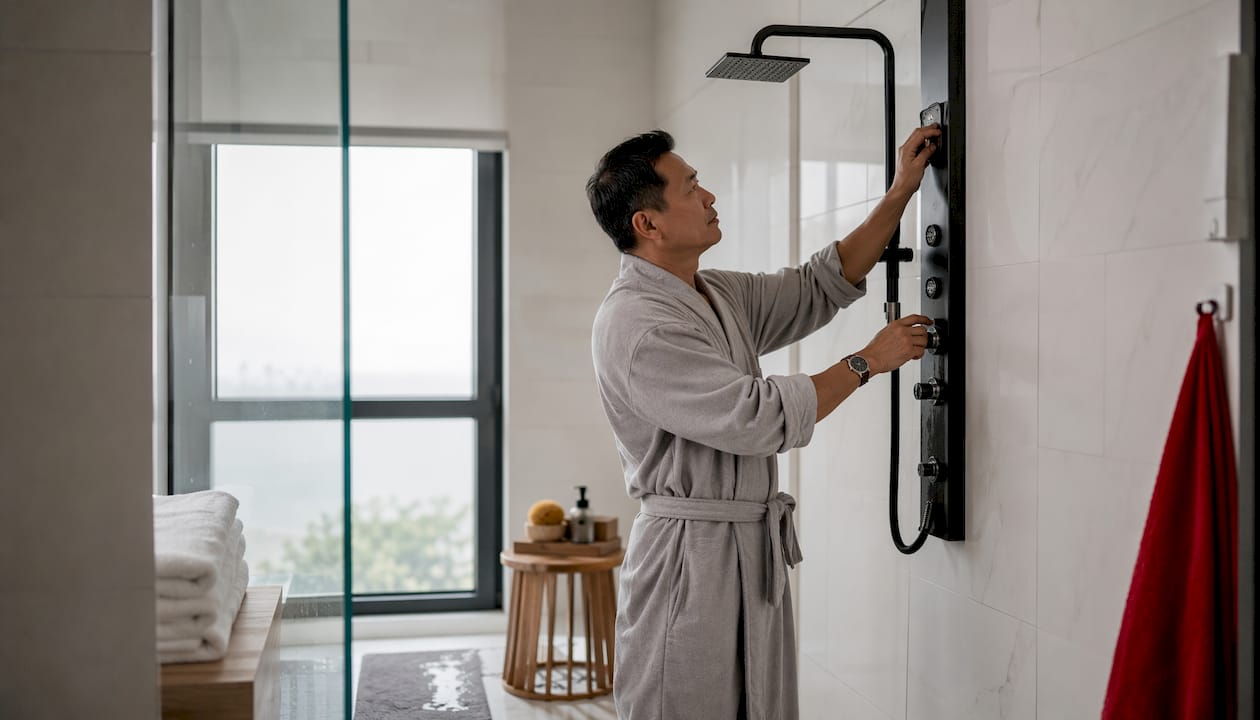
Wellness has moved from a lifestyle preference to a purchase requirement for affluent buyers. A primary bathroom that functions as a private retreat, with heated floors, a freestanding soaking tub, a rainfall shower with body jets, and double vanities with ample storage, addresses that demand directly. Traditional saunas and infrared sauna rooms are increasingly appearing in primary suites and dedicated wellness wings.
Wellness features including spa-inspired bathrooms and infrared saunas carry a 50–70% return on investment, reflecting how central they have become to the luxury buyer's checklist.
- Heated stone or tile flooring
- Freestanding soaking tub positioned for natural light or a view
- Rainfall showerhead with handheld and body spray jets
- Double vanities with integrated lighting and concealed storage
- Towel warmers and bespoke tile work as design anchors
Ergonomic design matters as much as the fixtures themselves. A bathroom that feels intuitive to move through, with storage exactly where you need it, reads as luxury even before a buyer notices the brand names on the hardware.
4. Outdoor living spaces extend the home's usable square footage
A well-executed outdoor kitchen, covered patio, and fireplace do not just add amenity. They add livable area, and buyers price it accordingly. In Southern California markets like La Jolla and Newport Beach, outdoor spaces often function as primary entertaining rooms for nine or ten months of the year.
The numbers back this up. According to 2026 Zillow research, outdoor kitchens add a 4.4% price premium and outdoor showers add 4.3%. Homes with lifestyle-driven amenities like docks sell for 5.4% more.
- Built-in outdoor kitchen with grill, refrigeration, and bar seating
- Wood-burning or gas fireplace as a gathering anchor
- Covered patio or pergola with ceiling fans and outdoor speakers
- Outdoor shower adjacent to pool or spa
- Privacy landscaping with mature trees and hedging
The psychological value here is hard to overstate. Buyers who can picture themselves hosting a dinner outside on a Tuesday night are buyers who make offers.
5. Home theaters reward buyers who want luxury leisure at home
A dedicated home theater signals that the home was designed for a specific lifestyle, not just assembled from a checklist. The difference between a media room and a true theater is acoustic treatment, tiered seating, and a projection system calibrated to the room's dimensions. Buyers in this tier have experienced both, and they know immediately which one they are standing in.
- 4K laser projection or a large-format OLED display
- Acoustic wall panels and sound-dampening ceiling treatment
- Tiered seating with power recliners and cup holders
- Dedicated amplification and speaker placement by a certified audio engineer
- Blackout shades and programmable lighting scenes
Thoughtful design here signals lifestyle quality rather than feature quantity. A smaller, perfectly executed theater room outperforms a large, mediocre one every time.
6. Energy efficiency appeals to affluent buyers on multiple levels
Green building features have crossed from "nice to have" into a genuine value driver in the luxury segment. Solar panel systems, triple-pane windows, high-efficiency HVAC with zoned control, and sustainable building materials reduce operating costs and qualify properties for energy-efficient mortgage programs. Affluent buyers increasingly treat sustainability as a proxy for quality construction overall.
- Solar panel systems with battery storage backup
- Triple-pane windows for thermal and acoustic performance
- Variable-speed HVAC with smart zoning
- Reclaimed wood, recycled glass, or low-VOC materials throughout
- EV charging stations in the garage
The payback period on some of these investments runs longer than a kitchen remodel, but the market appeal they generate often closes that gap at resale.
7. Bespoke design details create emotional connection
Custom millwork, hand-applied plaster walls, coffered ceilings, and statement lighting are the details buyers remember after the showing ends. These elements do not just look expensive. They communicate that someone made deliberate choices throughout the home, and that intentionality is what luxury buyers are actually paying for.
Turnkey homes with cohesive design language sell for about 3% more than comparable properties, while fixer-uppers typically sell for 14% less, per Zillow's 2026 research. The gap between a resolved home and an unfinished one is not cosmetic.
- Custom built-in cabinetry and shelving throughout living areas
- High-end molding, wainscoting, and ceiling detail
- Bespoke hardware and plumbing fixtures as design punctuation
- Statement lighting as architecture, not afterthought
- Consistent material palette from room to room
Less is more applies here. Three beautifully executed details beat ten mediocre ones, and buyers can tell the difference.
8. What the data says about maximizing luxury home value
Stu Harvey, Senior Agent with The Oppenheim Group and founder of Stu Harvey Estates, has closed over 250 luxury transactions across San Diego, Los Angeles, and Orange County, with more than $1.2 billion in career sales volume. His read on what actually moves buyers aligns closely with what the 2026 data shows.
The research supports that framing. Privacy features like gated entrances, sound-dampening landscaping, and smart security provide significant emotional and perceived value, often driving premiums that exceed visible luxury finishes. Explore the full breakdown of luxury property features buyers are prioritizing this year.
9. Location shapes what features are worth investing in
No upgrade outperforms a bad location, and in luxury real estate, location means more than zip code. School district quality, proximity to the coast or mountains, walkability to high-end retail, and the caliber of neighboring properties all set the ceiling on what any individual feature can return. A wine cellar in a trophy neighborhood commands a premium. The same wine cellar in a transitional area may not recover its cost.
Southern California markets like Rancho Santa Fe, The Hollywood Hills, and La Jolla have different valuation rules than the broader market. Understanding those rules before committing to a major upgrade is how you avoid expensive mistakes.
10. Architectural style sets buyer expectations before they enter
The exterior of a luxury home is its first and most lasting impression. Mediterranean, Spanish Colonial, Modern Farmhouse, and Contemporary styles each attract distinct buyer profiles, and the interior should deliver on whatever promise the facade makes. A mismatch between exterior style and interior finishes reads as unresolved, and buyers discount accordingly.
Grand entryways, detailed facades, and cohesive landscaping that frames the architecture all contribute to the sense that the home was designed as a whole. Buyers who feel that coherence from the driveway arrive at the front door already inclined to say yes.
11. Materials and craftsmanship are where value lives long-term
Rich hardwoods, natural stone, hand-laid tile, and solid-core doors are the materials that hold up under daily use and under buyer inspection. They also photograph well, which matters more than ever in a market where buyers often shortlist properties before visiting in person.
Quartzite, as noted earlier, outperforms other countertop materials at resale. The same principle applies to flooring: wide-plank white oak, honed marble, and large-format porcelain all read as premium and age gracefully. Cheap substitutes, regardless of how convincing they look at first glance, tend to reveal themselves during inspection.
12. Security and privacy features command quiet premiums
Gated entries, perimeter cameras, smart locks, and motion-activated lighting are table stakes in the luxury tier. What separates a truly private property is the layering: sound-dampening landscaping that buffers street noise, strategic fence and hedge placement that blocks sightlines without feeling like a fortress, and a security system that operates invisibly in the background.
Privacy ranks among the top priorities for luxury buyers, and sophisticated landscaping and privacy elements act as a buffer against market fluctuations by providing exclusivity. Buyers pay for the feeling of being unreachable when they want to be.
13. Wine cellars and luxury storage signal a complete lifestyle
A climate-controlled wine cellar, a custom walk-in closet with boutique-level display, and a garage with car lifts and dedicated detailing space all communicate the same thing: this home was built for someone who has everything and needs a place for all of it. These spaces rarely recover their full cost in a pure ROI calculation, but they close deals by making buyers feel that the home matches their life.
Custom closet systems with motion-sensor lighting, elongated mirrors, and motorized storage solutions turn a functional space into a destination. That shift from utility to experience is exactly what luxury buyers are willing to pay for.
14. Home offices have become permanent fixtures in luxury homes
Remote and hybrid work has made a dedicated, well-designed home office a genuine value driver rather than a bonus feature. The standard has risen well past a spare bedroom with a desk. Buyers expect built-in cabinetry, acoustic privacy, fiber-ready infrastructure, ergonomic furnishings, and lighting designed for video calls and focused work.
A 2026 buyer's guide to luxury home features highlights the home office as one of the amenities buyers are most likely to cite as a deciding factor. The best versions feel like a private executive suite, not a converted closet.
Ready to put these features to work?
Stu Harvey Estates brings over 15 years of luxury real estate expertise and $1.2 billion in sales to every transaction across San Diego, Los Angeles, and Orange County. Whether you are preparing a property for sale or searching for a home that already has these features built in, Stu's team can show you exactly where the value is. Browse current luxury listings or explore a standout example at 527 N Park Ave.
Key Takeaways
The most reliable way to boost luxury home value is to combine high-quality materials, cohesive design, and lifestyle-driven amenities into a turnkey property buyers can step into without hesitation.
| Point | Details |
|---|---|
| Cohesion beats features | Turnkey homes with cohesive design sell for about 3% more; fixer-uppers sell for 14% less. |
| Outdoor spaces add measurable premiums | Outdoor kitchens add a 4.4% price premium and outdoor showers add 4.3%, per 2026 Zillow research. |
| Smart tech needs simplicity | Smart home systems return 50–70% at resale, but over-engineered setups actively reduce buyer appeal. |
| Wellness amenities carry strong ROI | Spa bathrooms and infrared saunas carry a 50–70% ROI as buyer demand for wellness features grows. |
| Location sets the ceiling | No upgrade outperforms its neighborhood; invest in features that match the market's buyer profile. |