
A property’s Coastal Development Permit history often determines what you can build next, what your insurer will cover, and what a buyer’s lender will require before closing. Sellers who assemble CDP files, deed restrictions, and a current geotechnical report before listing typically move through escrow faster and defend their asking price better. Buyers who skip that review risk discovering, mid-escrow, that the sea wall protecting the bluff has five years left on its permit.
TL;DR:
Permits that expire or require renewal can significantly lower a property’s value and complicate future development plans or financing.
Sellers should compile all permit, restriction, and geotechnical documentation before listing to streamline escrow and strengthen their asking price.
Buyers need to conduct thorough geotechnical and permit file reviews to identify risks like erosion, permit expiration, or unpermitted work that could derail their investment.
Recurring costs such as seawall monitoring fees and mitigation obligations can amount to ongoing expenses comparable to HOA dues, affecting the property’s overall value.
Early documentation review and disclosure are key to faster closings and avoiding surprises related to coastal development permits and shoreline stabilization requirements.
Table of Contents
-
How coastal development permit San Diego history shapes marketability and value
-
Seller disclosure and document checklist for coastal luxury listings
-
Sea walls, monitoring fees, and how to price them into the deal
-
How CDP issues affect financing, insurance, and your escrow timeline
-
Stu Harvey’s checklist and market perspective for coastal luxury clients
How coastal development permit San Diego history shapes marketability and value
Not all CDPs age the same way, and that difference shows up directly in resale value. Some approvals are term-limited, expiring after a set number of years and requiring renewal or removal of the structure they cover. Others run for the life of the structure they protect, which sounds permanent but still carries maintenance obligations that transfer to the next owner. A smaller category involves recorded deed waivers, where a previous owner accepted development limits or public access conditions in exchange for permit approval, and those restrictions run with the land regardless of who buys it.
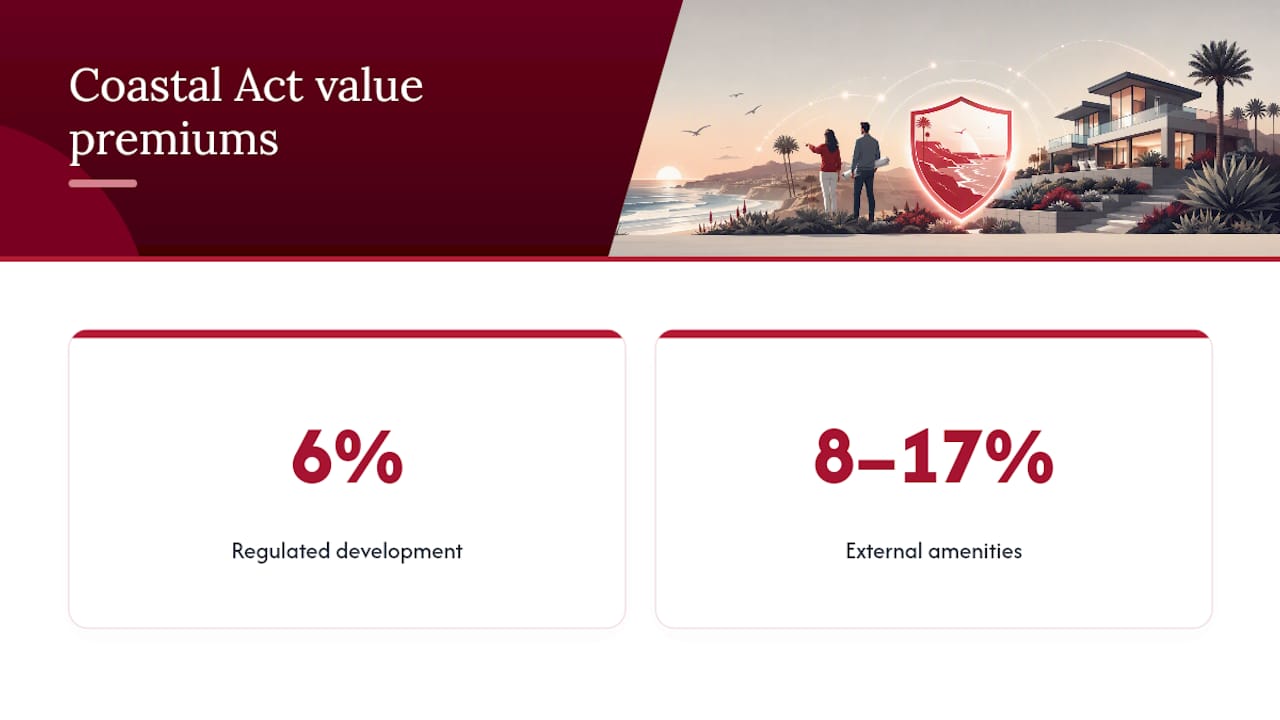
The financial stakes are well documented. An academic analysis of the California Coastal Act found local development inside the Coastal Zone gains roughly 6% in value from regulation, while broader external amenity effects, like protected views and limited nearby development, add 8% to 17% in value for surrounding properties. That premium can vanish fast when a permit is about to expire or a seawall needs reconstruction.
Picture two bluff-top homes in La Jolla, similar square footage and views. One carries a permanent, unconditioned seawall permit. The other has a permit expiring in three years with a removal clause attached. Buyers’ agents will price that difference into every offer, often before the property even hits escrow.
Seller disclosure and document checklist for coastal luxury listings
San Diego coastal disclosure norms are more demanding than a standard residential sale, and county advisories consistently recommend geotechnical checks and permit-file review before any bluff-edge or waterfront property changes hands. Sellers who wait until an offer arrives to gather these documents lose leverage. Compile them before the listing goes live.
Your pre-listing file should include:
-
The complete CDP history from the California Coastal Commission and any city-issued companion permits.
-
Recorded deed restrictions or public access easements tied to the parcel.
-
Maintenance and monitoring agreements, including inspection logs if a seawall or bluff stabilization structure exists.
-
A current geotechnical stability report, along with any prior engineering assessments.
-
City building permits and as-built drawings for additions, decks, or shoreline armoring.
-
HOA or cost-sharing agreements if the property splits shoreline maintenance obligations with neighbors.
Sellers must disclose unpermitted exterior work, prior CDPs, and any recorded restrictions tied to coastal compliance, since these directly limit what a buyer can legally build later. Summarize expiration dates, removal triggers, and financial obligations in plain language rather than burying them in the permit’s original legal text.
Pro Tip: Order a current geotechnical stability letter before you list, not after an offer comes in. A stale ten-year-old report raises more questions than it answers, and lenders increasingly want something recent.
What buyers should inspect before making an offer
A site-specific geotechnical or bluff-stability assessment is the single most important report a buyer can order on coastal property, and it is not optional for anything near an active bluff edge. These assessments typically run $8,000 to $40,000 depending on how many borings and lab tests the engineer needs. That range looks small next to a seven-figure purchase price, but skipping it can cost far more in post-closing disputes.
Beyond the geotechnical report, buyers need to pull and read the actual permit file, not just take a listing agent’s summary. Look specifically for maintenance obligations, monitoring schedules, and removal triggers tied to any shoreline structure. Local review in San Diego often runs as a separate, stricter layer focused on public access and visual resources, meaning a permit that looks clean on paper may still limit future additions.
| Due diligence item | What it reveals |
|---|---|
| Geotechnical/bluff assessment | Current stability, erosion rate, seawall condition |
| CDP file review | Permit term, conditions, expiration, prior amendments |
| Title report and easements | Public access rights, recorded restrictions |
| Lender/insurer consultation | Coverage exclusions, appraisal contingencies |
Red flags worth walking away from, or at least renegotiating over, include:
-
A seawall permit within five years of expiration with no renewal application filed.
-
Monitoring reports showing accelerating erosion rates.
-
Title exceptions referencing unresolved Coastal Commission enforcement actions.
A luxury investment due-diligence checklist built around these steps saves buyers from surprises that surface only after closing.
Sea walls, monitoring fees, and how to price them into the deal
Coastal armoring isn’t a onetime line item. Sea wall construction or major repair on a San Diego bluff can run from the low hundreds of thousands into seven figures depending on scope and access, and those costs often land on the current owner or get split among neighboring parcels through cost-sharing agreements.

Recurring obligations matter just as much. Many permits attach ongoing mitigation or monitoring fees tied to erosion tracking, and these function as annual carrying costs rather than a onetime hit. Investors modeling yield should treat them the same way they’d treat HOA dues or a land lease, not as a footnote.
Practical steps for both sides:
-
Sellers should amortize known future costs and present that math transparently rather than hoping buyers won’t ask.
-
Buyers should request the last five years of monitoring invoices to project the real annual obligation.
-
Both sides should confirm whether obligations transfer automatically or require a new application at sale.
Case studies from Solana Beach show these attached fees and monitoring terms materially move resale outcomes for bluff-top properties, sometimes more than the view itself.
How CDP issues affect financing, insurance, and your escrow timeline
Lenders now routinely factor coastal permit history into underwriting, not just appraisal. A geotechnical report showing active erosion, or a permit file with unresolved conditions, can trigger a lower loan-to-value ratio or an outright decline from a conservative lender.
Insurance carriers pay close attention too. Policies covering shoreline structures frequently exclude damage tied to active erosion or unpermitted armoring, leaving owners exposed exactly where they most need coverage.
Timeline planning matters as much as the numbers:
-
Pre-listing geotechnical reports and complete CDP files shorten escrow because lenders and insurers can move faster with documentation in hand.
-
Missing permit history or unresolved code violations routinely add weeks to closing while parties chase records.
-
Any pending Coastal Commission appeal or enforcement action can extend escrow by months, not days.
Buyers financing through a jumbo or portfolio lender should confirm the lender’s coastal-property requirements before writing an offer, not after.
Negotiation and pricing strategy for CDP-affected listings
Getting a fair price on a coastal luxury property with permit complexity comes down to preparation, not persuasion. Here’s how each side should approach it:
-
Sellers: Build a disclosure packet before listing, including the geotechnical letter, so buyers see transparency instead of gaps.
-
Sellers: Present carrying-cost amortization in the listing materials so the asking price already reflects known future obligations.
-
Buyers: Write contingency language specific to permit-file review, not just a generic inspection contingency.
-
Buyers: Negotiate an escrow holdback tied to any pending permit renewal or monitoring requirement rather than walking away entirely.
-
Buyers: Extend inspection timelines when geotechnical work requires drilling or lab turnaround.
Marketing language should acknowledge the lifestyle draw of a bluff-top or beachfront address while signaling that material disclosures are already in hand. That balance reassures sophisticated buyers rather than raising suspicion.
Pro Tip: List the geotechnical report’s completion date directly in the listing remarks. It signals preparation to serious buyers and quietly filters out the ones who’ll walk the moment permit questions come up.
Stu Harvey’s checklist and market perspective for coastal luxury clients
CDP history deserves careful review before a coastal property is listed. Assemble the permit file and related disclosures early so buyers and their advisers can evaluate the property before negotiations advance.
Seller priority list: pull the full CDP file, order a current geotechnical letter, document recurring fees, disclose everything in writing.
Buyer priority list: order your own geotechnical assessment, request five years of monitoring records, confirm lender coastal requirements early, build permit review into your contingency timeline.
Organizing disclosures early gives buyers clearer information and helps sellers address questions before they become closing delays.
— Stu Harvey
Get hands-on help with a coastal luxury transaction
Stu Harvey Estates handles the parts of a CDP-affected sale that generic listing agents typically outsource or skip: assembling the full permit dossier, connecting you with geotechnical engineers who know San Diego’s bluff conditions, and coordinating directly with lenders and insurers before problems surface mid-escrow.

Sellers get a pre-listing package that documents permit history, monitoring obligations, and carrying costs in language buyers actually trust. Buyers get a structured due-diligence plan built around the property’s specific coastal exposure, informed by resources like ocean proximity value research and neighborhood-specific permit patterns across La Jolla, Rancho Santa Fe, and surrounding coastal communities.
First contact usually starts with a conversation about your timeline and property specifics. From there, sellers move into disclosure packet assembly, and buyers move into a scoped inspection plan. Browse current San Diego coastal listings or reach out to start your due-diligence plan today.
Where to verify permit history and coastal risk yourself
Start with NOAA’s sea-level rise mapping tool to screen a specific parcel’s flood and erosion exposure under different sea-level scenarios. Pull the actual CDP file through the California Coastal Commission’s records or your local planning portal. For value context, the Coastal Act price-effect study offers useful academic grounding beyond agent anecdotes. Natural hazard disclosure requirements add another layer worth reviewing through a California disclosure guide.
This article is general information, not a substitute for advice from a qualified financial advisor. Consult a qualified financial professional about your own circumstances before acting on anything here.
Sources
-
San Diego regional disclosure language advising geotechnical checks and permit-file review
-
Selling a bluff-top home in Solana Beach: why the permit outweighs the view
-
Land-use regulations, property values, and rents: decomposing the effects of the California Coastal