
Buying a home out of state follows the same core transaction steps as a local purchase. The difference is coordination: you need a licensed in-state lender, a local buyer's agent, and a clear plan for verifying the property remotely. Act on those three things first, and the rest of the process becomes manageable. Typical closings run 30–60 days, earnest money is usually 1–3% of the purchase price, and closing costs land at 2–5%. Remote online notarization is legal in 45 states as of 2026, so a fully remote closing is often possible. Stu Harvey and Stu Harvey Estates are available to guide buyers through every stage.
Table of Contents
- How does the out-of-state home purchase process work, step by step?
- What are the best ways to verify a property you can't visit yet?
- How do financing and appraisals affect your timeline?
- What due diligence checks matter most for out-of-state buyers?
- How should you structure an offer when buying sight-unseen?
- What does closing look like when you're not there in person?
- Your out-of-state home buying checklist and sample timeline
- Key Takeaways
- What experienced out-of-state buyers get right that first-timers miss
- Stu Harvey Estates is built for buyers who can't be there in person
- Useful sources and further reading
How does the out-of-state home purchase process work, step by step?
The workflow is chronological, and skipping steps creates expensive problems later.
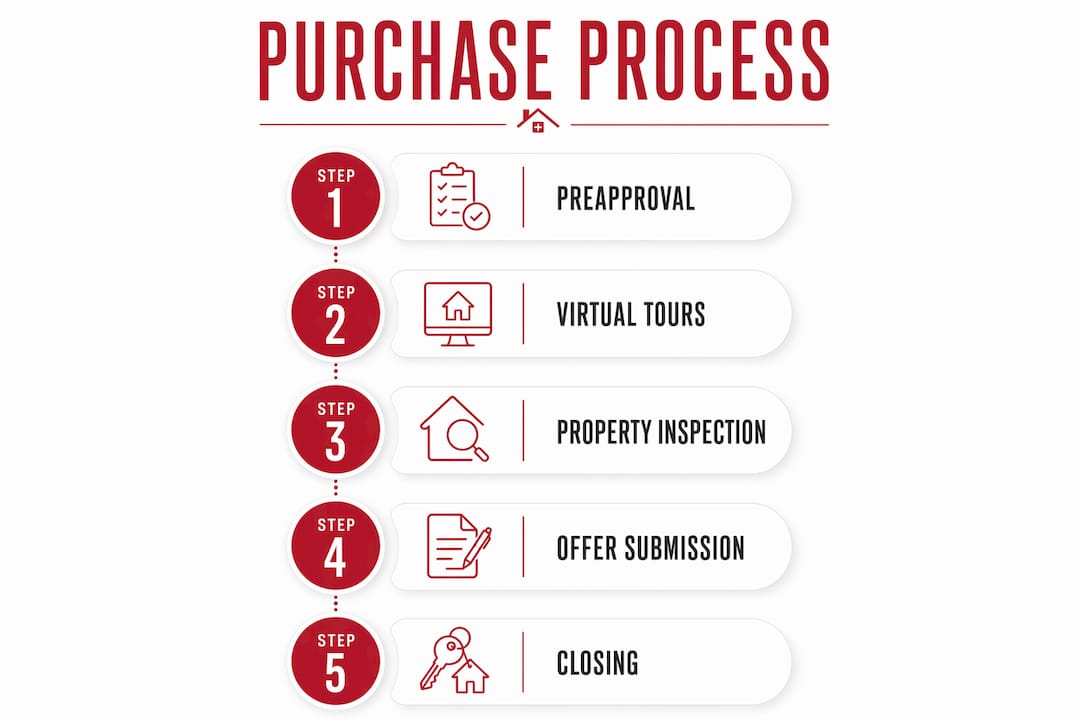
- Research and shortlist. Use online listing platforms, Google Street View, and neighborhood forums to narrow your target market before you spend a dollar on travel.
- Get mortgage preapproval. Your lender must be licensed in the state where the property sits. National lenders usually qualify; local credit unions often do not. Get the preapproval letter before you contact agents.
- Hire a local buyer's agent. Look for relocation experience specifically. A good agent becomes your eyes, ears, and negotiating voice on the ground.
- Hire a real estate attorney if the state requires one. Several states mandate attorney representation at closing. Confirm early. The role of a real estate attorney varies by state, so ask your agent what is standard locally.
- Virtual and in-person verification. Schedule 3D tours and agent-led video walkthroughs first, then plan at least one in-person visit during the inspection window if the property and price warrant it.
- Submit an offer with contingencies. Include inspection, financing, appraisal, and title contingencies. Remote buyers should not waive these lightly.
- Inspections, appraisal, and title work. This is where most delays happen. Coordinate inspector video calls and keep your lender's underwriting team updated.
- Closing and key transfer. Confirm whether your title company accepts RON or requires in-person signatures. Arrange key delivery in writing.
- Post-closing move coordination. Align your moving company, utility setup, and mail forwarding with the closing date.
The 30–60 day window is realistic for a straightforward transaction. Appraisal scheduling and lender underwriting are the most common sources of delay, not the remote coordination itself.
Pro Tip: In competitive markets, a preapproval letter plus flexible earnest-money timing signals seriousness to sellers. It can be the difference between your offer and an identical local one.
What are the best ways to verify a property you can't visit yet?
Remote verification has improved dramatically, but it still requires deliberate effort.
- Matterport or 3D tours: These let you walk a floor plan at your own pace and revisit rooms. Request one from the listing agent if it is not already posted.
- Agent-led live walkthroughs: A FaceTime or Zoom session with your buyer's agent is more useful than any static gallery. Ask them to open every closet, run every faucet, and walk the exterior perimeter.
- Live inspector video call: If you can't attend the inspection, require a live video walkthrough with the inspector. Ask questions in real time. Static reports miss context that a live call catches.
- Google Street View and neighborhood forums: Check daytime and nighttime imagery. Nextdoor and local Facebook groups give you unfiltered resident opinions on noise, traffic, and community feel.
- HOA documents and county records: Request the HOA packet and recent meeting minutes. Pull flood-zone overlays and zoning data from the county planning office.
For high-dollar or lifestyle-sensitive purchases, an in-person visit is worth the cost. Schedule it during the inspection window to avoid a second trip. Stu Harvey Estates coordinates virtual luxury tours for buyers who need a thorough remote evaluation before committing to travel.
Pro Tip: Book your inspection-window trip before you make the offer. Flights and hotels fill fast, and you want the flexibility to attend on the inspector's schedule, not yours.

How do financing and appraisals affect your timeline?
Your lender's state licensing is non-negotiable. A lender not licensed in the property's state cannot originate your loan, full stop. National banks and large online lenders are typically licensed everywhere; confirm this early rather than discovering the problem after you are under contract.
Occupancy type changes your loan terms significantly:
| Occupancy Type | Typical Down Payment | Notes |
|---|---|---|
| Primary residence | 3% | Most loan programs available |
| Second home | 10% | Stricter reserve requirements |
| Investment property | — | Higher rates, tighter underwriting |
Second homes and investment properties require higher down payments and stronger cash reserves. VA and USDA programs have their own occupancy rules. Clarify your loan type before you start touring.
Appraisal scheduling is the single most common cause of timeline slippage. A local appraiser familiar with the market moves faster and produces a more defensible valuation. Ask your lender to request one early.
Pro Tip: If you plan to use a power of attorney for signatures, confirm lender and title company acceptance before you go under contract. Some lenders reject POA outright, and finding that out at closing is a serious problem.
What due diligence checks matter most for out-of-state buyers?
The biggest risk in buying a home out of state is the local knowledge gap. Taxes, HOA rules, flood zones, and planned developments can all change your carrying costs and daily life in ways that photos never reveal.
- County assessor records: Property taxes vary enormously. Some jurisdictions run around $1,044 per year; others exceed $9,000. Pull the actual tax history before you make an offer.
- HOA covenants and recent minutes: Minutes reveal pending special assessments, litigation, and rule changes that the seller's disclosure may not mention.
- Title search: Outstanding liens, easements, and encroachments show up here. Your title company handles this, but review the commitment yourself.
- Flood zone and insurance requirements: FEMA flood maps are public. A property in a high-risk zone carries mandatory flood insurance, which adds meaningfully to annual costs.
- Planned local development: The county planning office can tell you what is approved or pending near the property. A new highway or commercial development nearby changes the neighborhood.
- Specialty inspections: Coastal properties may need erosion assessments; older homes may need radon or septic testing. Commission these based on local risk, not generic checklists.
Most of these records are accessible online through county portals, HOA management platforms, and FEMA's flood map service. The local knowledge guide from Stu Harvey Estates walks through how to interpret what you find.
How should you structure an offer when buying sight-unseen?
A sight-unseen offer does not have to be a reckless one. The contingencies you include are your protection.
Contingencies to include:
- Inspection contingency with a defined window (typically 10–17 days)
- Financing contingency tied to your preapproval terms
- Appraisal contingency to protect against overpaying
- Title contingency to clear any ownership issues
Negotiation tactics that reduce travel risk:
- Request seller-provided documents (HOA packet, prior inspection reports, utility bills) within 5 days of acceptance.
- Negotiate an inspection-window visit clause that allows you to walk the property during the inspection period.
- Use backup offers on competing properties so a failed deal does not leave you starting over.
- Confirm key delivery method in the contract, not just verbally.
On earnest money: 1–3% of the purchase price is standard. Wire it only after confirming instructions by phone with the title company using a number you looked up independently. Wire fraud targeting real estate transactions is a real and growing threat.
Pro Tip: Understand your state's "as-is" contract language carefully. Waiving repair requests is not the same as waiving inspection rights. In some states, "as-is" language can strip your ability to exit based on inspection findings. Ask your attorney.
What does closing look like when you're not there in person?
RON is legal in 45 states as of 2026, but individual title companies and lenders set their own acceptance policies. Confirm RON support with your settlement company before you go under contract, not the week of closing.
- If RON is accepted: You join a video call, present government-issued ID, and sign electronically. Request a recorded copy of the session.
- If RON is not accepted: A limited power of attorney or an in-person trip are your options. Confirm lender acceptance of POA in writing before you rely on it.
- Wire transfers: Always verify wiring instructions by phone using a number you sourced independently. Never follow emailed wire instructions without that call.
- Key transfer: Confirm the method in writing. Options include your agent meeting you at the property, a lockbox code, or a courier. Showing up to a locked house with no key plan is avoidable.
Pro Tip: Request written wire-transfer instructions and a recorded video of any remote notarization session. Both protect you if a dispute arises later.
Your out-of-state home buying checklist and sample timeline
Phase checklist:
- Pre-search: Check credit, set a budget, research lenders licensed in the target state
- Search: Interview agents with relocation experience, schedule virtual tours
- Offer: Confirm contingencies, wire earnest money securely (1–3% of purchase price)
- Due diligence: Commission inspections, pull county assessor records, review title commitment
- Closing: Confirm RON or POA acceptance, verify wire instructions by phone
- Moving: Book movers, set up utilities, forward mail
Sample 12-week timeline:
| Week | Milestone |
|---|---|
| 1–2 | Lender preapproval, agent interviews |
| 3–4 | Virtual tours, shortlist properties |
| 5–6 | Offer submitted and accepted |
| 7–8 | Inspections, appraisal ordered (travel trip here if planned) |
| 9–10 | Title work, underwriting review |
| 12 | Closing (RON or in-person), key transfer, move coordination |
Budget benchmarks to verify locally:
| Cost Item | Typical Range | Where to Verify |
|---|---|---|
| Earnest money | 1–3% of purchase price | Title company |
| Closing costs | 2–5% of purchase price | Lender Loan Estimate |
| Inspection fees | Varies by property size and type | Local inspector quotes |
| Travel (one verification trip) | Varies by distance | Airline and hotel rates |
| Property taxes (annual) | ~$1,044 to $9,000+ | County assessor records |
For luxury purchases, the luxury home buying checklist from Stu Harvey Estates adds detail on specialty inspections and higher-value due diligence steps.
Key Takeaways
Buying a home out of state follows the same core steps as a local purchase, but remote coordination, lender licensing, and verified due diligence determine whether the deal closes cleanly.
| Point | Details |
|---|---|
| Lender licensing matters | Your mortgage lender must be licensed in the property's state; confirm this before signing anything. |
| Timeline benchmark | Expect 30–60 days to close; appraisal and underwriting cause most delays. |
| Budget for real costs | Earnest money runs 1–3% and closing costs 2–5% of the purchase price; verify property taxes with county assessor records. |
| Confirm RON early | Remote online notarization is legal in 45 states, but individual title companies and lenders set their own policies. |
| Stu Harvey Estates | Offers buyer representation, virtual-showing coordination, and local inspection referrals for out-of-state buyers in Southern California. |
What experienced out-of-state buyers get right that first-timers miss
The process looks manageable on paper. Where buyers actually lose money is in the gap between what they can see remotely and what only shows up on the ground.
I've worked through enough cross-market transactions to know that the buyers who come out ahead are not the ones who did the most research online. They are the ones who hired the right local agent, asked the right questions during the inspection call, and did not let competitive pressure push them into waiving protections they actually needed.
The luxury market adds another layer. A $3M property in a coastal market may look identical on Matterport to a $2M one two blocks away. The difference is often in what the camera does not show: HOA litigation, a planned development two parcels over, or a flood-zone reclassification that changes insurance costs by thousands per year. Those details require someone who knows the neighborhood, not just the listing.
My consistent advice: insist on a live inspector call, pull the HOA minutes yourself, and do not skip the in-person visit on any transaction above a certain price threshold. The cost of a flight is trivial against the cost of a surprise after closing.
Stu Harvey Estates is built for buyers who can't be there in person
Out-of-state buyers in Southern California's luxury markets face a specific challenge: the properties that move fastest are often the ones that require the most local judgment to evaluate. Stu Harvey Estates provides buyer representation tailored to that reality, including buyer-advisory services and remote property-finding support, virtual-showing coordination, vetted local inspection and title referrals, and remote-closing support for buyers who need to move quickly without being on the ground.
Stu Harvey brings 15+ years of experience, $1.2B+ in sales volume, and 250+ completed luxury transactions to every client relationship. Whether you are targeting La Jolla, Newport Beach, or the Hollywood Hills, the team's local knowledge translates directly into better offers and fewer surprises at closing. Browse current listings or reach out to schedule a virtual consultation and start your search with a team that knows the market from the inside.
Useful sources and further reading
The claims in this article draw from the following authoritative sources. Use them to verify figures and confirm current rules before you act.
- Time to close on a house | Rocket Mortgage — closing timeline benchmarks and earnest money/closing cost ranges
- What states allow remote notary? | NotaryCam — RON state-by-state availability as of 2026
- Required closing costs and property tax guidance | Old Republic Title — property tax ranges and closing cost components
- How to buy a house in a different state | Chase — procedural overview and lender licensing notes
- Buying a house out of state | Rocket Mortgage — loan program and occupancy type guidance
- How to buy a house in another state | Zillow — inspection best practices and travel contingency planning
- Buying a home out of state | HomeLight — travel planning and backup-offer strategies
- How to buy a house out of state | EffectiveAgents — agent selection and RON adoption context
Local rules on attorney requirements, RON acceptance, and property tax rates change. Confirm current requirements with a licensed in-state agent, title company, or real estate attorney before relying on any web-based guidance for your specific transaction.