
Moving from Bay Area to San Diego generally trades your six or seven-figure Silicon Valley paycheck's ceiling for a lower cost of living, more square footage, and reliable sun, but it does not mean cheap living. You'll need real budgets, a commute-first neighborhood strategy, and a moving timeline built around military PCS season and summer demand. This guide covers all three, plus a local agent's checklist for getting it right the first time.
TL;DR:
- Expect the cost of living in San Diego to be lower than the Bay Area, but still more expensive than many other U.S. cities, especially in housing and insurance.
- Commutes vary significantly by neighborhood, so testing your actual drive during weekday mornings is essential before deciding where to buy or rent.
- Moving timing should be planned at least six to eight weeks in advance during peak season, with professional movers costing between $2,500 and $7,000 for the roughly 500-mile trip.
- School quality varies sharply by ZIP code, making it crucial to verify district boundaries, schedule school tours, and consider wildfire risks before purchasing a home.
- Adjusting to San Diego also involves cultural shifts, including a community centered more on neighborhood and coastal proximity, military presence, and a slower civic pace compared to the Bay Area.
Table of Contents
- What changes when you're living in San Diego versus the Bay Area?
- How much does it cost to live in San Diego compared to the Bay Area?
- Which San Diego neighborhoods should Bay Area movers shortlist?
- How long does the Bay Area to San Diego move take?
- What do families need to confirm before choosing a school district?
- Where do Bay Area transplants find work in San Diego?
- What does a local agent's relocation checklist look like?
- What are the rules for relocating pets to San Diego?
- Should you use storage or interim housing during the move?
- What paperwork do you need to update after moving?
- How do you set up utilities in San Diego?
- How do healthcare options compare between the two regions?
- What cultural adjustments go beyond the weather and cost of living?
- What surprises Bay Area buyers most about relocating here?
- How Stu Harvey Estates helps with your San Diego relocation
- Sources
What changes when you're living in San Diego versus the Bay Area?
The weather difference is real but not as simple as "always sunny." San Diego's coast gets hit with May Gray and June Gloom, a marine layer that keeps beach neighborhoods overcast and cool into early afternoon, while communities just a few miles inland bake in clear skies the same morning. Bay Area transplants who buy in Pacific Beach or La Jolla expecting endless sunshine sometimes feel shortchanged their first spring, so understanding what microclimate actually means for San Diego real estate before you commit to a ZIP code saves a lot of buyer's remorse.
Daily life slows down in ways that surprise people coming from Palo Alto or Oakland. Fewer late-night coworking scenes, more backyard barbecues and beach mornings, and a workplace culture that leans biotech and military rather than software sprints.
- Expect more outdoor recreation built into ordinary weekdays, not just weekends.
- Public transit is thin outside downtown and the trolley corridors, so plan on owning a car.
- Commutes run on freeways (I5, I15, the 805) rather than BART or Caltrain, and traffic patterns differ by time of day and coastal proximity.
How much does it cost to live in San Diego compared to the Bay Area?
San Diego costs less than San Francisco or San Jose, but it's still one of the more expensive metros in the country. That gap is where most of the financial upside in this move actually lives.
What a Bay Area move typically buys you: sellers who cash out of a modest Bay Area home often find their proceeds cover a larger property in San Diego, sometimes with an actual backyard instead of a shared courtyard. Renters see a similar pattern, San Diego's median rents run below San Francisco's, though the exact gap depends heavily on neighborhood and unit type.
That relief doesn't erase every bill. Keep these in the budget:
- California state income tax still applies, no matter which coastal city you land in.
- Homeowners insurance costs more in wildfire-prone canyon-adjacent neighborhoods and flood-zone areas near rivers and lagoons, so check risk maps before you fall for a view lot.
- Utility setup and moving costs (covered below) add a few hundred to a few thousand dollars depending on distance and service level.
- Property market dynamics in San Diego differ from Bay Area patterns, inventory moves differently and price appreciation doesn't track the same tech-cycle swings.
Which San Diego neighborhoods should Bay Area movers shortlist?
Pick your commute before you pick your view. That's the single piece of advice local movers and agents repeat most, and it holds up because a gorgeous house with a 90-minute freeway slog to your office will wear on you faster than any HOA fee.
Four archetypes cover most Bay Area buyers:
- Coastal premium — La Jolla, Del Mar, Pacific Beach. Expect the highest price per square foot and the strongest resale demand, best for buyers prioritizing lifestyle over commute distance.
- Walkable urban — North Park, Little Italy, Mission Hills. Denser, restaurant-heavy, closer to downtown biotech and healthcare jobs, appeals to former urban Bay Area residents who don't want to lose walkability.
- Family suburbs — Carmel Valley, Rancho Bernardo, Poway. Larger lots, top-rated school clusters, longer commutes to downtown or the coast.
- Value suburbs — Chula Vista, Santee, parts of El Cajon. Lower entry price, more space per dollar, but plan for a real commute if your job sits near the coast or downtown.
Once you've narrowed to two or three archetypes, shortlist three to five specific neighborhoods and drive each one during your actual future commute window, not on a quiet Sunday afternoon. Confirm school boundaries and HOA or parking rules before you write an offer. If you're torn between two areas, rent for a year first. A deeper look at coastal neighborhood trade-offs is worth reading before you tour.
Pro Tip: Drive your prospective commute at 7:30 AM on a Tuesday, not on a Saturday. San Diego traffic patterns around La Jolla and downtown shift dramatically on weekday mornings, and that fifteen-minute drive on your scouting trip can become forty-five in real life.

How long does the Bay Area to San Diego move take?
Most full-service moves along this roughly 500-mile corridor take two to five days in transit, with total cost typically landing between $2,500 and $7,000 depending on load size and service level.
Booking timing matters more than most people expect:
- Book six to eight weeks out during peak season (summer and military PCS months).
- Book two to four weeks out during slower fall and winter windows, when rates run lower and crews have more availability.
- Full-service movers cost the most but handle everything; direct carriers avoid broker markups; DIY truck rentals and portable containers cut costs further if you're willing to load and drive yourself, and U-Haul's planning guidance recommends locking in trucks or containers roughly six weeks ahead.
- If you're landing in a high-rise or HOA-governed building, arrange your certificate of insurance and reserve elevator or loading dock time before move day, not the morning of, and consider consulting San Diego California | One Day Doors & Closets for any home improvements needed after your move.
What do families need to confirm before choosing a school district?
San Diego's school quality varies sharply by ZIP code, and district and boundary data show that stratification clearly, meaning two homes ten minutes apart can feed completely different school tiers.
Before you commit to any neighborhood on your shortlist:
- Pull the district boundary map for every home you're seriously considering, not just the city-wide reputation.
- Schedule an actual school tour, ideally during a regular school day rather than an open house.
- Ask about after-school care availability and pediatric care access nearby, both matter more once you're unpacking boxes with a toddler underfoot.
- Check wildfire and flood risk maps for the same address, insurance costs and safety concerns often trail school rankings in importance but shouldn't.
Where do Bay Area transplants find work in San Diego?
San Diego's job market centers on four anchors: biotech and life sciences (Torrey Pines and Sorrento Valley), defense and military (a major Navy and Marine Corps presence), healthcare systems, and tourism and hospitality. It's a different mix than the software-and-venture-capital economy most Bay Area movers are leaving.
- Commutes run slightly shorter on average than Bay Area equivalents, but freeway chokepoints around I5 and I15 during rush hour can erase that advantage fast.
- Test your actual commute at rush hour before signing anything, GPS estimates lie about traffic.
- If your job is remote, weight lifestyle and microclimate heavily in your neighborhood pick since commute constraints don't apply.
- Migration data confirms a steady inbound flow from other California metros, including San Francisco, which keeps housing demand and competition elevated in popular ZIP codes.
What does a local agent's relocation checklist look like?
After 15 years and more than $1.2 billion in Southern California sales, a few habits separate a smooth relocation from a stressful one. Visit prospective neighborhoods at different times of day, not just once. Line up your COI and elevator reservation before your movers arrive, especially in coastal condo buildings. Choose your microclimate deliberately, coastal fog versus inland sun is a lifestyle decision, not a footnote. And run wildfire and flood due diligence on any home you're seriously considering, before you fall in love with it.
For readers weighing coastal versus inland trade-offs in more detail, this neighborhood breakdown covers the higher end of that spectrum directly.
What are the rules for relocating pets to San Diego?
California doesn't require a special entry permit for dogs and cats arriving from another California city, so a Bay Area to San Diego pet move is simpler than an out-of-state relocation. That said, a few practical steps prevent headaches.
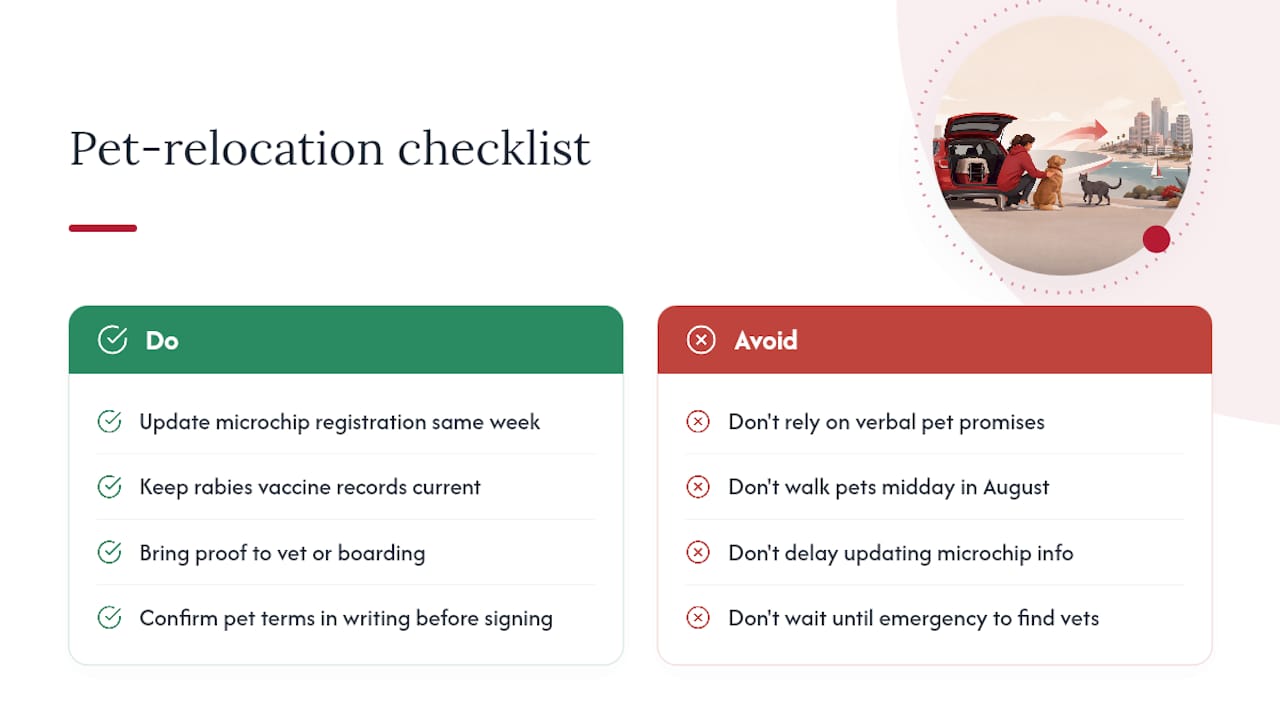
Update your pet's microchip registration with your new address the same week you move, animal control and shelters rely on that database if a pet gets loose during the chaos of moving week. Rabies vaccination records should stay current and accessible, many San Diego veterinary offices and boarding facilities ask for proof before accepting a new patient.
Housing matters more than most people plan for. Rental listings in San Diego vary widely on pet policy, and even pet-friendly buildings often cap weight limits or breed types, so confirm pet terms in writing before you sign a lease, not after your moving truck is already unloading. If you're buying into an HOA-governed condo or townhouse, check the community's pet rules too, some coastal buildings restrict pet count or size regardless of what the listing agent tells you verbally.
Heat matters differently here than in the fog-cooled Bay Area. Inland neighborhoods run hotter for more of the year, so pets accustomed to San Francisco's mild summers need a gradual adjustment period, extra water, shade, and caution with midday walks in August.
Finally, research local veterinary and emergency animal care options in your target neighborhood before moving day, not during a Sunday night emergency. Coverage and specialty care availability varies by area, particularly the further you get from central San Diego.
Should you use storage or interim housing during the move?
Timing rarely lines up perfectly between selling in the Bay Area and closing in San Diego, so plan for a storage or interim housing gap of anywhere from a few days to a couple of months.
Portable storage containers work well if you're not sure exactly which neighborhood you're landing in. Load once at your Bay Area home, store the container at a local facility, and have it delivered once you've settled on a place, useful if you're planning to rent for a year before buying. Traditional self-storage units make more sense for smaller loads or if you're storing furniture that won't fit your new (often smaller, if you're moving into a walkable urban condo) place immediately.
Interim housing options range from extended-stay hotels to short-term furnished rentals, both common choices while you house-hunt in person rather than sight-unseen. Furnished corporate housing tends to run pricier but includes utilities and basic furnishings, useful if you're moving with kids and don't want to buy an air mattress for six weeks. Some families choose to stay with relatives or in a short-term rental in one neighborhood while touring homes in several others, which doubles as a real-world test of commute times and daily routines before committing to a purchase.
Whatever you choose, get the timeline in writing. Storage facilities and short-term rentals both have their own notice periods and fee structures, and a moving plan that assumes everything closes on schedule rarely survives contact with actual escrow timelines.
What paperwork do you need to update after moving?
California residency paperwork follows a fairly firm 10-day clock once you've established a new home address, so treat this as one of the first tasks after your boxes arrive, not something to handle "eventually."
Your driver's license address update needs to happen through the California DMV within that window; you can typically do this online if your license is current and you're not changing your name. Vehicle registration follows a similar path, update your address with the DMV so registration renewals, smog check notices, and toll violations reach the right mailbox.
Voter registration is worth handling the same week, especially if you're moving between counties and want to be eligible for local San Diego elections. California's online voter registration portal makes this a five-minute task, but it's easy to forget amid unpacking.
A few more administrative items round out the list: notify your bank and credit card issuers of the address change to avoid fraud holds on your first San Diego purchases, forward your mail through USPS, and update your address with the IRS and California Franchise Tax Board if you're filing taxes soon after the move. None of these tasks are complicated individually, but stacked together in your first two weeks, they're the kind of detail that's easy to let slip until a bounced piece of mail forces the issue.
How do you set up utilities in San Diego?
Utility setup in San Diego runs through a different set of providers than the Bay Area, so don't assume your old accounts transfer automatically, they don't.
San Diego Gas & Electric (SDGE) handles both electricity and natural gas service for most of the metro area, and you'll want to schedule your account transfer or new service at least a week before move-in to avoid arriving at a dark house. Water and sewer service typically comes through the city's Public Utilities Department, though some suburban communities run their own municipal water districts, worth checking during your neighborhood research phase rather than after signing a lease.
Internet and cable options vary more by neighborhood than people expect. Coastal and urban areas generally have solid fiber and cable competition, while some inland and canyon-adjacent pockets have fewer providers, another reason to ask about internet speeds during a home tour if you work remotely. Trash and recycling service is usually bundled through the city or your HOA in condo buildings, so check whether that's already included before you set up a separate account.
How do healthcare options compare between the two regions?
San Diego's healthcare system rivals the Bay Area's in scale, if not in exact specialty mix. The region hosts major academic and hospital networks including UC San Diego Health, Scripps Health, and Sharp HealthCare, each with multiple campuses spread across coastal and inland neighborhoods, so proximity to a specific hospital system is worth weighing during your neighborhood search, particularly if you have ongoing specialist care needs.
Pediatric care is a strong point for families, Rady Children's Hospital anchors specialty pediatric services regionally, which matters if you're relocating with kids who have any ongoing medical needs. Coverage networks differ from Bay Area plans though, so confirm your existing insurance carrier's in-network providers in San Diego before you move, rather than discovering a gap during your first urgent care visit.
What cultural adjustments go beyond the weather and cost of living?
The cultural shift running underneath the climate and cost differences is often the one that catches Bay Area transplants off guard. San Diego's economy and social scene lean military, biotech, and tourism rather than venture capital and software, and that shapes everything from networking events to weekend conversation topics.
Community identity here often centers on neighborhood and coastal proximity rather than employer or industry, you're more likely to be asked which beach you surf near than which startup you work for. The military presence, particularly around Coronado and the bays, brings a different rhythm to certain communities, deployment cycles and base schedules influence local business hours and community events in ways that don't exist in Bay Area suburbs. Civic pace runs slower too, San Diego's local government and permitting processes often move at a different speed than the Bay Area's, worth knowing if you're planning any renovation soon after buying.
What surprises Bay Area buyers most about relocating here?
Most Bay Area buyers I work with come to San Diego chasing the same two things: more space and a slower pace. What surprises them is how much the microclimate and commute pattern shape daily happiness more than the price tag does. The mistake I see most often is buying on view alone, then discovering the coastal fog or the freeway chokepoint six months later, once the moving boxes are long gone.
If you want a neighborhood match built around your actual commute and lifestyle priorities, not just listing photos, reach out and we'll walk through it together.
— Stu Harvey
How Stu Harvey Estates helps with your San Diego relocation
Stu Harvey Estates is the direct alternative to sorting through generic listing sites and guessing at neighborhood fit on your own. Instead of scrolling hundreds of unfiltered results, you get a shortlist built around your actual commute, school priorities, and microclimate preference, backed by more than 15 years of Southern California transactions and over $1.2 billion in sales across San Diego, Los Angeles, Orange County, and beyond.
A typical initial consult covers your budget range, target neighborhoods, and timeline, then narrows to a short list of homes and areas worth touring in person, with concierge-level support connecting you to trusted local movers, inspectors, and lenders along the way. If you're ready to see what's actually available, browse current San Diego listings or reach out to request a personalized relocation plan built around where you're coming from and what you actually need in your next home.
Sources
- NeighborhoodScout — San Diego schools
- Bekins / AMS Relocation — Moving from Bay Area to San Diego
- U-Haul — Moving to San Diego: A complete guide
- Apartment List — Moving to San Diego