
A relocation real estate checklist is a transaction-focused task list and timeline that lines up every step of buying or selling a luxury home, from initial search through closing, so the move happens on schedule and without surprises at the closing table. For a $3 million or $30 million property, that means coordinating escrow deadlines, jumbo underwriting, title complexities, and moving logistics into one document a client or their transaction coordinator can actually run. Stu Harvey brings 15+ years of real estate experience and 250+ personal career transactions to helping clients organize their property search and transaction timelines.
The short version: a well-built checklist prevents the two things that sink luxury deals most often, blown timelines and last-minute security gaps at closing.
-
Defines the transaction timeline from pre-listing through post-close
-
Assigns ownership of each task to agent, coordinator, escrow, or client
-
Builds in buffer days for jumbo underwriting and specialized inspections
-
Includes wire fraud and identity verification protocols for high-value transfers
Key Takeaways
A relocation real estate checklist works because it turns a luxury transaction’s scattered deadlines into one owned, date-anchored plan that protects both timing and discretion.
| Point | Details |
|---|---|
| Build in buffer days | Add 15 to 20 days to contract timelines to absorb jumbo underwriting and inspection delays. |
| Assign an owner to every task | Agent, TC, escrow, lender, and attorney each need clear responsibility, not shared guesswork. |
| Verify wires by phone, always | Confirm wiring instructions using stored contact details, never a number from an email. |
| Book white-glove movers early | Schedule specialty movers 8 to 10 weeks ahead, independent of the exact closing date. |
| Use a coordinator that adapts the plan | Stu Harvey Estates runs off-market search, TC handoff, and move coordination as one timeline. |
Table of Contents
What Is a Relocation Real Estate Checklist Meant to Cover?
This checklist stays inside the transaction lane: property search, offers, inspection contingencies, escrow and title deadlines, disclosures, staging, and the closing logistics that need to sync with a move date. It is not a packing list or a change-of-address tracker.
-
Included: offer terms, contingency deadlines, escrow milestones, title review, disclosure timing, staging windows, move-in/move-out coordination tied to the contract
-
Excluded: boxing up the kitchen, hiring painters for the new place, forwarding mail
-
Hand it off when: you have more than one property closing within 30 days of each other, or the deal involves a trust, LLC, or out-of-state lender
What Does a Luxury Relocation Timeline Look Like?
Most luxury purchases run several months end-to-end, and the countdown to closing benefits from firm anchor points rather than a vague sense of “sometime this spring.”
-
90 to 180 days out: Get pre-qualified with a jumbo lender, define search criteria, and start off-market outreach
-
60 to 90 days out: Tour properties, submit offers, negotiate terms and contingency periods
-
30 to 45 days out: Complete inspections, order title work, finalize loan underwriting
-
14 to 21 days out: Clear contingencies, confirm insurance, review closing disclosure
-
7 days out: Verify wire instructions by phone, confirm movers and staging removal
-
Closing day: Sign, fund, record
-
Post-close: Transfer utilities, update recordkeeping, confirm move-in access
Jumbo underwriting commonly takes 45 to 60 days compared to 21 to 30 days for a conforming loan, and trust or LLC title work can add more. That’s why luxury home buying timelines generally recommend a 15 to 20 day buffer built directly into the contract, not added as an afterthought when something slips.
Pro Tip: Ask your escrow officer to schedule closing for a Tuesday or Wednesday. It gives you two business days of slack if a wire, a signature, or a document review runs late, without pushing you into a weekend delay.
Who Owns Each Task in the Phase-by-Phase Checklist?
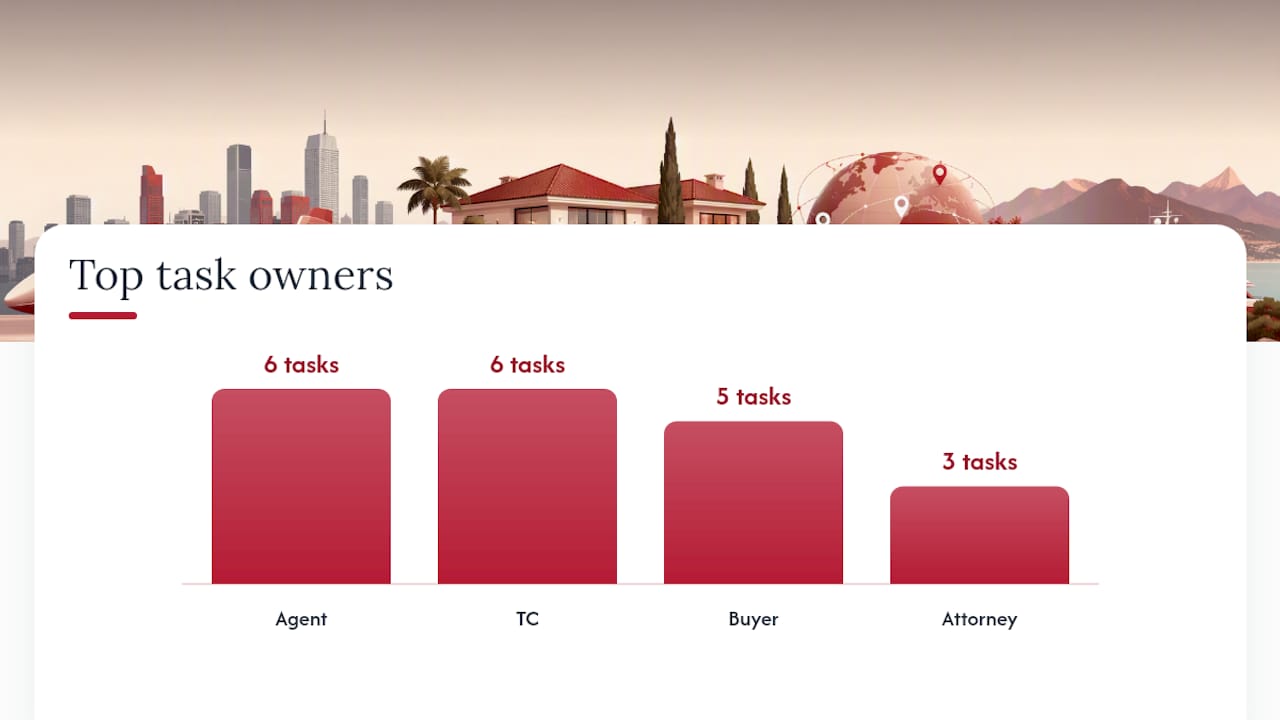
Every phase needs a name attached to every task, not just a date. Here’s how the work breaks down.
1. Pre-search readiness
-
Get jumbo pre-qualification letter (buyer, lender)
-
Define budget including carrying costs (buyer, agent) — critical
-
Select agent, TC, and attorney if needed (client) — critical
-
Set up secure document-sharing folder (TC) — recommended
2. Active search and off-market outreach
-
Review off-market and pocket listings (agent) — recommended
-
Tour shortlisted properties (buyer, agent)
-
Order preliminary title search on top choices (title officer) — recommended
3. Offer and acceptance
-
Draft offer with buffer-day contingencies (agent, attorney) — critical
-
Verify seller disclosure package is complete (agent) — critical
-
Open escrow and confirm wiring instructions verbally (escrow) — critical
4. Contingencies and due diligence
-
Order structural, roof, and specialized systems inspections (buyer, TC) — critical
-
Review HOA/trust documents if applicable (attorney) — critical
-
Confirm insurance quote before contingency removal (buyer) — critical, since insurability issues at the $5M-plus tier often surface late and derail deals that skipped this step
5. Escrow, title, and financing
-
Clear underwriting conditions (lender) — critical
-
Finalize title insurance and trust vesting (title officer, attorney) — critical
-
TC confirms all signed docs 5 days before closing — critical
6. Move overlap and arrival
-
Book white-glove movers 8 to 10 weeks ahead (concierge) — recommended
-
Coordinate staging removal with closing date (agent, TC) — recommended
7. Post-close handoff
-
Transfer keys, codes, warranties (TC) — critical
-
Archive closing documents (client, TC) — recommended
Pro Tip: Give your transaction coordinator write access to a shared calendar with every deadline color-coded by owner. Luxury deals fall apart less from missed tasks than from nobody knowing who was supposed to do them.
Why Do Luxury Deals Need Extra Diligence and Privacy?
High-value properties routinely need more runway than a standard sale because jumbo underwriting, specialized inspections, and trustee signoffs all move slower than a conventional file. Building 15 to 20 extra days into the contract, as noted above, keeps a slow appraisal or a trust attorney’s review from forcing a rushed closing.
Privacy matters just as much as timing here. Luxury transactions frequently call for private or quiet listings, restricted showing schedules, and after-hours or mail-away closings so a high-profile buyer or seller never has to sit in a crowded escrow office.
-
Run quiet or off-market listings when the client’s identity needs protecting
-
Restrict showings to pre-vetted, pre-qualified buyers only
-
Offer mail-away or after-hours closing signings
-
Complete insurance, structural, and specialized systems reviews in parallel, not sequentially
Pro Tip: Order your insurance and structural reviews the same week you go under contract, not after inspection contingencies expire. Running them in parallel instead of one after another is what lets a 30-day due diligence period actually finish on time.
Who Handles What: Roles and Coordination
A luxury deal has more moving parts than most buyers expect, and each one needs a clear owner.
-
Listing/buyer agent: sources properties, negotiates terms, manages client relationship
-
Transaction coordinator: owns the timeline, document control, and vendor coordination, and keeps communications confidential
-
Escrow/title officer: manages funds, verifies title, runs closing mechanics
-
Lender/underwriter: clears jumbo loan conditions
-
Attorney: reviews trust, LLC, or international ownership structures
-
Relocation concierge/movers: handles the physical move on a schedule that matches closing
-
Client: approves decisions, signs documents, sets privacy preferences
Hire a dedicated TC once a deal involves overlapping closings, a trust, or an out-of-state lender. Their job is tracking every deadline and coordinating vendors so the agent can focus on negotiation instead of paperwork.
How Do You Prevent Wire Fraud at Closing?
High-value wires attract fraud attempts, and the safeguards need to start well before closing day.
-
Confirm wiring instructions by phone using a number you already have on file, never one from an email
-
Verify identity at multiple points: contract signing, escrow opening, and again before funding
-
Choose title and escrow firms with experience in trust-based and international transactions
-
Confirm secure trust account protocols with your escrow officer in writing
Escrow fraud losses in real estate have grown enough that title companies now build layered verification into every high-value closing rather than treating it as optional.
What Do the Costs and Fees Look Like at Each Phase?
Luxury transaction costs stack up differently than a standard sale, and it helps to know where the money goes before you’re staring at a closing disclosure.
Pre-offer and diligence: Specialized inspections (structural, roof, wind mitigation, pool, mechanical systems) commonly run into the low thousands combined for a large estate, and insurance quotes should be obtained before you remove contingencies, not after. Title searches and preliminary reports typically fall in the few-hundred-dollar range at this stage.
Escrow and closing: Title insurance premiums scale with purchase price and often represent one of the largest line items on a luxury closing statement. Escrow fees, recording fees, and attorney review (if a trust or LLC is involved) add on top. Jumbo lenders may also charge higher origination points than conforming loans, so compare lender fee sheets early rather than at the finish line.
Move and post-close: White-glove moving services for a large estate, especially with fine art, pianos, or climate-sensitive items, cost meaningfully more than a standard household move and should be quoted 8 to 10 weeks out. Staging removal, temporary storage, and any post-close punch-list repairs round out the final tally.
Ask your agent or TC for a written fee estimate at contract signing that breaks out inspection, escrow, lender, and move costs separately. A single bundled number makes it harder to catch an inflated line item before it’s too late to negotiate.
How Do Interstate or Cross-Jurisdictional Moves Change the Checklist?
Buying in a different state adds legal and logistical layers a same-state move never touches. Property tax structures, disclosure requirements, and title insurance rules vary by state, so a checklist built for California won’t automatically work for a purchase in Colorado or Florida.
Out-of-state buyers should confirm early whether their current lender can fund in the new state, since not every jumbo lender operates in every jurisdiction. Trust and LLC ownership structures also need review by an attorney licensed in the destination state, particularly when the property will be held for estate planning or investment purposes.
Remote buyers should plan for one or two in-person trips: one during active search or offer negotiation, and one closer to closing for a final walkthrough. Video walkthroughs and remote online notarization can bridge some gaps, but title companies in certain states still require in-person signing for specific document types. Confirm this with your title officer during the escrow-opening phase, not the week of closing.
Finally, factor in state-specific transfer taxes and recording fees, which can differ by tens of thousands of dollars on a multi-million-dollar property. Your closing cost estimate should reflect the destination state’s actual rates, not a generic percentage carried over from your last transaction.
When Should You Book Movers, Cleaners, and Stagers?
Third-party services need their own place on the timeline because they run on different lead times than the transaction itself. White-glove movers handling fine art, pianos, or climate-controlled items should be booked well in advance of the anticipated move date, well before you know the exact closing date.

Staging works in reverse. If you’re selling, staging should go in during the pre-listing phase and come out only after closing is confirmed and funded, never before, in case a closing slips. If you’re buying, coordinate the seller’s staging removal date with your final walkthrough so you’re not inspecting a home full of rented furniture.
Cleaning crews for a luxury estate, especially one with specialty flooring, stonework, or extensive glass, should be scheduled for both a pre-listing deep clean and a post-move-out clean, timed around the final walkthrough rather than the closing date itself, since sellers often need a day or two after signing to vacate.
Build a shared vendor calendar that your transaction coordinator or concierge owns, cross-referenced against the escrow timeline. The goal is simple: no vendor shows up before the property is legally ready for them, and no vendor holds up a closing because they were booked too late.
An Editorial Note on Running This Checklist
Organize your relocation checklist as a working document, with a named person responsible for each deadline. Review it regularly with your transaction team, and allow time for financing, inspections, title review, and moving arrangements.
How Stu Harvey Estates Handles Your Relocation Timeline
Stu Harvey Estates runs this checklist as an actual operational plan, not a PDF you’re handed and left to manage alone. That means off-market search access, a transaction coordinator who owns your deadlines and vendor calendar, and move coordination timed to your actual closing date rather than a guess.

Clients relocating between coastal markets like La Jolla, Rancho Santa Fe, the Hollywood Hills, or Newport Beach get a relocation package built around their specific timeline, covering everything from jumbo lender coordination to white-glove mover scheduling. If you’re weighing a move and want a checklist adapted to your actual contract dates instead of a generic template, start your property search and request a relocation consultation.
Sources
-
What Real Estate Agents Need to Know About Luxury Transactions - South Oak
-
$5M+ Real Estate Checklist: PBC Buyer & Seller Guide | Palm Beach Luxury
This article is general information, not a substitute for advice from a qualified financial advisor. Consult a qualified financial professional about your own circumstances before acting on anything here.