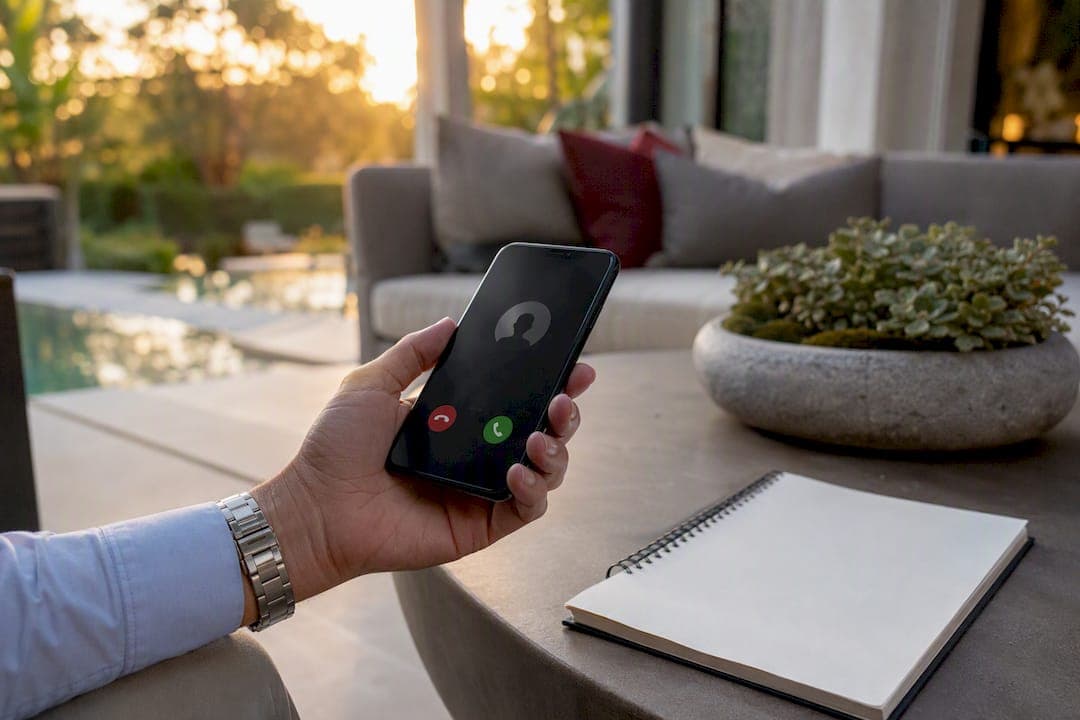
Wire fraud in real estate happens when criminals hijack email or phone communication during a transaction and trick you into sending your down payment or closing funds to their account instead of the title company's. If you suspect this has happened, act in this order: call your bank immediately and request a wire recall, notify your lender, title officer, and agent at the same time, and save every email, screenshot, and confirmation number you have.
Speed matters more than almost anything else here. Banks can sometimes freeze a wire before it settles, but that window often closes within hours, not days, and U.S. Bank's guidance on mortgage wire fraud stresses contacting the sending bank the moment something feels wrong.
- Call your bank's fraud department and request a wire recall.
- Notify your lender, title company, and real estate agent simultaneously.
- Preserve emails, headers, screenshots, and wire confirmations before doing anything else.
Every minute counts: once fraudulent funds clear into a mule account, they're frequently moved or withdrawn within hours, which is why banks and the FBI treat these first calls as the entire recovery window.
Key Takeaways
Wire fraud in real estate succeeds when urgency and last-minute changes override basic phone verification, so slowing down and calling a known number is the single most effective defense.
| Point | Details |
|---|---|
| Verify before wiring | Call the title company using a number from your original contract, never one from an email. |
| Watch for last-minute changes | Any change to wiring instructions within 48 hours of closing deserves a phone call, not a quick reply. |
| Act within hours, not days | Call your bank's fraud department immediately if you suspect fraud, since recovery odds drop fast after funds clear. |
| Preserve everything | Save email headers, wire receipts, and call logs before reporting to IC3 or the FTC. |
| Choose a team with documented protocols | Stu Harvey Estates verifies wiring instructions out-of-band and logs every handoff during closing. |
Table of Contents
- What Counts as Wire Fraud in a Real Estate Transaction
- How Scammers Intercept Closings and Redirect Funds
- What Red Flags Signal an Active Scam?
- A Prevention Checklist for Buyers, Sellers, and Agents
- How Do Experienced Agents Actually Protect Clients?
- What to Do If You've Already Wired Money to a Scammer
- What Evidence Should You Collect, and Where Do You Report It?
- Why Preparation Beats Panic at the Closing Table
- Frequently Asked Questions
- Sources
What Counts as Wire Fraud in a Real Estate Transaction
Wire fraud in this context is a federal crime: someone uses electronic communication, usually a compromised or spoofed email account, to trick you into wiring money to an account they control. Legally, it typically falls under business email compromise (BEC), a scheme the FBI describes as one of the most damaging fraud vectors facing consumers and businesses alike.
The 2025 IC3 Annual Report documents continued growth in BEC losses, with real estate transactions repeatedly named among the highest-value targets. That's not surprising once you consider the mechanics of a closing: large sums move in a single transfer, multiple parties handle sensitive details, and buyers are often wiring money for the first time in their lives. Criminals don't need to fool a bank's fraud algorithms. They just need to fool one nervous, distracted human at exactly the right moment.
How Scammers Intercept Closings and Redirect Funds
Most real estate wire fraud follows a predictable sequence, even though the details vary case by case.
- Phishing and email compromise. Scammers send a convincing fake login page to an agent, title officer, or buyer, harvesting credentials.
- Silent monitoring. Once inside an inbox, they read months of correspondence, learning names, dates, and transaction details.
- Timed interception. Right before closing, they either intercept the real wiring instructions email or spoof a new one from an address that looks nearly identical to the real one.
- The fraudulent ask. The buyer receives "updated" instructions, often with urgent language about a deadline, and wires funds to the criminal's account.
Common entry points include unsecured email accounts, third-party document portals without two-factor authentication, and spoofed phone numbers that mimic a title company's real line. AARP documented a New Jersey couple who lost roughly $92,000 this exact way, wiring their down payment to an account that looked, on paper, entirely legitimate.
What Red Flags Signal an Active Scam?
- Wiring instructions that change at the last minute, especially within 24 to 48 hours of closing.
- A request to send funds to a bank or account type that doesn't match earlier paperwork.
- Sudden urgency: "wire today or lose the house," "the deadline moved up."
- Emails with slightly off tone, unusual phrasing, or small spelling errors from someone who normally writes carefully.
- A phone call or text from a "known" contact using a new number you haven't used before.
The AARP case above followed this exact pattern: a legitimate-looking email arrived days before closing, cited a supposed bank change, and pressured the buyers into acting before they could confirm anything by phone.
Pro Tip: If a wiring instructions email arrives with any changed detail, however small, stop. Call the title company using the number from your original contract, never a number in the email itself.
A Prevention Checklist for Buyers, Sellers, and Agents
Every party in a transaction has a specific role to play in stopping fraud before money moves.
Buyers should:
- Get the wiring instructions in person or by phone, never solely by email, before the transaction even begins.
- Call the title company directly, using a number from the closing contract or the company's official website, to confirm any instructions before sending funds.
- Send a small test transfer of $1 to verify the account, when your bank supports it, before the full amount.
Agents should standardize:
- A written policy that wiring instructions are never sent or accepted via email without a follow-up call.
- Client education at contract signing, not the week before closing, warning buyers about exactly this scam.
- A documented verification log for every handoff between agent, lender, and title.
Title and escrow companies must:
- Deliver wiring instructions only through an authenticated client portal, not plain email attachments.
- Use a signed Wire Transfer Warning Form that buyers acknowledge before closing.
- Apply secure document seals or watermarks that make tampering easy to spot.
Here's a script that works: when confirming instructions, ask the title officer to state the last four digits of the escrow account and the closing date from memory, not by reading them off a screen. A scammer working off a hacked inbox usually can't answer specifics that weren't in the intercepted email.
Pro Tip: Never trust a phone number pasted into an email. Look it up independently, on the title company's website or your signed contract, every single time.
The National Association of REALTORS® has flagged a newer wrinkle: voice cloning and deepfake video calls now let scammers impersonate agents or sellers convincingly enough to fool multi-channel checks that used to be considered airtight. NAR recommends adding an independent callback step even when a video call "looks right." The CFPB's mortgage closing checklist backs this up, listing wire verification as a required step before any closing.
How Do Experienced Agents Actually Protect Clients?
A well-run agent team treats wire security as a standing procedure, not a one-time warning.
- All closing-related emails route through an encrypted platform, never a personal inbox.
- Wiring instructions are confirmed out-of-band, meaning a phone call using a number the client already has on file, not one supplied in a message.
- Every verification call gets logged with a date, time, and the name of the person confirming it.
- Clients get a plain-language warning about wire fraud the day they sign a purchase agreement, months before money changes hands.
A workable phone script sounds like this: "I'm calling to confirm the wiring instructions for [property address]. Can you confirm the receiving bank name and the last four digits of the account?" Ask this using a number pulled from the original contract, never from the email that raised your suspicion.
Pro Tip: Ask your agent who, specifically, verifies wiring details at each handoff. If they can't name a person and a process, that's your answer about how prepared they are.
What to Do If You've Already Wired Money to a Scammer
If you suspect fraud, whether you've caught it early or already sent funds, move through these steps immediately and in order.
- Call your bank's fraud department and request an emergency wire recall. Ask specifically for the SWIFT recall process if the funds went to a domestic bank.
- Contact the receiving bank directly, if you can identify it, and request they freeze the account.
- Notify your lender, title officer, and agent at the same time so they can flag the transaction on their end.
- File a report with IC3 and your local police department to create an official record.
Call your bank before anyone else. U.S. Bank's guidance notes that recovery odds drop sharply once a wire clears and disperses, which for BEC-style fraud can happen within 24 hours. The 2025 IC3 Annual Report shows that even with fast reporting, full recovery is far from guaranteed. That's not meant to discourage you. It's the reason speed and documentation matter more than almost anything else you'll do that day.
What Evidence Should You Collect, and Where Do You Report It?
Investigators need a paper trail, so gather it before memories fade or accounts get deleted.
- Save the fraudulent email in full, including headers, not just a screenshot of the message body.
- Keep every wire confirmation, receipt, and bank statement tied to the transaction.
- Log phone numbers, call times, and names of anyone you spoke with during the transaction.
- Preserve any text messages related to changed instructions.
Report the crime through the right channel for each issue:
- File a complaint with IC3 for the business email compromise itself.
- Submit a report through the FTC's ReportFraud portal for consumer fraud tracking.
- Use Identitytheft if personal information was compromised alongside the funds.
- Contact your state real estate regulator if a title or escrow company's negligence contributed to the loss.
Civil suits against title companies or agents are sometimes pursued when it's clear standard verification controls were skipped, though these cases hinge heavily on documented negligence.
Why Preparation Beats Panic at the Closing Table
I've watched buyers freeze up at the exact moment speed matters most, because nobody told them ahead of time what a scam attempt looks like. The agents who protect clients best aren't the ones with the fanciest tech. They're the ones who explain the wire fraud risk on day one of a contract, log every verification call, and treat a changed instruction as an automatic stop sign rather than an inconvenience.

What you should expect from any agent you work with: a clear verification process explained before you ever wire a dollar, not after something goes wrong.
How the Right Team Reduces Your Wire Fraud Risk
Every step outlined above, the callback scripts, the authenticated portals, the documented handoffs, only works if someone actually follows it on your transaction. Stu Harvey Estates builds wire verification into every closing from contract to keys: confirmed contacts, out-of-band phone checks before any funds move, and a team that flags anything that doesn't match what was agreed to in writing.

If you're buying or selling in San Diego, Los Angeles, Orange County, or anywhere along the Southern California coast, that oversight is part of what you get working with an experienced team rather than piecing together protections yourself. Browse current listings and connect with an agent to talk through your closing timeline and get your wiring instructions verified the right way before you send a single dollar.
Frequently Asked Questions
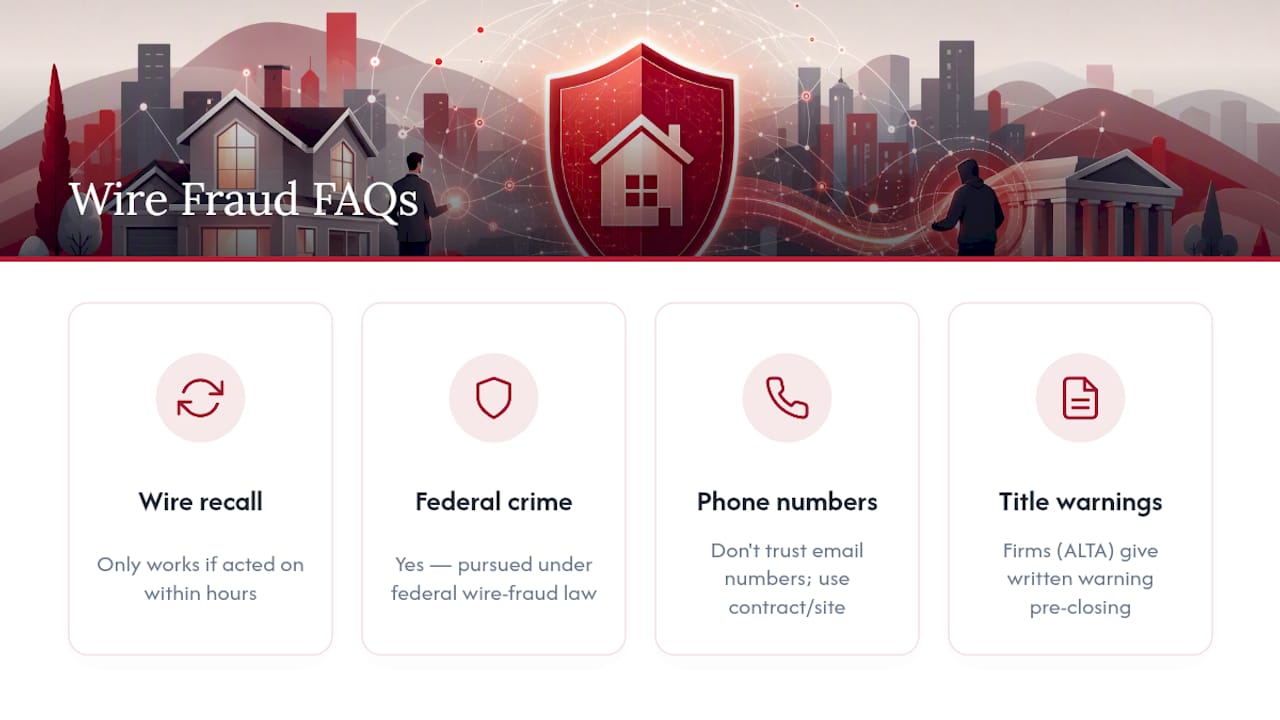
Can a bank actually recall a wire once it's sent? Sometimes, but only if you act fast. Recall requests work best within hours of the transfer, before the receiving bank disburses the funds to the scammer.
Is wire fraud in real estate a federal crime? Yes. It typically falls under federal wire fraud statutes and is investigated as business email compromise when email systems are the entry point, per the FBI.
Should I ever trust a phone number sent in an email with wiring instructions? No. Always use a number from your original signed contract or the company's official website, independent of anything in the message you're trying to verify.
What if my title company never mentioned wire fraud risk before closing? That's worth asking about directly. Reputable title and escrow companies, following ALTA guidance, typically provide a written wire fraud warning well before your closing date.
This article is general information, not a substitute for advice from a qualified financial advisor. Consult a qualified financial professional about your own circumstances before acting on anything here.
Sources
- 2025 IC3 Annual Report
- Business Email Compromise | FBI
- ReportFraud | Federal Trade Commission
- Mortgage closing checklist | CFPB