
What makes a luxury property genuinely undervalued?
An undervalued luxury property is not simply a cheap one. The value gap in luxury markets appears when a property's price per square foot sits measurably below premium neighborhood benchmarks, despite active demographic growth and ongoing development nearby. The gap usually traces back to temporary conditions: a motivated seller, a marketing misstep, or a cosmetic condition issue that looks worse than it is.
Key signals that a luxury property may be priced below its true worth:
- Price per square foot trailing comparable sales by a meaningful margin
- Days on market extending well past the neighborhood average
- Recent demographic shifts or infrastructure investment not yet priced in
- Seller circumstances suggesting urgency rather than strategic pricing
- Cosmetic condition issues masking structurally sound bones
- Listing fatigue from an outdated or poorly targeted marketing approach
The core misconception to discard early: undervalued does not mean distressed. Value in luxury real estate arises from temporary dislocations, not structural flaws. The best opportunities combine intrinsic property quality with a reason the market has not yet caught up.
How to use comparable sales data to assess luxury property value
Comparable sales analysis in luxury real estate requires more discipline than in conventional markets. Luxury transactions are infrequent, often off-market, and highly heterogeneous, so a single bad comparable can distort your entire read.
A practical method for organizing your analysis:
- Pull the last 24 months of closed sales within a half-mile radius at a comparable price tier.
- Normalize for living area, lot size, condition, and view quality.
- Calculate price per square foot for each sale and plot the trend over time.
- Layer in days on market for each transaction to gauge demand depth.
- Flag any outliers: a trophy sale or a distressed close can skew averages sharply.
| Metric | What to track | Why it matters |
|---|---|---|
| Price per sq ft trend | 5-year direction | Reveals structural appreciation vs. short-term spike |
| Days on market | Median vs. average | A few stale listings distort averages; track both |
| Transaction volume | Quarter over quarter | Thinning volume often precedes price softening |
| Cash buyer share | Percentage of closes | High cash ratios signal a stable, demand-driven market |
Days on market compression across multiple quarters confirms genuine demand, not just a seasonal blip. A flat price level paired with rising transaction volume and shorter marketing periods can actually be a healthier signal than a sharp price spike driven by one or two trophy sales.
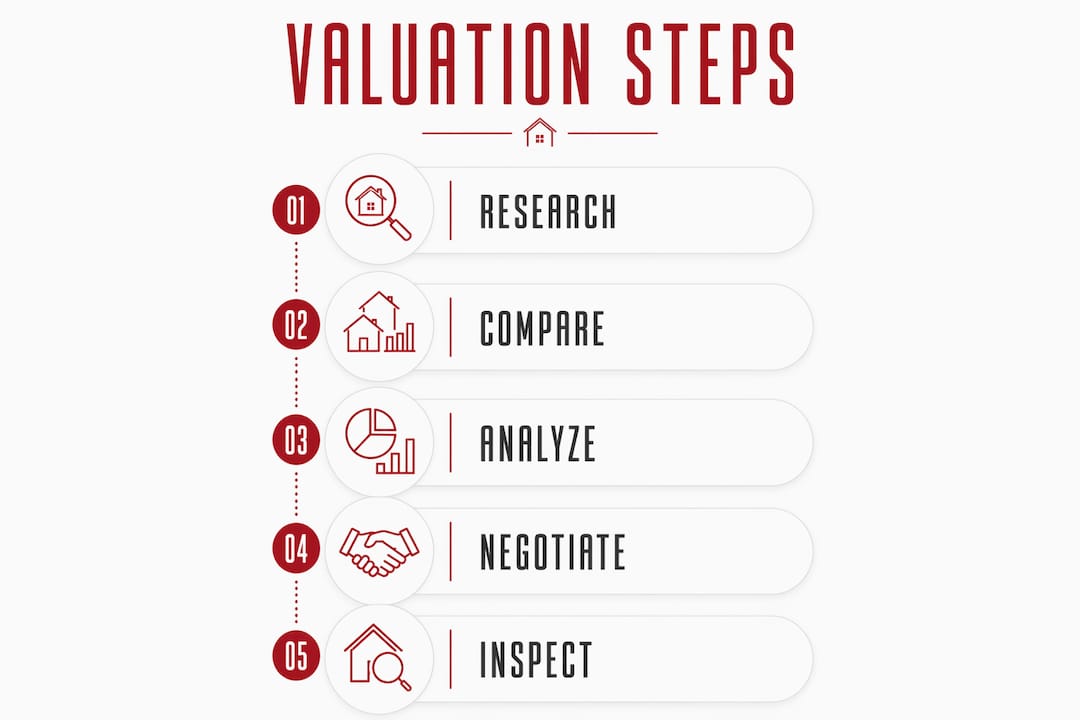
Pro Tip: Track the median and average days on market separately. In thin luxury markets, a single overpriced listing sitting for 400 days can make a healthy submarket look sluggish. The median tells the real story.
How to recognize motivated sellers and read their signals
The asking price in luxury real estate is a strategic tool, not a pure reflection of worth. A property that has lingered on the market often signals a seller under pressure, whether from a life change, a capital need, or an estate situation.
Common seller motivations that create pricing opportunity:
- Lifestyle transitions: relocation, divorce, or downsizing
- Capital needs: a seller who needs liquidity to fund another purchase or business
- Trust and estate sales: trustees motivated by speed and simplicity over maximum price
- Listing fatigue: a property that has sat unsold and whose seller has recalibrated expectations
- Ownership structure complexity: an LLC or trust arrangement that complicates the sale process
Price reductions are the clearest negotiation signal in the market. A property that has dropped its ask once is a seller who has already moved psychologically. Two reductions usually mean the seller is ready to deal. Cash buyers regularly achieve purchase prices between 3% and 7% below comparable financed offers, which compounds meaningfully at luxury price points.
Pro Tip: Ask your agent to pull the full price history on any listing you are considering. The pattern of reductions, and the timing between them, tells you more about seller motivation than any disclosure document.

Spotting luxury properties with cosmetic issues that hide real value
Cosmetic problems are the most common source of genuine value in luxury real estate. Outdated finishes, neglected landscaping, dated kitchens, and worn flooring all suppress buyer interest and, by extension, price. None of them affect structural integrity.
Properties worth a closer look often show:
- Kitchens and bathrooms with high-quality bones but dated finishes
- Landscaping that is overgrown or poorly maintained but on a premium lot
- Interior paint schemes and flooring that are simply out of style
- Lighting fixtures and hardware that read as a prior decade
- Minor deferred maintenance visible enough to deter casual buyers
The critical distinction is between cosmetic and structural. Cosmetic issues have predictable, budgetable costs. Structural problems, including foundation issues, failing mechanical systems, and water intrusion, can erase any value gap entirely. Never skip a professional inspection because a property looks like a simple refresh. Evaluating high-end properties for improvement potential requires independent structural and mechanical review before you price the renovation work.
How emerging neighborhoods signal undervalued luxury opportunities
The best time to buy into a luxury neighborhood is before the market has fully priced the transition. New wealth migration, luxury car registrations, and high-end architectural project starts consistently precede formal price appreciation in emerging luxury areas.
Neighborhood signals worth tracking:
- New luxury residential construction approvals on the fringe of established enclaves
- High-end retail and lifestyle infrastructure breaking ground, not yet open
- LLC property purchases and luxury vehicle registrations trending upward
- Architects and designers starting projects in previously overlooked blocks
- Private school openings or expansions drawing affluent families to the area
The investors who move early in transitional neighborhoods operate with a structural advantage that later buyers simply cannot replicate. Deep location knowledge accumulated over years, not months, is what separates a well-timed entry from a speculative guess. In Southern California markets like emerging San Diego submarkets, tracking these leading indicators has consistently identified appreciation windows before they become consensus.
How to access auctions, foreclosures, and off-market luxury deals
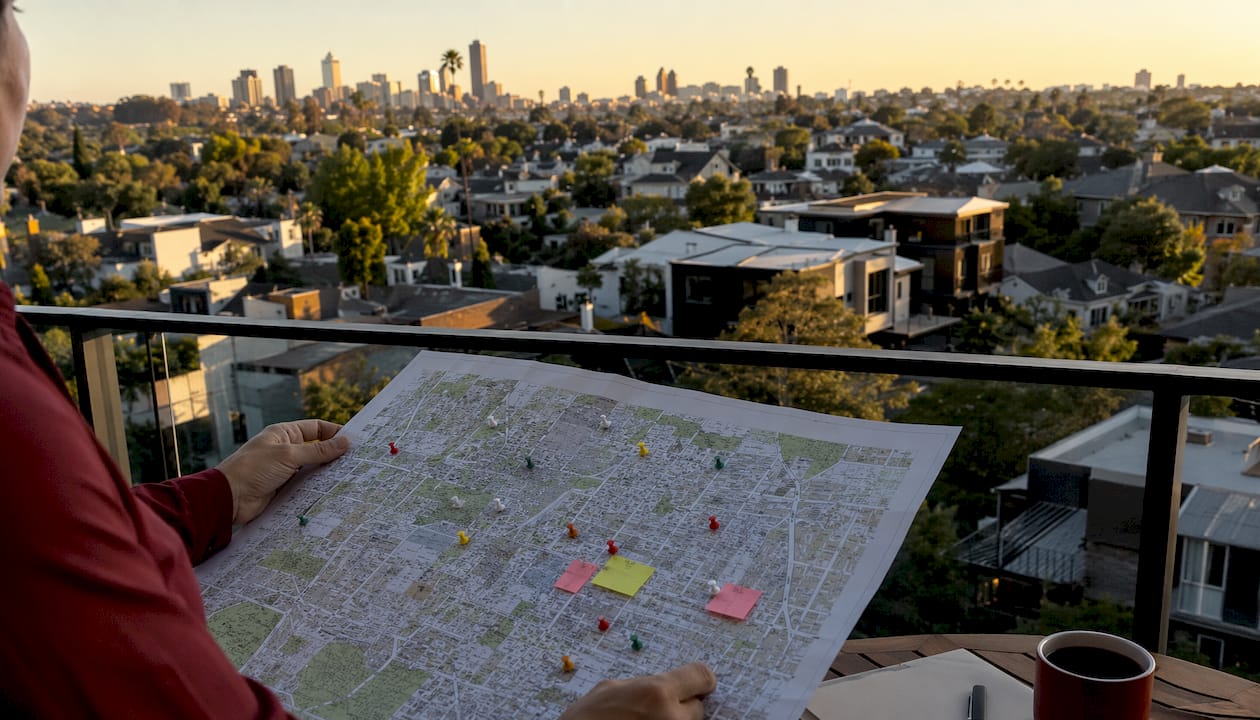
Off-market luxury properties bypass public listings entirely and trade through networks of private bankers, family offices, and brokerage gatekeepers with high client vetting standards. In some markets, a meaningful share of the most desirable inventory never appears publicly at all.
Sellers choose off-market channels for distinct reasons: privacy from public digital records, the ability to test pricing without MLS commitment, and access to targeted, pre-qualified buyers rather than casual browsers. Off-market does not guarantee a discount. The buyer advantage is access, not price.
Steps to access off-market inventory:
- Work with a buyer's agent who has a documented off-market track record in your target market and price tier.
- Register as a verified buyer with major brokerages that maintain private buyer registries.
- Prepare a specific, detailed buyer brief: price range, location, size, timeline, and proof of funds.
- Cultivate relationships with private bankers and wealth managers whose clients include luxury sellers.
- Engage attorneys who specialize in high-net-worth transactions and entity-structured sales.
For auctions and foreclosures, due diligence requirements do not shrink because the timeline is compressed. Structural inspection, title search, zoning verification, and environmental assessment remain non-negotiable. A buyer who waives inspection to close quickly on an off-market deal may save a few weeks and lose far more.
Pro Tip: Off-market deal access is determined by the quality and specificity of your buyer brief. A vague request gets ignored. A precise brief with proof of funds gets circulated.
Luxury market metrics that reveal true investment value
Luxury property valuation uses a multi-method approach that incorporates intangible factors: architectural significance, parcel uniqueness, privacy, and protected views. These elements rarely translate into automated valuation models, which is why algorithm-based estimates are unreliable in the luxury segment.
Key metrics that sophisticated investors track:
- All-cash buyer ratio: Markets where more than 60% of luxury transactions are all-cash tend to experience shallow price corrections and behave more like long-term wealth stores.
- Price per square foot trajectory over five or more years, not just current snapshot
- Yield to appreciation mix: whether the market rewards income, capital growth, or both
- Days on market compression across multiple quarters as a demand confirmation signal
- Foreign and UHNW buyer migration flows into the submarket
The luxury real estate market in Las Vegas illustrates how these metrics play out in practice: submarkets with high cash ratios and thin inventory tend to hold value through rate cycles that punish mortgage-dependent markets. Understanding why luxury neighborhoods operate differently from conventional residential markets is foundational to reading these signals correctly.
Why legal and zoning factors can make or break a luxury purchase
Zoning and legal considerations directly affect what a luxury property is worth and what you can do with it. A parcel with expansion potential under current zoning commands a premium that raw square footage alone does not capture. Conversely, restrictive easements, right-of-way obligations, or flood zone designations can quietly erode value.
Before closing on any luxury property, verify the current zoning classification and any pending rezoning applications in the surrounding area. Check for deed restrictions, HOA covenants, and historic preservation designations that limit renovation scope. Environmental assessments matter too, particularly for waterfront or hillside properties where soil stability and setback requirements can constrain development. Title searches should extend beyond standard residential depth to capture any encumbrances tied to prior entity ownership structures.
Why professional appraisal and inspection matter more in luxury real estate
Standard residential appraisals are inadequate for luxury properties. The comparable set is thin, transactions are often private, and the value drivers, including architectural pedigree, privacy, and view corridors, require specialist judgment to quantify. A luxury-focused appraiser works from private transaction databases and applies a disciplined adjustment grid across micro-location, condition, and scarcity factors.
Inspections in the luxury segment require the same level of specialization. Engage inspectors with documented experience in high-end construction: custom mechanical systems, smart home infrastructure, pool and spa equipment, and premium building envelopes all require specific technical knowledge. Never use an agent-referred inspector on a transaction where the agent has any dual-agency exposure.
How your agent relationships determine what deals you actually see
The luxury market runs on relationships. The best properties, priced correctly and with motivated sellers, rarely reach the public MLS. They move through agent networks, private buyer registries, and brokerage introductions before any public listing is considered.
To build the relationships that surface real opportunities, work exclusively with buyer's agents who specialize in your target price tier and geography. Ask specifically about their last three off-market introductions: the addresses, the dates, and the outcome. An agent with genuine network depth answers that question without hesitation. Agents who describe their "network" in general terms usually do not have one worth accessing.
Stu Harvey Estates brings over 15 years of luxury transaction experience and more than $1.2 billion in sales volume across San Diego, Los Angeles, Orange County, and Southern California. That depth of market presence means access to inventory and seller relationships that never appear on a public search. Browse current luxury property listings or connect directly to discuss your acquisition criteria.
How infrastructure and development plans affect luxury property desirability
Planned infrastructure projects are among the most reliable leading indicators of luxury property appreciation. A new transit corridor, a waterfront redevelopment, or a major mixed-use project can shift the desirability of an entire submarket within a few years, well before prices reflect the change.
Track municipal planning commission agendas, environmental impact reports, and approved development permits in your target neighborhoods. Pay particular attention to projects that improve connectivity, add lifestyle amenities, or signal public investment in an area. Private development follows public infrastructure, and luxury residential values follow both. The investors who read these signals early, before the projects open rather than after, capture the appreciation that later buyers pay a premium to access.
Key Takeaways
Identifying undervalued luxury properties requires layering market data, seller insight, and location knowledge rather than chasing low prices alone.
| Point | Details |
|---|---|
| Value gap, not cheap price | Undervalued luxury properties trail neighborhood benchmarks due to temporary dislocations, not structural flaws. |
| Cash buyer advantage | Cash offers regularly close between 3% and 7% below comparable financed offers in luxury transactions. |
| Off-market access is relationship-driven | Genuine off-market inventory trades through agent networks and private bankers, not public databases. |
| High cash ratios signal stability | Markets where more than 60% of luxury transactions are all-cash tend to experience shallow price corrections. |
| Lead indicators precede appreciation | Luxury car registrations, architectural project starts, and wealth migration signal neighborhood transitions before prices move. |