
A distressed luxury property is a high-end home or estate sold at a material discount because the owner faces a specific financial, legal, or operational pressure — not because the asset lacks upside. The discount is the entry point; resolving the underlying problem is how investors create value.
Three things every investor should know before going further:
- The discount comes from owner pressure, not property failure. A divorce, a defaulted jumbo loan, or a stalled renovation creates urgency to sell, which is where the margin lives.
- Forced appreciation is the primary return engine. Buying below stabilized value and then resolving the specific problem (clearing title, completing a renovation, repositioning the asset) drives equity growth faster than passive market appreciation.
- Your first move is a title and lien search, not a renovation estimate. Legal encumbrances kill more distressed luxury deals than construction budgets do.
For sourcing and pipeline data, investors should check ATTOM, Realtor, Foreclosure, and LoopNet as primary starting points.
Key Takeaways
Distressed luxury property investing rewards investors who resolve specific owner-pressure problems with precise underwriting, experienced teams, and conservative exit assumptions.
| Point | Details |
|---|---|
| Distress is owner pressure, not property failure | The discount comes from financial, legal, or situational urgency — not from a fundamentally flawed asset. |
| Title and lien search comes first | Legal encumbrances kill more luxury distressed deals than renovation budgets; order the preliminary title report before spending on inspections. |
| Budget 20% contingency on luxury rehab | Bespoke systems and nonlinear material costs make standard 10% contingencies inadequate for high-end renovation projects. |
| Cash and short holds outperform in current conditions | Shore Acres Capital's 2026 analysis identifies cash purchases and focused short holds as the most effective strategies given higher rates and a debt maturity wall. |
| Exit at 90–95% of current stabilized value | Underwrite exits conservatively; renovation premiums compress in softening markets, and luxury liquidity varies significantly by price band and season. |
Ready to pursue distressed luxury opportunities in Southern California? Search current listings or connect with Stu Harvey Estates for acquisition support in San Diego, Los Angeles, and Orange County.
Table of Contents
- What does "distressed luxury property" mean for investors?
- Why investors pursue distressed luxury properties
- Where investors find distressed luxury deals in the U.S.
- How to evaluate a distressed luxury deal: investor checklist
- Legal and title pitfalls that derail distressed luxury deals
- Financing and exit strategies for distressed luxury deals
- Principal risks and how to manage them
- How experienced luxury operators run distressed deals
- Typical timelines and cost buckets for distressed luxury deals
- Practical resources and data tools for U.S. investors
- Tax implications of investing in distressed luxury properties
- How luxury market trends affect distressed investment viability
- Real-world examples of distressed luxury investments
- Insurance considerations for distressed luxury properties
- Negotiating with lenders, owners, and courts in distressed luxury deals
- Why distressed luxury deals deserve a closer look
- Useful sources
What does "distressed luxury property" mean for investors?
The industry term is distressed real estate, and in the luxury segment it carries a specific meaning that differs from the standard residential context. Shore Acres Capital defines distress as owner pressure to sell, organized into four types: financial, physical, operational, and situational. The property itself may be in excellent structural shape; the distress lives in the owner's circumstances.
The four canonical distress types:
- Financial distress: Pre-foreclosure, mortgage default, or delinquency on a jumbo loan. Luxury owners with high equity often avoid formal foreclosure by selling at a discount rather than losing the asset to the bank, which means many luxury financial-distress deals are off-market.
- Physical distress: Deferred maintenance, abandoned renovations, or a partially executed build-out. A $6M coastal home with a half-finished primary suite and unpermitted additions is physically distressed even if the owner is solvent.
- Operational distress: Poor management, stalled value-add plans, or a rental property running below market rents. Common in luxury multi-unit or mixed-use properties.
- Situational distress: Probate, divorce, partnership disputes, or estate liquidation. These are the most common sources of luxury distress in coastal California markets because high-equity owners rarely default but do face life events.
Why luxury changes the underwriting:
Jumbo loans behave differently than conforming mortgages. Payoff amounts are larger, lender workouts are less standardized, and the pool of qualified buyers is thinner, which means a lender's timeline to foreclose is often longer. Owners with substantial equity have strong incentives to sell privately rather than let a property reach auction. That dynamic concentrates luxury distress in the off-market and probate channels rather than the REO pipeline.
Partial-execution risk is the other luxury-specific issue. A multi-million-dollar renovation that stopped at partial completion is not a pro-rata problem — the cost to complete nonlinear bespoke systems (custom HVAC, smart-home integration, imported stonework) often exceeds a simple proportional estimate. Understanding luxury investment properties requires a different cost framework than standard residential rehab.
Red flags that trigger deep underwriting:
- Unfinished or expired building permits
- Unique structural systems (geothermal, radiant floors, custom steel framing)
- Nonstandard materials with long lead times or single-source suppliers
- Bespoke features (wine cellars, home theaters, infinity pools) whose replacement cost is nonlinear
- HOA violations or unpaid assessments in high-end communities
Why investors pursue distressed luxury properties
The economics are straightforward: buy below stabilized value, spend capital to resolve the specific problem, and exit at or near market. Shore Acres Capital's 2026 analysis argues that current conditions — higher rates, a debt maturity wall, and stalled projects — create select distressed opportunities where cash purchases and short holds are the most effective strategies.
The two core return engines:
- Purchase discount: Buying a $5M stabilized-value property at $3.5M (a 30% discount) creates $1.5M of embedded equity before a single dollar of renovation is spent.
- Forced appreciation: Targeted interventions — completing a stalled renovation, clearing a title defect, or repositioning a mismanaged rental — convert that embedded equity into realized gain on exit.
That is roughly $800K in gross profit on $5M deployed — a return profile that passive buy-and-hold rarely matches in the same timeframe.
Market commentary from Andrew LeBaron on the 2026 distressed apartment wave found that the cleanest deals cleared near a 30% discount, while deals with governance or capital-stack complications required larger discounts to attract buyers. The lesson: complexity is priced in, and investors who can resolve complexity capture the spread.
A 2026 HousingWire summary of Auction.com data found that distressed-property buyers are focusing selectively on problem-specific opportunities rather than broad market bottom-fishing. That is exactly the right posture for luxury assets, where idiosyncratic problems (a probate dispute, a stalled permit) are more common than systemic collapse.
Pro Tip: Distressed luxury investing is not a leverage game. The operators who succeed keep contingency capital in reserve, move fast on due diligence, and size positions they can carry through a longer-than-expected hold. Thin equity cushions and aggressive debt structures are how distressed deals become distressed investments.
Where investors find distressed luxury deals in the U.S.
Sourcing is the hardest part. Luxury distressed inventory rarely surfaces on the public MLS at a discount — by the time it does, the spread has often narrowed. The best deals come from channels that give investors earlier access.
Primary sourcing channels:
- Off-market broker networks: High-end brokers in coastal markets often know about estate sales, divorce-driven listings, and pre-foreclosure situations weeks before anything is filed publicly. Relationships here are worth more than any database subscription.
- Bank REO lists: Lenders with non-performing jumbo loans occasionally release REO inventory directly to qualified buyers. Cultivating relationships with special-asset officers at regional and national banks pays off over time.
- Foreclosure auctions: Foreclosure tracks auction schedules and pre-foreclosure filings across U.S. counties. Useful for pipeline visibility, though auction purchases carry title risk (see Section 6).
- Probate filings: County probate courts are public record. Monitoring filings in target counties — Los Angeles, San Diego, Orange County — surfaces estate-sale opportunities before they reach brokers. Life-event sourcing through probate and divorce channels is a repeatable off-market strategy.
- ATTOM data feeds: ATTOM aggregates foreclosure starts, pre-foreclosure notices, and REO data at the property level. Best used to build a county-level pipeline and set alerts on specific zip codes or price bands.
- Realtor.com: Useful for tracking days-on-market outliers, price reduction history, and expired listings in luxury zip codes. A $4M listing that has sat for 180 days with two price cuts is a sourcing signal worth investigating.
- LoopNet: Primarily a commercial platform, but useful for luxury multi-unit, mixed-use, and large-estate listings with investment characteristics. Also good for identifying distressed luxury assets with CRE components.
Kiavi's July 2026 investor pulse reported year-over-year increases in foreclosure starts and filings, with faster foreclosure timelines shortening the window for investor bids. Speed of readiness — pre-approved financing, a title company on call, a contractor who can estimate quickly — is now a competitive advantage.
Pro Tip: Set ATTOM alerts for pre-foreclosure notices in your target zip codes at least 90 days before a scheduled auction. That window is when motivated sellers are most open to a negotiated off-market sale — and when you have time to do real diligence.
How to evaluate a distressed luxury deal: investor checklist
Due diligence for luxury investment properties follows a specific sequence. Skipping steps or reordering them is how investors end up with expensive surprises.
Step-by-step diligence sequence:
- Initial screen: Confirm purchase price vs. stabilized value (comps), estimated cost-to-complete, and exit liquidity. If the math doesn't pencil at conservative assumptions, stop here.
- Title and lien search: Order a preliminary title report immediately. Identify all recorded liens, unpaid taxes, HOA assessments, mechanic's liens, and any lis pendens. This is non-negotiable before spending money on inspections.
- Property condition assessment: Engage a licensed inspector and, for luxury assets, a specialty contractor who can assess custom systems (HVAC, smart home, pool/spa, structural). Standard home inspectors miss bespoke system failures.
- Cost-to-complete estimate: Get contractor bids for all incomplete or deferred work. Add a contingency of at least 15–20% for luxury projects — nonlinear material costs and specialty-trade lead times make standard 10% contingencies inadequate.
- Permit and entitlement review: Pull the permit history from the local building department. Unpermitted work creates liability at resale and can require costly remediation or demolition.
- Comps and exit underwriting: Run sold comps within 12 months in the submarket. For unique luxury properties, use a licensed appraiser familiar with the local luxury segment, not automated valuation models.
- Tax and insurance check: Confirm property tax basis, any supplemental assessments, and insurability. Distressed luxury properties — especially those with deferred maintenance or partial construction — can be difficult or expensive to insure.
- Tenant and occupancy review: If occupied, confirm lease terms, rent rolls, and any tenant rights that affect the renovation timeline or exit.
Underwriting inputs:
Legal review checklist:
- Outstanding senior and junior liens (confirm payoff amounts and subordination)
- Unpaid property taxes and special assessments
- HOA violations, unpaid dues, and pending litigation
- Permit status: open, expired, or unpermitted work
- Probate or partnership encumbrances requiring court approval
- Mechanic's liens from prior contractors
- Recommended contract clauses: escrow holdbacks for unknown liens, seller payoff covenants, assignment-friendly language, and title insurance endorsements for easements or historic covenants
Legal and title pitfalls that derail distressed luxury deals
Title is where distressed deals die. The legal complexity in luxury transactions is higher than in standard residential sales because the dollar amounts attract more creditors, the ownership structures are more complex (trusts, LLCs, family partnerships), and the history of unpermitted work or stalled renovations creates layers of potential liability.
Title risks to verify before closing:
- Surviving senior liens after foreclosure auctions (not all liens are extinguished by a trustee's sale)
- Mechanic's liens from contractors who worked on stalled renovations
- HOA assessments and fines that accrue during vacancy
- Unresolved building permits that create title exceptions
- Probate liens and court-ordered encumbrances
- Federal and state tax liens (IRS and Franchise Tax Board in California)
- Deficiency judgment exposure in recourse states
Contractual protections to request:
- Escrow holdbacks sized to cover the maximum estimated lien exposure
- Seller payoff covenants with specific cure deadlines
- Assignment-friendly language if you plan to wholesale or bring in equity partners
- Enhanced title insurance endorsements covering easements, historic covenants, and survey matters
- Specific representations and warranties on permit status and HOA standing
The sequence matters: engage a title company before making an offer, not after. A preliminary title report costs a few hundred dollars and can surface deal-killers in 48 hours. Budget for enhanced title insurance endorsements on luxury properties — standard policies often exclude the exact items that matter most in distressed transactions. Retain counsel experienced in REO, auction, and probate matters in the subject county. Seller disclosure norms in luxury sales vary by transaction type, and distressed sellers — estates, banks, courts — often provide limited or no disclosure, shifting the burden entirely to buyer diligence.
Financing and exit strategies for distressed luxury deals
Luxury distressed acquisitions require capital structures that match the asset's risk profile and timeline. The wrong financing kills deals that the underwriting supports.
Financing options:
- All-cash: The fastest path to closing and the strongest negotiating position. Sellers under pressure — estates, banks, divorcing parties — consistently favor cash buyers. The cost is opportunity cost on capital, not interest.
- Hard-money or bridge loans: Rates typically run 9–12% annualized with 1–3 points, but they close in days rather than weeks. Appropriate for short-hold flips where the renovation timeline is under 12 months and the exit is clear. KKR's analysis of CRE debt markets notes that property value resets in some sectors have made senior-secured lending attractive — a signal that bridge lenders are active and competitive in the current cycle.
- Private equity or deal-level equity: Bringing in a co-investor or equity partner shares risk and provides operational expertise. Common in larger luxury deals ($5M+) where a single investor's capital is fully deployed.
- Seller financing or lender workouts: Occasionally available when a lender holds a non-performing note and prefers a structured payoff to a foreclosure. Requires direct negotiation with the special-assets desk.
Typical financing stacks:
- 100% cash: Best for probate and auction purchases where speed and certainty matter most.
- 60% senior bridge + 40% sponsor equity: Standard for renovation-heavy deals with a 12–18 month hold.
- Short-term bridge + equity co-invest: Used when the deal is larger than one sponsor's capital base or when operational expertise is needed for a complex repositioning.
Exit strategies and decision triggers:
- Flip (sell after renovation): Best when the submarket has strong buyer demand, the renovation is complete, and holding costs are rising. Requires a clear comp set and a realistic days-on-market assumption.
- Refinance and hold: Works when the stabilized asset generates rental income that services debt and the long-term appreciation thesis is strong. Luxury rentals in coastal California can support this in the right submarket.
- Sale to institutional buyer: Relevant for larger assets or portfolios. Requires institutional-grade documentation, clean title, and a stabilized income stream.
Luxury property repositioning strategy is the bridge between acquisition and exit — the quality of that plan determines which exit is available and at what price.
Principal risks and how to manage them
Every distressed luxury deal carries a specific risk profile. The ones that blow up deals share a common pattern: the investor underestimated one variable and had no contingency for it.
| Risk | Likelihood | Mitigation |
|---|---|---|
| Cost overrun on custom finishes | High | Specialist contractor estimates; 20% contingency minimum |
| Title survivor from auction | Moderate | Preliminary title report; enhanced title insurance |
| Appraisal/exit liquidity mismatch | Moderate | Conservative exit comps; appraiser familiar with luxury submarket |
| Probate timeline extension | Moderate | Budget 6–18 months for probate-driven deals; bridge financing |
| Over-improvement for submarket | Moderate | Align finish level to buyer demand, not personal preference |
| Permit remediation cost | Low to moderate | Pull permit history before offer; budget for remediation |
| Insurance gap during renovation | Low to moderate | Builder's risk policy from day one; specialty luxury insurer |
| Market timing / liquidity | Low to moderate | Conservative exit assumptions; hold liquidity buffer of 6+ months |
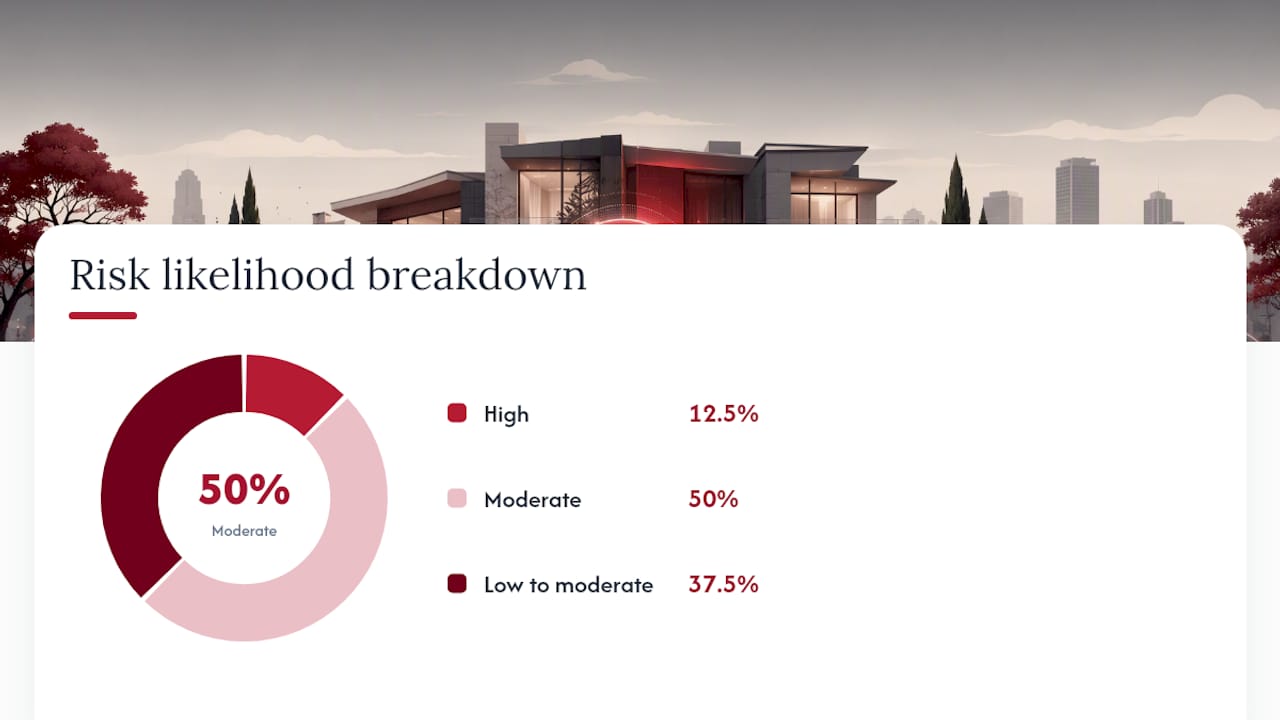
The two failure modes that appear most often in luxury distressed deals are cost overruns on bespoke finishes and exit liquidity mismatches for one-off features. A $200K custom wine cellar that cost $350K to complete adds far less than $350K to the exit price in most submarkets.

A $7M buyer in Newport Beach has different expectations than a $7M buyer in Rancho Santa Fe.*
Pro Tip: For partial-execution projects, insist on contractor escrows and phased draws tied to verified milestones. Releasing full renovation budgets upfront on a stalled project is how investors inherit someone else's contractor problems.
How experienced luxury operators run distressed deals
The difference between an investor who profits from distressed luxury and one who gets stuck is almost always team quality and decision discipline. Building a powerhouse real estate management team is not optional at this price point — it is the product.
Team checklist and validation roles:
- Acquisition lead: Underwrites the deal, runs comps, and owns the go/no-go decision.
- Construction manager: Validates cost-to-complete, manages contractor bids, and monitors draws. Must have luxury-finish experience.
- Title counsel: Reviews the preliminary title report, identifies encumbrances, and structures the contract protections.
- Local broker: Provides submarket comp data, buyer demand signals, and days-on-market context. A broker who has closed 10+ transactions in the target zip code is worth more than any data platform.
- Tax advisor: Structures the acquisition entity, advises on depreciation, and models the tax impact of the exit.
- Specialty insurer: Provides builder's risk coverage during renovation and confirms the post-renovation policy is in place before closing.
Go/no-go decision rules:
- Minimum purchase discount: 20% below stabilized value (30% preferred for complex deals)
- Maximum capex-to-value ratio: 20% of stabilized value for targeted renovations; 25% for full repositioning
- Required hold liquidity buffer: 6 months of carrying costs in reserve, unencumbered
- Legal red flags that trigger a walk: unresolved IRS liens, active probate litigation with contested beneficiaries, permits that require demolition to cure
Anonymized mini-case: A 5,400-square-foot coastal estate in a Southern California luxury enclave entered probate after the owner's death. Cost-to-complete: $480K, including permit remediation and HOA payoff. Holding and financing costs over 11 months: $190K. Exit price: $5.75M. Gross profit: approximately $980K. The deal worked because the team identified the permit cure path before making an offer and negotiated an escrow holdback for the HOA assessment. The one near miss: a mechanic's lien from the original contractor surfaced two weeks before closing and required a $45K negotiated settlement.
Pro Tip: When negotiating around bespoke features — a custom home theater, a one-of-a-kind pool design — treat them as liabilities in your offer price, not assets. If the buyer pool for that feature is narrow, price accordingly. You can always market the feature; you can't un-spend the money to build it.
Typical timelines and cost buckets for distressed luxury deals
Realistic planning prevents the single most common mistake in distressed luxury: underestimating how long the legal and permitting phases take.
| Phase | Typical Duration | Notes |
|---|---|---|
| Sourcing and negotiation | 1–3 months | Probate deals can extend to 6+ months for court approval |
| Title cure and clearance | 2–6 weeks | Longer for auction purchases with lien survivors |
| Permitting | 6–16 weeks | Luxury coastal markets (LA, San Diego) run longer; custom systems add time |
| Construction and renovation | 4–12 months | Partial-execution projects vary widely based on completion percentage |
| Stabilization and marketing | 4–8 weeks | Staging, photography, broker preview |
| Exit (sale or refinance) | 30–90 days | Luxury market liquidity varies by price band and season |
Typical cost buckets as a percentage of stabilized value:
- Purchase price: 68–78% of stabilized value (the discount range)
- Targeted renovation: 8–18% of stabilized value
- Contingency on renovation: 15–20% of renovation budget
- Holding and carrying costs: 3–6% of total cost (varies with hold duration and financing)
- Transaction costs (acquisition and exit): 4–6% combined
Permit timelines in luxury coastal markets are longer than investors expect. Los Angeles and San Diego counties regularly run 10–16 weeks for structural permits, and specialty systems (geothermal, custom pool, solar integration) add review time. Specialty-trade contractors — the ones who can execute high-end finishes correctly — book out 6–10 weeks in advance in Southern California. Factor both into your hold timeline before committing to a financing structure with a hard maturity date.
Practical resources and data tools for U.S. investors
Key data providers:
- ATTOM: Best for foreclosure pipeline data, pre-foreclosure notices, and property-level ownership history. Use it to build county-level sourcing alerts and track REO inventory in target zip codes.
- Realtor.com: Best for comp research, days-on-market trends, and price reduction history in luxury zip codes. Useful for identifying motivated sellers before they reach distressed status.
- Foreclosure.com: Best for auction scheduling, pre-foreclosure filings, and bank-owned listings. Use it to track upcoming auctions in target counties and identify properties before they reach the courthouse steps.
- LoopNet: Best for luxury investment listings with CRE characteristics — large estates, multi-unit luxury, mixed-use. Also useful for identifying distressed assets with institutional-buyer potential.
- SEC IAPD: The SEC adviser information system lets investors verify fund sponsors and check regulatory filings for any fund-level partner or co-investor.
Professional contacts to have on call:
- Title company with luxury and REO/probate experience in your target county
- Real estate attorney experienced in REO, auction, and probate transactions
- Specialty luxury contractor with references in the target price band
- Tax advisor familiar with real estate investment structures and 1031 exchanges
- High-end staging and marketing specialist for the exit
For deeper reading, the luxury real estate market report and the guide to identifying undervalued luxury properties provide additional context on Southern California market conditions and preliminary screening tactics.
Tax implications of investing in distressed luxury properties
Tax treatment in distressed luxury deals is not uniform — it depends on how the property is held, how long it is held, and how the acquisition is structured.
Short-term flips (held under 12 months): Gains are taxed as ordinary income at federal rates up to 37%, plus applicable state income tax. The math on a flip must account for this before the deal is underwritten, not after.
California taxes all capital gains as ordinary income, which is a material consideration for Southern California investors.
Depreciation and cost segregation: For rental or investment properties, depreciation deductions can offset income during the hold period. Cost segregation studies on luxury properties — which often have significant personal property components (custom fixtures, built-ins, landscaping) — can accelerate depreciation and improve cash-on-cash returns during the hold.
1031 exchanges: Investors who hold a distressed luxury property as investment property (not a primary residence or dealer property) can defer capital gains taxes by rolling proceeds into a like-kind exchange. The 45-day identification and 180-day closing windows are tight in a luxury market with limited inventory, so exchange planning must begin before the sale closes.
Debt forgiveness income: In short sales or lender workouts, forgiven debt may be treated as taxable income under IRS rules. The Mortgage Forgiveness Debt Relief Act has had various extensions; investors should confirm current rules with a tax advisor before structuring a workout.
Acquisition entity structure: Holding distressed luxury assets in an LLC or limited partnership provides liability protection and can simplify the tax treatment of multiple investors. The structure also affects depreciation allocation and exit tax treatment.
This is general information, not tax advice. Confirm current rules and your specific situation with a qualified tax advisor.
How luxury market trends affect distressed investment viability
Distressed luxury deals do not exist in a vacuum. The spread between a distressed purchase price and a stabilized exit price is directly tied to where the luxury market is in its cycle.
When luxury markets are liquid — strong buyer demand, low days-on-market, multiple offers on well-priced listings — distressed investors have clear exit visibility and can underwrite aggressively. When luxury markets soften, exit timelines extend, comp sets widen, and the risk of an appraisal or buyer-pool mismatch increases.
The current cycle presents a specific dynamic. Higher interest rates have compressed the pool of financed luxury buyers, pushing more transactions toward cash buyers and extending days-on-market in some price bands. At the same time, the debt maturity wall and stalled development projects have increased the supply of distressed opportunities, particularly in the $3M–$8M range in Southern California coastal markets.
Macro stress indicators matter too. Delinquency trends in high-income zip codes, tracked through sources like Statista's metro-level delinquency data, can signal where localized luxury distress is building before it surfaces in public filings.
In a softening market, the renovation premium compresses. A $500K kitchen renovation that added $700K to exit value in 2022 may add $450K today in the same submarket. Aligning finish level and renovation scope to current buyer demand — not peak-cycle expectations — is the discipline that separates profitable distressed operators from those who break even or worse.
Real-world examples of distressed luxury investments
Successful example — probate estate, coastal Southern California: An oceanview home in a San Diego coastal enclave entered probate after a contested estate. The property had not been updated since the early 2000s, had deferred maintenance on the roof and HVAC, and carried an HOA delinquency. An investor purchased it at a substantial discount relative to its stabilized value. A targeted $420K renovation — roof, HVAC, kitchen, primary bath, and exterior — plus HOA payoff and permit clearance produced an exit at $5.05M after 14 months. The deal worked because the investor moved fast on title clearance, had a contractor ready to bid within a week of going under contract, and negotiated a court-approved escrow holdback for the HOA delinquency.
Unsuccessful example — partial-execution overrun: An investor acquired a partially renovated $4M luxury property in a Los Angeles hillside neighborhood at $2.8M. The cost-to-complete estimate was $600K. Actual cost: $1.1M, driven by discontinued smart-home components, a structural issue discovered behind a finished wall, and a 14-week permit delay on the pool. The exit price of $4.3M produced a loss after financing and holding costs. The failure point: the investor used a general contractor unfamiliar with the specific systems and did not budget for the nonlinear cost of completing someone else's bespoke design.
The pattern across both examples is consistent with what Andrew LeBaron's 2026 market commentary observed: clean deals with identifiable problems clear at predictable discounts; complex deals with governance or capital-stack complications require larger discounts and more experienced operators to execute profitably.
Insurance considerations for distressed luxury properties
Standard homeowner's insurance policies will not cover a distressed luxury property under renovation. Insurers treat vacant, partially renovated, or structurally compromised properties as high-risk, and most standard policies have vacancy clauses that void coverage after 30–60 days of non-occupancy.
Key coverage types for distressed luxury deals:
- Builder's risk insurance: Covers the structure and materials during renovation. Required from the day of closing on any property undergoing active construction. Luxury properties require higher coverage limits and often need specialty insurers who understand custom finishes and high-value systems.
- Vacant property insurance: For properties that are vacant but not under active renovation. Covers fire, vandalism, and liability. Premiums are higher than standard homeowner's policies.
- Umbrella liability: Protects against third-party claims during renovation — contractor injuries, visitor accidents, neighboring property damage. Standard at $1M–$5M for luxury assets.
- Flood and earthquake riders: In coastal California markets, standard policies exclude both. Separate flood (through the National Flood Insurance Program or private carriers) and earthquake policies are often required by lenders and advisable regardless.
Luxury-specific considerations:
Bespoke features — custom art installations, imported stone, one-of-a-kind millwork — require scheduled personal property endorsements to be covered at replacement cost. Standard policies cover at actual cash value, which for a 10-year-old custom feature may be a fraction of replacement cost.
Distressed properties with deferred maintenance or partial construction often have difficulty obtaining coverage at all. Some specialty insurers focus specifically on renovation and distressed properties; working with a broker who places luxury renovation policies regularly is worth the additional premium.
Negotiating with lenders, owners, and courts in distressed luxury deals
Each counterparty in a distressed luxury transaction has different motivations, timelines, and constraints. Effective negotiation starts with understanding what the other side actually needs.
Negotiating with motivated sellers (divorce, estate, financial distress):
Speed and certainty are the primary currencies. A seller facing a divorce judgment, a probate deadline, or a foreclosure notice values a clean, fast close over a higher price with contingencies. Offering a shorter inspection period, a larger earnest money deposit, and a cash or pre-approved financing structure signals seriousness and often justifies a lower offer price. Avoid over-negotiating on price at the expense of deal certainty — a seller who feels squeezed will find another buyer or let the property go to auction.
Negotiating with lenders (REO and short sales):
Bank special-asset desks operate on different timelines than individual sellers. They have internal approval processes, committee reviews, and regulatory constraints. Patience and persistence matter more than aggressive negotiation tactics. Provide a clean, complete offer package — proof of funds, entity documents, a brief acquisition summary — and respond to counter-offers within 24 hours. Lenders respect buyers who are organized and decisive.
Negotiating in probate and court-supervised sales:
Court-confirmed sales in California require overbid procedures and judicial approval. The initial accepted offer becomes the floor for a public overbid process. Investors who win probate deals often do so by setting a strong initial offer that discourages overbidders, not by bidding low and hoping for no competition. Retaining an attorney familiar with California probate procedure is not optional — the process has specific notice requirements, hearing timelines, and confirmation procedures that affect closing certainty.
Negotiating around bespoke features:
When a property has unique features that are costly to maintain or replace, use them as negotiating leverage on price, not as reasons to walk. A custom home theater that costs $80K to update is a $80K line item in your cost-to-complete estimate — and a reason to reduce your offer by at least that amount. Sellers who are emotionally attached to bespoke features often resist discounting for them; framing the conversation around market comparables rather than personal value tends to be more productive.
Why distressed luxury deals deserve a closer look
The conventional view of distressed real estate is that it means broken, neglected, or deeply discounted to the point of obvious opportunity. In the luxury segment, that framing misses the point almost entirely.
The most interesting distressed luxury deals are not obvious. They are properties with a specific, solvable problem — a probate dispute, a stalled renovation, a defaulted jumbo loan on an otherwise excellent asset — that has created seller urgency without destroying underlying value. The investor's job is to identify the problem, price it accurately, and execute the solution faster and more precisely than the market expects.
What I see consistently in Southern California luxury markets is that investors who succeed in this space are not the ones with the most capital or the most aggressive offers. The playbook is not complicated. The execution is.
Useful sources
- ATTOM: Property-level foreclosure data, pre-foreclosure notices, and REO pipeline tracking across U.S. counties. Used for sourcing and timeline data throughout this article.
- Realtor: Comp research, days-on-market trends, and price reduction history for luxury submarkets. Used for market context and sourcing signals.
- Foreclosure: Auction scheduling, pre-foreclosure filings, and bank-owned listings. Used for auction sourcing guidance.
- HousingWire / Auction.com 2026 buyer outlook: — Survey of distressed-property buyers; used for market sentiment and selective-opportunity framing.
- Shore Acres Capital — Understanding Distressed Real Estate: — Operator-level definition of distress types and the "buy the problem" thesis. Used for definition and operator perspective sections.
- KKR — The Case for CRE Debt: — CRE valuation resets and senior-secured lending opportunities. Used for financing strategy section.
- Kiavi Investor Pulse: July 2026: — Foreclosure start and filing trends; faster timelines and investor readiness requirements. Used for sourcing and timeline sections.
- Andrew LeBaron — The Distressed Apartment Wave: — Operator observations on 2026 distressed deal discounts and complexity pricing. Used for valuation examples and case study context.
- SEC IAPD: Adviser brochure and fund disclosure verification. Recommended for investors vetting fund sponsors or co-investors.
This article is general information, not a substitute for advice from a qualified financial advisor. Consult a qualified financial professional about your own circumstances before acting on anything here.